
CP2000 Partial Agreement: How to Respond When You Only Agree with Some IRS Changes
Introduction: CP2000 Partial Agreement in Plain English
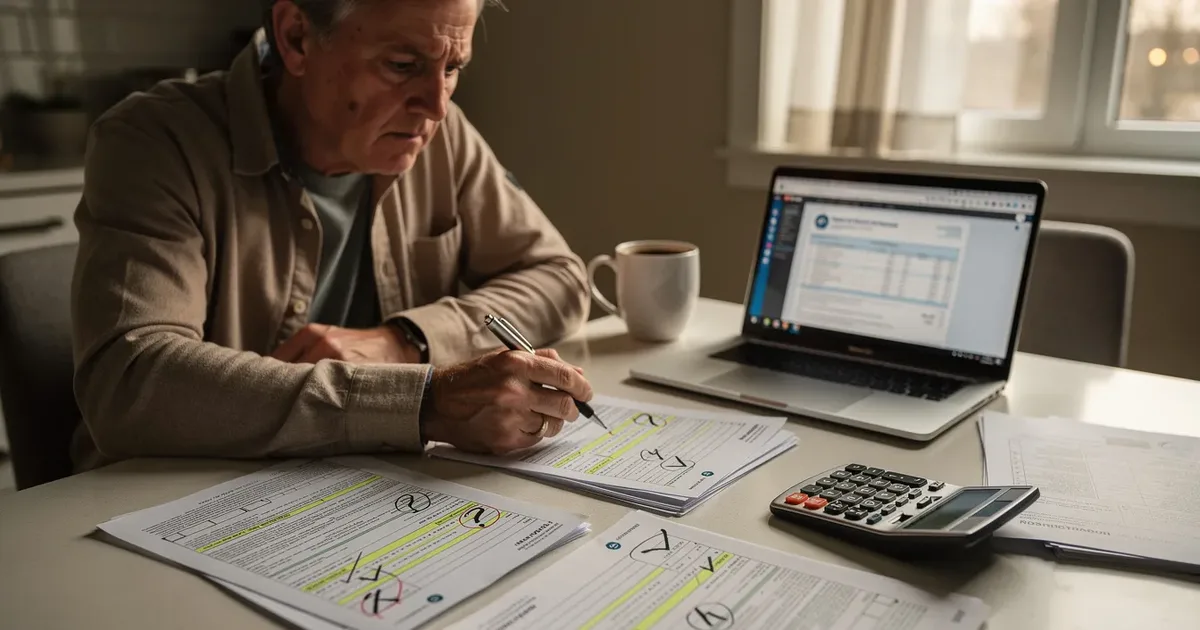
If you just pulled a letter from the IRS out of your mailbox and the words "CP2000" are printed across the top, take a breath. A CP2000 partial agreement means you review the IRS's proposed changes, accept the adjustments you believe are correct, and dispute the ones you believe are wrong or overstated. You are not being hauled into a full irs audit, and the internal revenue service has not yet decided you owe the full amount shown. What you are holding is a proposal - and you do not have to accept every line of it.
An irs CP2000 notice is an automated under reported letter generated when the IRS compares your filed tax return against income documents submitted by employers, banks, brokerages, and other third parties. When those numbers do not match, the IRS system flags the difference and mails you a notice proposing adjustments. The IRS sends over 6 million CP2000 notices yearly, so you are far from alone. For U.S. taxpayers trying to respond without a tax professional, the hard part is usually figuring out what changed, what deadline applies, and which items you can reasonably challenge.
This guide walks through what a CP2000 is, why the IRS generated it, common mismatch triggers, response deadlines, how to evaluate a partial agreement, how to prepare your reply, payment and installment options, and what can happen if you ignore the notice. That matters because a CP2000 can increase your tax, penalties, and interest if you mishandle it, while a clear partial response can protect your rights and help you avoid escalation to a CP3219A statutory notice of deficiency and eventually a final notice with limited appeal options.
ClearNotice is a digital tool built for exactly this moment. It decodes IRS notices like the CP2000, summarizes your deadlines and options in plain English, and helps you decide whether to fully agree, partially agree, or disagree - before the clock runs out.

What Is an IRS CP2000 Notice (and Where Does Partial Agreement Fit In)?
An irs cp2000 notice is a letter generated by the IRS's Automated Underreporter (AUR) program. The irs automated underreporter system compares every piece of income data reported under your social security number - W-2s, 1099s, and reports from financial institutions and other third parties - against what you reported on your originally filed tax return. When something does not line up, the IRS flags the discrepancy and sends you a notice.
The key point many taxpayers miss: a CP2000 notice proposes changes to your tax return. It shows you a proposed additional tax, proposed penalties, and additional interest, but nothing has been assessed yet. It is not a bill. It is not a statutory notice. It is the IRS saying, "We think your return should look different - here is our math."
On the enclosed response form included with the notice, you have three choices. You can agree with all the proposed changes, you can disagree with all of them, or you can partially agree. Partial agreement is appropriate when some items on the notice are legitimate - perhaps unreported interest income from a bank account you overlooked - while others are based on incorrect income data or assumptions by the IRS.
CP2000 notices most commonly target underreported income from wages, dividends, freelance income, retirement distributions, cancellation of debt, and capital gains. They can also involve credits and deductions that do not match what the IRS expected to see.
Why the IRS Sends a CP2000 Notice: Common Triggers
The IRS sends CP2000 notices when income reported under your social security number by third parties does not match your tax return. This is not an accusation of fraud. In fact, many taxpayers receive these notices because of honest mistakes, late-arriving forms, or software input errors.
Missing a Form 1099 or W-2 often triggers a cp2000 notice. Missing 1099 income triggers a cp2000 notice whether the form came from a bank, a freelance client, or a payment app. Brokerage mismatches can lead to a cp2000 notice too - especially when a broker reports proceeds on a 1099-B but uses incorrect cost basis or omits it entirely, making the IRS believe your capital gains were far larger than they actually were.
Errors in employer reporting can trigger a cp2000 notice as well, as can cryptocurrency transactions, which often cause CP2000 discrepancies because exchanges may issue a 1099-DA without accurate basis data. The IRS sends CP2000 notices for unreported gambling winnings, unreported income from side gigs, and investment transactions where dividends or distributions went unreported.
Duplicate or erroneous reports - such as a client issuing two 1099-NEC forms for the same payment - create situations where the irs believes you earned more than you did. These are textbook cases where partial agreement makes sense: accept the real income, dispute the phantom income.
Timeline: When the IRS Sends CP2000 Notices and How Long You Have
CP2000 notices typically arrive six to eighteen months after you file your return. The delay exists because the IRS waits for all income statements and income documents to flow in from payers. Employers and financial institutions submit W-2s by January 31, while many 1099 forms trickle in through March. Only after the IRS has matched all that data against your return does the AUR system flag discrepancies.
Because of this cycle, you might receive a CP2000 notice for a tax year you filed well over a year ago, sometimes even two. The notice itself will clearly identify the tax year in question.
You have 30 days to respond to a cp2000 notice from the date printed on the letter - not from the day you open it. If you live outside the United States, the window may extend to 60 days. If you need additional time, call the phone number on the notice before the response deadline expires; the IRS may grant an informal extension.
Missing that window has real consequences. If you do not respond, the IRS can treat the entire notice as accepted, assess the full proposed tax, and eventually issue a CP3219A statutory notice of deficiency - a legal document that gives you only 90 days to petition the us tax court.

Step‑by‑Step: What to Do the Day You Receive a CP2000
The first thing to do is confirm that the letter is actually an irs notice. Look in the upper-right corner for the notice number (CP2000 or a variant like CP2000A) and the date of the notice. Confirm which tax year the notice covers - it may not be the most recent one.
Next, flip to page one and locate the proposed additional tax, interest, and proposed penalties. This is the total the IRS says you would owe if you accept every adjustment. Write that number down, because it is your starting reference point for deciding whether to agree, partially agree, or fully disagree.
Third, find the "response due by" date and mark a calendar reminder at least one week before that deadline. You have 30 days to respond to a cp2000 notice, and late responses can eliminate your options.
Fourth, gather all related tax documents for the tax year in question: W-2s, 1099s of every type, brokerage and crypto statements, 1099-K payment app reports, bank statements, and your originally filed tax return. Having everything in front of you is the only way to evaluate whether the irs proposed adjustments are accurate.
Finally, scan or photograph the entire notice - every page, front and back - and save it in a secure location. ClearNotice can decode the notice and generate a checklist of what to review, putting each proposed adjustment into plain English so you know exactly what the IRS is questioning.
Understanding Partial Agreement: When It Makes Sense
A partial agreement with a cp2000 notice allows taxpayers to dispute some proposed changes while accepting others. In practice, it looks like this: the IRS correctly identifies a 1099-INT from a savings account you forgot to report - that is real unreported interest income you accept. But on the same notice, the IRS lists a stock sale from your brokerage and assumes zero cost basis, inflating your taxable income by thousands of dollars. You dispute that item because you have purchase records proving a much higher basis.
Partial agreement is the right move whenever the notice contains a mix of accurate and inaccurate adjustments. Common scenarios include a duplicate 1099-NEC from a client who issued two forms for the same freelance income payment, a broker reporting gross proceeds without reflecting your actual cost basis for investment transactions, a third party reporting income that belongs to a different person with a similar social security number, or income that was already included on your return but under a different line item.
You can agree with specific payers and dollar amounts and disagree with others, but you must clearly spell this out on the cp2000 response form and in an attached written explanation. Vague language invites the IRS to treat your response as full agreement.
The financial upside is straightforward: partial agreement can substantially lower the additional tax, proposed penalties, and additional interest compared to signing the form as-is and paying the entire proposed amount.
How to Read Your CP2000 Notice Before Choosing Partial Agreement
Start with page one. It shows a summary of the proposed adjustment - the total additional tax, interest, and penalties if you accept the IRS's position in full. This page is the headline number, not the detail.
The detail lives on the following pages. Look for side-by-side columns labeled something like "As shown on your return," "As corrected by IRS," and "Difference." Each row corresponds to an income type and a specific payer. This is where you will see exactly which income the irs disagrees with: a 1099-DIV from a brokerage, a W-2 from a former employer, or unreported income from bank accounts.
Go through each row methodically. Underline or highlight items you clearly agree with - income you know was missing from your return. Then flag items that seem wrong, inflated, or confusing. These flagged items are the core of your partial agreement response.
Locate the response form included with the notice. It typically has check boxes for agree, partially agree, or disagree, plus space to reference an attached explanation. Addressing a cp2000 notice involves reviewing proposed changes against tax records line by line - not just glancing at the total.
ClearNotice can decode each line item and translate the IRS jargon into plain English, so you understand exactly what is being adjusted before you commit to anything.
Comparing the CP2000 Notice to Your Income Documents
Pull together every income document for the specific tax year on the notice: W-2s, 1099-INT, 1099-DIV, 1099-NEC, 1099-MISC, 1099-R, 1099-B, 1099-K, and any crypto exchange or brokerage statements. If you no longer have hard copies, you can request an income transcript from the irs website, which lists all information returns filed under your social security number for a given year.
With documents in hand, compare each payer name and dollar amount on the CP2000 to the original forms. Look for issues such as amounts that were actually included elsewhere on your filed tax return (for example, freelance income bundled into gross receipts on schedule c), numbers that were mis-keyed by a payer, or forms that were corrected after you filed.
For investment and capital gains items, verify cost basis, sale dates, and whether the IRS assumed zero basis when you actually have purchase records. Maintain records of basis and deductions for investments - this is the single most common source of overassessment in CP2000 proposals. If a broker reported only proceeds on a 1099-B and omitted basis, the IRS will treat the entire sale as profit.
Create a simple two-column worksheet: items you accept on one side, items you dispute on the other. Note the dollar amount for each. This worksheet becomes the backbone of your partial agreement response and the supporting documentation you attach to the response form.

Choosing Between Full Agreement, Partial Agreement, and Disagreement
Think of these three options as a decision framework based on your specific facts - not as a personality test.
Full agreement makes sense when all the mismatched income is genuinely missing from your return and the IRS's math is correct. The trade-off: fastest resolution, but you waive the chance to challenge errors. If the IRS assumed zero basis on a stock sale and you do not push back, you pay tax on phantom gains.
Partial agreement is ideal when the notice is a mix - some clear underreporting plus some incorrect assumptions by the IRS. Perhaps you failed to report a 1099-NEC but the IRS also doubled your reported income from a brokerage because basis was missing. You accept the legitimate item and dispute the rest. Many taxpayers find themselves in this middle ground.
Total disagreement might be appropriate when the entire notice is wrong: identity theft, entirely erroneous third-party reports, or income that belongs to a different taxpayer. You would check "disagree" and provide evidence for every disputed line.
If you are unsure which bucket your situation falls into, a licensed tax professional can review the numbers, or you can start with ClearNotice's decoder to see each proposed change explained in plain English before making a decision.
How to Complete the CP2000 Response Form for a Partial Agreement
On the response form, check the box indicating that you partially agree with the proposed changes. If the form only offers "agree" and "disagree" options, check "disagree" and write "partial agreement - see attached" in the margin or explanation area.
For each line item on the notice, note the dollar amount you accept and the amount you dispute. Reference your attached explanation letter for the full breakdown. The IRS needs specific numbers - do not write vague statements like "I disagree with some items." Instead, write something like "Accept $1,200 unreported interest income from XYZ Bank; dispute $8,400 capital gains from ABC Brokerage - correct basis attached."
If this was a joint return, both spouses must sign the response form. Missing signatures are a common cause of processing delays. Make sure the names match what is on file with the IRS.
Include your phone number and best contact times in case the IRS CP2000 unit needs clarification. However, verbal conversations do not substitute for written documentation - everything material should be on paper.
Before mailing, make a complete copy or scan of the filled-out response form and all attachments. Send your response via certified mail for proof of submission. Mail it to the irs address printed on the notice, not to your local irs office. Keep your certified mail receipt with your tax records.
Writing an Explanation Letter for Partial Agreement
Your explanation letter does not need to read like a legal brief. Short, clear paragraphs work better than dense legalese. The IRS reviewers handling CP2000 responses process high volumes; make their job easy and your case benefits.
Start the letter with your full name, mailing address, social security number (last four digits for security if mailing), the tax year in question, and the CP2000 notice number from the upper-right corner of the letter.
Open with a direct statement: "I partially agree with the proposed changes in the above-referenced CP2000 notice. Below I identify the items I accept and the items I dispute."
For each accepted item, state the payer name, the tax form type, and the amount. For example: "I accept the unreported 1099-INT from First National Bank in the amount of $475."
For each disputed item, explain why. Reference specific forms and amounts: "I dispute the proposed capital gains adjustment of $8,400 from ABC Brokerage (Form 1099-B). The IRS used a basis of $0; the correct basis is $12,500 per the attached brokerage statement. Corrected gain is $1,900." A written explanation is required if you disagree with any part of the notice, so be thorough.
Attach copies - never originals - of corrected W-2s or 1099s, brokerage statements, bank records, trade confirmations, and any correspondence from payers confirming errors. Include supporting documents when disputing a cp2000 notice, because assertions without evidence rarely succeed.
Close the letter by asking the IRS to recalculate the additional tax, penalties, and interest based only on the agreed-upon items and to send a revised notice reflecting those corrections. You can request a penalty abatement when agreeing with the CP2000 changes, particularly if you had reasonable cause for the error.
Payment of Additional Tax When You Partially Agree
Even when you partially agree, you can choose to pay the portion of proposed tax you accept right away. Doing this reduces the interest and penalties that continue to accrue while the IRS reviews your disputed items. Interest accrues daily on unpaid tax balances from the original due date of the return, so early payment on the accepted portion saves real money.
Standard IRS payment options work here: IRS Direct Pay from a bank account, the Electronic Federal Tax Payment System (EFTPS), debit or credit card payments through approved processors, or a check mailed with the payment voucher included in the notice package. The CP2000 notice usually calculates interest to a date roughly 30 days after the notice; anything unpaid past that date keeps growing.
When sending payment, clearly label it with "CP2000 - Tax Year [year]" along with your name, social security number, and notice number. This ensures the IRS correctly applies it to the right tax year and notice rather than crediting it to general tax debt or a different period.
If you cannot pay even the agreed-upon underpaid tax, you can request a payment plan. The IRS allows taxpayers who owe additional tax to set up structured payments rather than paying in a lump sum. Form 9465 or the online installment agreement tool at IRS.gov will get the process started.
Installment Agreements and Other Options If You Can't Pay in Full
When a CP2000 results in significant tax liability, an installment agreement lets you pay over time. Interest and late-payment penalties still accrue during the plan, but it prevents more aggressive collection actions like liens and levies.
For taxpayers who owe $50,000 or less in combined tax, penalties, and interest, the IRS offers streamlined installment agreements that do not require detailed financial disclosure. You propose a monthly amount, and as long as the balance is paid within the collection statute (generally 72 months or before the statute expires), the IRS typically approves it.
Other relief options exist but are more complex. "Currently not collectible" status pauses collection if you are experiencing genuine financial hardship - but the tax debt does not disappear, and interest keeps running. An Offer in Compromise lets you settle for less than the full amount owed, but qualifying is difficult and almost always requires a licensed tax professional.
To request an installment agreement alongside your CP2000 partial agreement response, include a completed Form 9465 or note in your letter that you are requesting a payment plan, specifying the monthly amount you can afford. ClearNotice can help you understand the timeline and potential next steps before committing to a long-term arrangement.
What Happens After You Send a Partial Agreement Response?
After you mail your response, the IRS AUR unit receives the package, inputs the changes you accepted, and begins reviewing the items you disputed along with your supporting documentation. The IRS typically takes 8 to 12 weeks to respond to your reply, though heavy backlogs can push that timeline further.
During this period, do not file an amended return for the same tax year just because of the CP2000. Taxpayers must not file an amended return simply due to partial agreement on a cp2000 notice - doing so can create confusion and duplicate adjustments in the irs system.
Several outcomes are possible. The IRS may accept your partial position entirely, sending a revised notice reflecting only the agreed items and recalculating proposed tax and interest. The IRS may issue a revised notice reflecting changes accepted from a partial agreement but reject some of your disputed items, leaving a smaller balance to resolve. Or the IRS may reject your dispute altogether and issue a CP3219A statutory notice of deficiency for the remaining amount.
If the IRS agrees with your partial position, expect a formal letter confirming the adjusted figures - essentially a final bill for the accepted portion. Review every follow-up irs notice carefully to confirm that only the agreed items were assessed. If the result does not match what you submitted, contact the IRS promptly using the number on the new notice.
Risks of Ignoring a CP2000 or Mishandling Partial Agreement
Ignoring a CP2000 notice leads to automatic tax adjustments. The IRS treats silence as full agreement with all the proposed changes, even if you only intended to accept part of the additional tax. The full proposed tax, penalties, and interest get assessed to your account.
From there, the IRS issues a CP3219A Notice of Deficiency, followed by a formal bill (CP14), and eventually collection notices. Failure to respond results in a Notice of Deficiency being issued, and ignoring the notice can escalate to IRS collections actions including a CP90 final notice of intent to levy, federal tax liens, and wage garnishments.
The financial impact compounds quickly. A 20% accuracy-related penalty may apply for underreporting - the irs assesses this substantial understatement penalty on top of the additional tax. Interest accrues daily. Late-payment penalties stack on as well. What started as a moderate proposed adjustment can balloon into a tax debt far larger than the original proposal.
Sending an unclear or incomplete partial agreement can also backfire. If your disagreement is not clearly documented - with specific dollar amounts, payer names, and supporting documents - the IRS may default to treating the entire response as full agreement. That is why carefully prepared partial-agreement responses matter: they protect taxpayer rights and keep the door open to further appeal or tax court review if needed.
Bottom line: respond before the deadline, be specific about what you accept and dispute, and keep copies of everything.

CP2000 vs. Other IRS Notices (CP3219A, CP90, and Final Notices)
A CP2000 is an automated underreported letter proposing changes. It sits at the earliest, most flexible stage of the IRS irs procedures for addressing income mismatches. A CP3219A is a statutory notice of deficiency - a legal document asserting that the IRS has determined you owe additional tax. A CP90 is a final notice of intent to levy, meaning the IRS is about to seize assets.
These three notices represent an escalation ladder. The CP2000 partial agreement stage is the best time to correct errors, provide supporting documentation, and reduce your tax liability before anything is legally assessed. Once the IRS moves to a CP3219A, your options narrow to petitioning the us tax court within 90 days or accepting the assessment.
CP90 and related collection notices arrive much later, after tax has been formally assessed and remains unpaid. At that point, the conversation shifts from "is the tax correct?" to "how do we collect it?" You lose the ability to argue about the accuracy of the original proposed changes.
Responding properly to a CP2000 - especially with a well-documented partial agreement - helps avoid ever reaching the CP90 final notice stage. Tax resolution is far simpler and less expensive at the proposal stage than after assessment and collection begin.
When to Get Help from a Licensed Tax Professional vs. Using ClearNotice
Many cp2000 partial agreement cases can be handled by the taxpayer directly. If the notice involves a straightforward missing 1099 and one disputed item with clear documentation, self-response is entirely reasonable.
However, certain situations strongly benefit from experienced tax professionals. Large additional tax tied to complex capital gains, cryptocurrency transactions across multiple exchanges, business income on schedule c or Schedule E, foreign bank accounts, or potential identity-theft issues all add layers of complexity. If the irs proposed changes involve financial interests in partnerships, trusts, or foreign entities, professional guidance becomes essential.
A licensed tax professional - whether an enrolled agent, CPA, or tax attorney - can reconstruct cost basis from incomplete records, interpret brokerage reports, negotiate penalty relief, and handle written submissions and phone calls with the IRS on your behalf.
ClearNotice serves as a first-line tool for everyday taxpayers. It decodes your CP2000 notice, translates IRS language into plain English, surfaces deadlines, and generates a personalized checklist of tax documents and next steps - including whether your situation warrants professional help.
A practical workflow: enter your notice details into ClearNotice, review the plain-English explanation and options, and then either respond on your own or bring the ClearNotice summary to a tax professional. The summary saves time (and billable hours) because the professional does not have to start from scratch interpreting the notice.
Preventing Future CP2000 Notices and Partial Agreements
The simplest way to avoid a future CP2000 is to make sure every dollar of reported income on third-party forms matches what you report on your return. Double-check all income documents before filing your tax return. Create a yearly checklist of expected forms - W-2, 1099-NEC, 1099-MISC, 1099-INT, 1099-DIV, 1099-B, 1099-K, 1099-R - and do not file until every form has arrived or you have confirmed with each payer that nothing is outstanding.
File an extension if missing documents by the tax deadline. An extension gives you until October 15 to file, which is often enough time for late or corrected forms to arrive.
Pull an IRS Wage & Income Transcript for the tax year before you file. These transcripts, available on IRS.gov, show every information return filed under your social security number. By comparing the transcript to the forms in your possession, you can catch discrepancies before the IRS does.
For investment activity, carefully track cost basis, holding periods, and wash-sale rules so that Schedule D and Form 8949 match what your brokerage reports. If a broker reports a tax form with incorrect basis, request a corrected form immediately.
ClearNotice's broader platform can help track IRS correspondence timelines and educate you on common mismatch triggers, so you proactively avoid them in future years rather than reacting after the fact.
Frequently Asked Questions About CP2000 Partial Agreements
Do I still owe interest if I only partially agree with a CP2000 notice? Yes. Interest runs on any additional tax from the original due date of the return, not from the date of the notice. Paying the accepted portion quickly reduces the interest that accrues, but interest on the disputed portion will also apply if the IRS ultimately prevails on those items. Per standard irs procedures, interest is statutory and cannot be waived except in narrow circumstances involving IRS error.
Should I file an amended return if I send a partial agreement? Generally, no. Taxpayers must not file an amended return simply due to partial agreement on a CP2000 notice. The CP2000 response process is separate from the amended return process. Filing an amended return for the same issues can create duplicate adjustments and confusion in the IRS system. Only file an amended return if you have changes unrelated to the CP2000.
How long will it take the IRS to respond to my partial agreement? The IRS typically takes 8 to 12 weeks to process a CP2000 response, though backlogs can extend this. During that time, do not assume silence means acceptance. If you have not heard back after 12 weeks, call the number on your original notice for a status update.
Can I change my mind after sending a partial agreement response? Partial agreement does not waive your right to appeal. If the IRS rejects your explanation and issues a CP3219A statutory notice of deficiency, you still have 90 days to petition the tax court. As long as you respond within all stated deadlines, your options remain open. You can also pay penalties and the disputed amount, then file a refund claim - though this path is more complex and typically requires a tax professional.
ClearNotice can help identify which notice you have, what your deadlines are, and what the next logical step is, even before you speak with a professional.
Conclusion: Using ClearNotice to Navigate Your CP2000 Partial Agreement
A CP2000 notice is an opportunity - not a final judgment. It is the IRS telling you that the taxable income on your return does not match what they received from third parties. In many cases, the most accurate response is partial agreement: accept what is genuinely correct and dispute what is not.
Acting before the response deadline, documenting exactly what you agree and disagree with, and paying what you can toward the accepted additional tax prevents escalation to collection actions that are far more disruptive and expensive.
ClearNotice's IRS notice decoder can instantly tell you what your CP2000 notice means, what partial agreement looks like in your specific letter, and which documents and deadlines matter most. Whether you handle the response yourself or bring in experienced tax professionals, starting with a clear understanding of the notice puts you in control.
Whenever an irs cp2000 notice - or any other IRS letter - arrives, use ClearNotice as your first step. Reduce the anxiety, understand your options, and make confident decisions about your tax resolution path.
Keep reading
 CP2000 & income mismatch
CP2000 Response Time: What to Expect From IRS | ClearNotice
Sent your CP2000 response and still waiting? Most taxpayers hear back within 30 to 90 days. Here is exactly what happens after you respond and when to follow up.
 CP2000 & income mismatch
CP2000 Response: Upload, Fax, or Mail Ranked | ClearNotice
The IRS gives you three ways to respond to a CP2000 notice: upload, fax, or mail. This guide ranks all three by speed so you can pick the fastest option your notice allows before your 30-day deadline runs out.
 CP2000 & income mismatch
CP2000 Response Letter Sample: Step-by-Step | ClearNotice
A CP2000 notice is a proposed IRS adjustment, not a final bill. This guide gives you a complete CP2000 response letter sample you can adapt, including a full disagreement letter and document checklist.