
The IRS says I underreported income. What do I do?
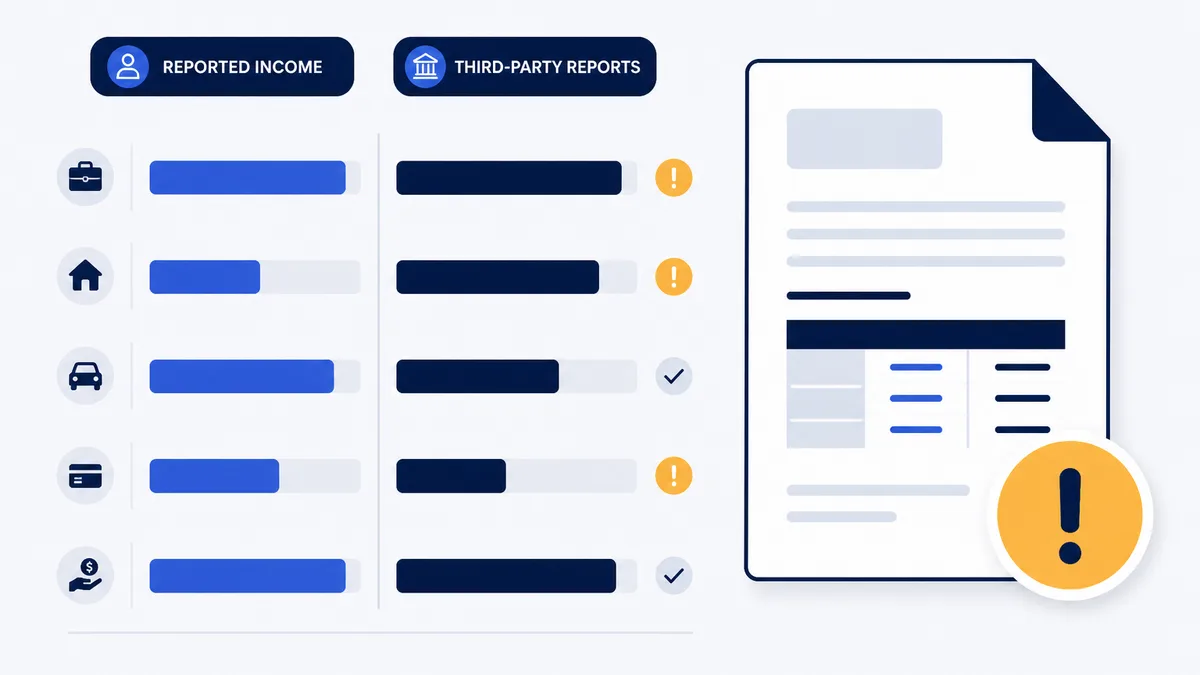
When the IRS says I underreported income, it usually means third-party forms such as W-2s or 1099s do not match the amounts on your filed return. A common vehicle is the CP2000 proposal, which shows the agency’s comparison and suggested tax change. Your job is to verify each line, then choose agree, disagree, or partial agree with documents before the reply date.
How third-party reporting feeds these notices
Employers, banks, brokers, payment apps, and other payers send information returns to the IRS. The agency’s systems compare those totals to what you reported. When a gap appears, automated underreporter programs can propose additional tax, and sometimes related penalties or interest estimates, in a structured letter.
Typical mismatch sources include:
- A 1099 you never entered on the return
- Broker proceeds reported in gross while you owed tax only on gain
- Duplicate or corrected payer forms that still show an old figure in the IRS system
- Income belonging to a spouse, dependent, or business entity listed under your TIN by mistake
- Timing differences between cash-basis reporting and payer fiscal cutoffs
None of those bullets proves intent to hide income. The notice is a proposed math conversation. Your reply supplies the missing explanation or accepts the change.
If the trigger looks like a form you never saw, read IRS notice about a 1099 I never received next. If you already know you will contest specific lines, keep how to dispute underreported income nearby while you build exhibits.
Read the CP2000 (or related proposal) like a worksheet
A CP2000 typically includes:
- The tax year under review
- A summary of proposed changes to income, credits, or tax
- A side-by-side style comparison of amounts the IRS shows versus amounts from your return
- A response form or checkbox page for agree / disagree / partial
- A reply-by date and mailing or fax instructions
- Contact details dedicated to that underreporter unit when calls are appropriate
Work line by line. Highlight every income type you recognize. Flag every line you do not recognize. Pull your own W-2s, 1099s, brokerage statements, and return copy for that year before you choose a position.
Do not skim only the total tax increase. A single wrong payer line can inflate the whole proposal. Fixing that line in a disagreement package can shrink or eliminate the proposed balance.
Three positions: agree, disagree, or partial
Agree
Choose agree when the IRS lines match your records and you accept the tax effect. Pay the amount shown if you can, or follow payment options the notice or IRS account tools describe. Agreement closes the underreporter conversation on those terms. Interest may still apply based on dates and rules.
Disagree
Choose disagree when one or more proposed lines are wrong or incomplete. Common disagreement themes:
- The income was already reported on another line or schedule
- The gross proceeds are not taxable in full (basis, return of capital, nontaxable transfers)
- The payer TIN or name is wrong and the income is not yours
- A corrected 1099 exists that the IRS table has not reflected
- Filing status or credit interactions are misapplied in the proposal
Attach clear copies, not a vague essay. Label exhibits to match the notice’s line references. A structured reply modeled on ClearNotice’s sample response patterns can keep the package readable for the examiner who opens it.
Partial agree
Partial agree fits when some lines are correct and others are not. Accept the accurate pieces, dispute the rest with documents, and recompute only what remains if the notice’s worksheet asks you to. This path avoids fighting numbers you know are right while still protecting the lines that are wrong.
The reply-by date on an underreporter proposal matters. If you let that date pass without a response, the IRS may assess tax using the proposed figures. Even when you plan to agree, send the signed response or payment path on time so the file does not default into assessment while you wait for a quieter weekend.
Evidence, mistakes to avoid, and getting help
Building a clean evidence folder
Create a single packet:
- Cover note with your name, TIN last four, tax year, and notice number
- Completed response page from the notice
- Index of exhibits (Exhibit A, B, C…)
- Copies of information returns and account statements
- Relevant return schedules that already showed the income
- Corrected payer forms if you obtained them
- Proof of any payments already made toward the year
Use the same year on every page. Black out unrelated account numbers if you wish, but leave enough detail for matching. Mail with tracking or use the fax/upload channel the notice allows, then store confirmation.
What not to do in the first rush
- Ignore the letter because the dollar amount feels “too small to be real”
- Call a general IRS line without the notice in hand and without noting the unit number
- File a random amended return that conflicts with a careful CP2000 reply unless you understand how the two interact; see amend after a CP2000 when amendment is truly on the table
- Send original irreplaceable documents when copies suffice
- Accept a cold caller’s demand for immediate payment by unusual methods
Speed matters for the calendar. Panic does not improve the math.
Penalties, interest, and tone
Proposals may list accuracy-related or other penalty concepts depending on the facts. Interest estimates can appear as well. Your disagreement package should focus on income correctness first. Penalty relief arguments, when relevant, need their own facts (reasonable cause standards are specific). A licensed professional can help when penalty dollars dominate the page or when multi-year patterns appear.
Keep your written tone factual. Accusing the IRS of bad faith rarely helps. Showing that payer report A was corrected on date B with form C does help.
When to hire a licensed professional
Bring in a CPA, enrolled agent, or tax attorney if:
- Brokerage or crypto proceeds create basis puzzles you cannot document quickly
- Multiple payers and states tangle the same year
- The proposed increase is large relative to your cash reserves
- You suspect identity theft mixed into the underreporter table
- Prior underreporter cases remain open for other years
Professionals can request wage and income transcripts, spot duplicate 1099s, and draft a disagreement that tracks IRS worksheet logic. Educational guides explain options; they do not replace advice tailored to your transcripts.
When the IRS says I underreported income, slow the moment down into tasks: identify whether you hold a CP2000 or related proposal, verify each third-party line, pick agree / disagree / partial, and ship a documented reply before the printed date. Use sample response structure for clarity, and escalate to a licensed pro when the facts outgrow a kitchen-table worksheet. The notice starts a comparison. Your organized answer finishes it.
Quick follow-ups
Is an underreporter notice the same as a criminal charge?
No. These notices propose tax changes based on information returns. They are civil account mail, not a prosecution by themselves.
What are my three basic positions on a CP2000?
You can agree with the proposal, disagree with documents, or partially agree when some lines are right and others are wrong.
Should I amend my return the same day I open the notice?
Not automatically. Read the notice instructions first. Many cases are handled through the underreporter reply process rather than a rushed separate amendment.
Upload a photo for a free plain-English explanation of your amounts, deadline, and options.

Founder of ClearNotice · Updated August 2026 · About