
How much is the IRS failure to file penalty?
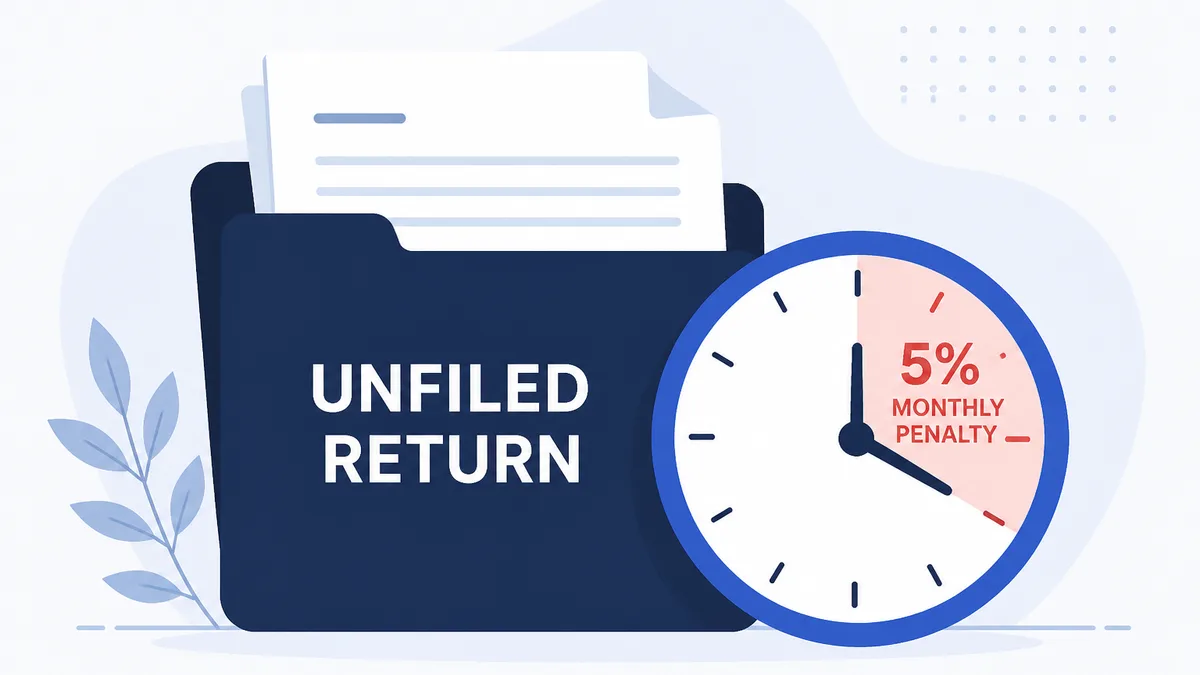
The IRS failure to file penalty is one of the most expensive ordinary charges on a late individual return. In typical cases it is about 5% of the unpaid tax for each month (or part of a month) the return is late, and it usually stops growing once it reaches 25% of that unpaid tax. Filing on time, even when you cannot pay yet, is often the single cheapest move you can make.
What the rate usually means in plain English
People hear “penalties” and picture one vague fee. The IRS failure to file penalty is more specific. It is aimed at the missing return, not only at the unpaid bill.
For many individual income tax returns filed late with tax still unpaid:
- The charge is generally 5% of the unpaid tax for each full or partial month the return is late
- Growth commonly stops at 25% of that unpaid tax
- A month counts even if you are only a few days late into that month
That math is why five late months can feel sudden. At 5% per month, the common ceiling is often reached after five months of lateness on the unpaid tax figure the penalty uses.
Exact dollars still depend on your return, your payment dates, and whether other penalties apply for the same period. Use published IRS rules and your notices as the source of truth for your account. ClearNotice’s penalty calculator helps you estimate how failure-to-file figures can stack beside failure-to-pay and interest so the cost of waiting is visible.
Filing without paying is still a win
This is the point many people miss when cash is tight.
Not filing because you cannot pay keeps the late-filing meter running. That meter is much steeper than the usual late-payment meter. Filing on time (or as soon as you can) and then dealing with the balance is usually cheaper. Once a valid return is filed, the failure-to-file growth on that return generally stops climbing month by month. Any unpaid tax may still face failure-to-pay charges and interest under IRS rules, but those ordinary pay-side charges are far smaller per month than the late-filing rate described above.Think of it this way:
- File so the expensive meter stops
- Confirm the balance on your account
- Pay in full if you can, or set up a plan if you cannot
A balance due after a filed return is a payment problem. An unfiled return is a filing problem and a payment problem at once.
How this shows up in the mail
You might learn about a missing return through a letter such as CP59, which asks you to file or explain. Other balance letters can include late-filing amounts after the IRS has assessed tax. Read the notice code, the tax year, and the breakdown of tax, penalty, and interest.
If the IRS later prepares a substitute return from third-party data, that filing often lacks the deductions and credits you would claim yourself. Filing your own return, even late, is usually the better path to a correct liability. Silence does not freeze the situation.
How unpaid tax is measured for the penalty
The percentage is generally tied to the tax that remains unpaid when the return is late, not to every line on the form. Withholding and timely payments can reduce the unpaid tax figure the penalty uses. That is another reason accurate withholding and estimated payments matter: they can shrink both the bill and the late-filing add-on.
If you already paid everything through withholding and are only late filing a refund return, the percentage failure-to-file charge often does not land the same way as it does on a balance-due year. Still, late filing can create other problems, including refund timing and, in extreme delay, losing a refund claim under statute rules. Do not treat “I am getting money back” as a reason to ignore filing deadlines forever.
When both late filing and late payment apply
Many people are late on both the return and the payment. IRS rules coordinate those penalties for the same months so you are not simply adding the full late-file rate on top of the full late-pay rate without adjustment. In practice, the late-filing side remains the dominant monthly cost while the return is still missing.
Once the return is filed, the late-filing monthly growth stops. Late-payment charges and interest can continue on unpaid amounts under their own rules. That sequence is why “file first” is repeated so often by tax professionals.
Minimum charges and longer delays
Besides the percentage rules, the IRS also describes a minimum failure-to-file amount in situations where a return is more than 60 days late and the percentage math would otherwise produce a smaller figure (subject to not exceeding the unpaid tax). Treat that as a floor concept for some late cases, not as a separate monthly add-on you invent on your own. Your notice or transcript is the place to see what was actually assessed.
Very long delays raise more than penalty math. Collection letters can escalate. Refund claim deadlines can expire. Substitute returns can appear. The monthly percentage is only one part of the cost of waiting.
Relief is possible, not automatic
Penalty removal is a separate request, not a default. Two common doors people discuss are:
- First-time penalty abatement, when prior compliance history qualifies for an administrative waiver on certain failure-to-file or failure-to-pay amounts for one tax period
- Reasonable cause, when facts such as serious illness, disaster, or unavailable records show you exercised ordinary business care and still could not file on time
Neither door is a promise. Interest rules are stricter than penalty rules. A licensed professional can help when the dollars are large or the facts are tangled.
Do not assume a friendly phone call erases late-filing charges by itself. Relief usually needs a clear request and supporting facts. Missing a notice deadline while you wait for “someone to fix it” can make collection harder, not easier.
Practical checklist if you are already late
- Gather W-2s, 1099s, and last year’s return
- File the missing year as soon as the numbers are reliable
- Pay what you can with the return
- If a balance remains, use IRS payment tools rather than hoping letters stop
- Compare any assessed penalties with the penalty calculator so you understand the pieces
- If a CP59 or similar missing-return letter arrived, follow its file-or-explain path
Putting the rate in perspective
The IRS failure to file penalty exists to push returns in on time. At roughly 5% of unpaid tax per month, up to a common 25% ceiling, it grows much faster than ordinary failure-to-pay charges. Filing even when you cannot pay is usually the move that protects you. After the return is in, you can tackle the balance with payment plans, hardship options, or full payment when cash arrives. For dollar estimates on your facts, pair your notices with the penalty calculator and, when needed, advice from an enrolled agent, CPA, or tax attorney.
Quick follow-ups
Does the failure to file penalty apply if I am due a refund?
The percentage penalty is based on unpaid tax shown on a late return. If you are owed a refund and owe no tax for that year, that percentage charge generally does not apply the same way, though other late-filing risks can still matter.
If I cannot pay, should I still file?
Yes, in almost every ordinary case. Filing stops the steep late-filing meter from growing. You can then arrange payment for any balance under IRS payment tools.
Is five percent charged every month forever?
No. The common individual rate is generally 5% of the unpaid tax for each month or part of a month the return is late, and it usually caps at 25% of that unpaid tax.
Upload a photo for a free plain-English explanation of your amounts, deadline, and options.

Founder of ClearNotice · Updated August 2026 · About