
What is the IRS 60 day review of my refund?
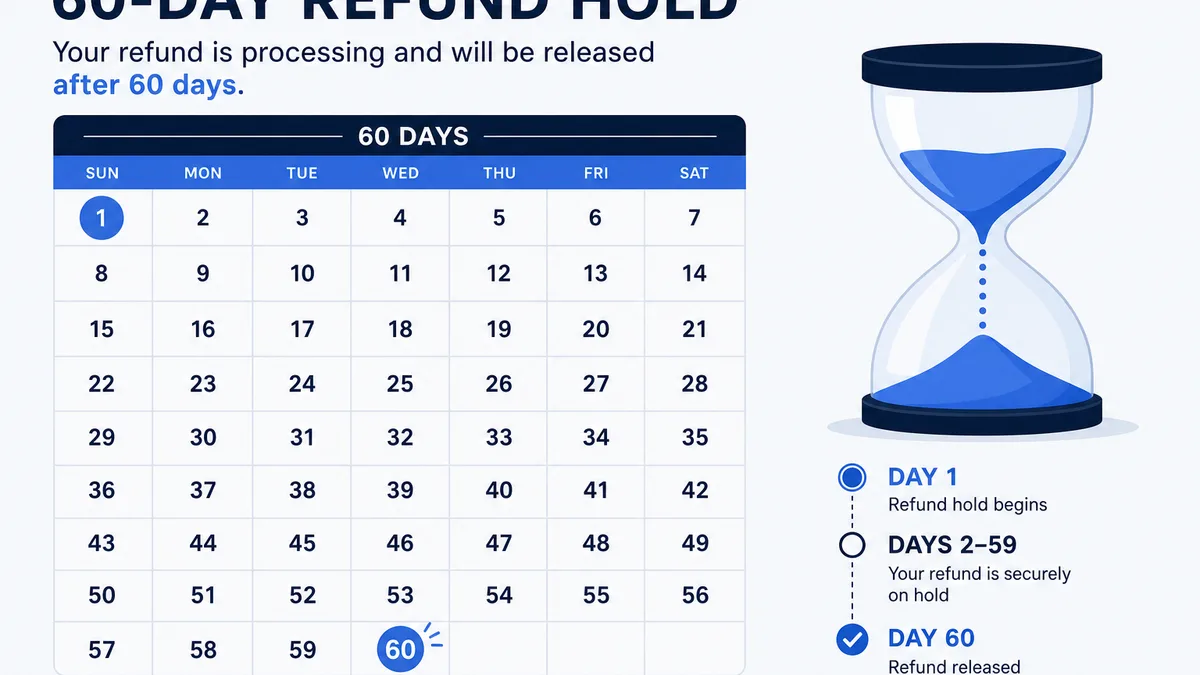
An IRS 60 day review is a waiting period the agency often cites while it checks parts of your return before releasing a refund. The clock usually starts from the date on the notice, not from the day you filed. Many people receive CP05, which asks you to wait while income, withholding, or credits are verified. The review is a screening step, not a final bill. Match your letter’s instructions before you call, mail papers, or change your return.
What the 60 day window actually means
When people ask about an IRS 60 day review, they usually received a letter that pauses the refund and mentions a period of about 60 days before status calls are useful. That number is a planning marker on the notice, not a promise that money arrives on day sixty-one.
The IRS uses automated filters to compare your return to wage reports, withholding records, and credit databases. When something does not line up, the refund may be held while staff or systems finish checks. The hold protects the Treasury from paying refunds that later need correction. It feels personal, but selection is often rule-based.
Common themes during this window:
- W-2 and 1099 income compared to what you reported
- Federal tax withheld versus employer filings
- Refundable credits such as EITC, Additional Child Tax Credit, or American Opportunity Credit
- Schedule C or gig income that differs from third-party forms
- Dependent and filing-status combinations that fail validation
None of those items means you did something wrong by default. They mean the return needs a closer look before payment goes out.
How CP05 fits the 60 day story
A CP05 is one of the most common letters tied to this wait. It states that your refund is delayed while the IRS reviews selected items. The notice often tells filers who submitted the return to take no action at first and to wait about 60 days from the notice date before calling about refund status.
If the code on your mail is unclear, use notice lookup to confirm you are reading a CP05 and not a document request or identity letter. Different codes follow different scripts.
CP05 is not a balance due notice. It does not, by itself, say you owe more tax. It is also not the same as a completed field audit. Think of it as a temporary stop on the refund pipeline until verification ends or a follow-up letter arrives.
What the IRS verifies (in plain terms)
During an IRS 60 day review, the agency is asking whether the refund you claimed matches reliable records. Verification can happen without contacting you. Internal matching may be enough when figures align after a closer look.
Examples of checks:
- Wages: Does box 1 on your W-2 match the income lines you used?
- Withholding: Does box 2 match the credit you claimed for federal tax paid?
- Information returns: Do 1099-NEC, 1099-INT, or brokerage forms support the amounts on schedules?
- Credits: Do dependent Social Security numbers, relationship rules, and income limits fit program rules?
- Filing status: Does household data match prior-year patterns or spouse filings when applicable?
If everything reconciles, the refund may release without another letter. If not, you may get CP05A or a similar notice asking for proof. That branch is covered in our guide on when the IRS wants proof of income.
What to send, and when
When the letter says wait
If CP05 (or a similar hold letter) tells you not to call yet and not to mail documents, the productive move is usually patience plus housekeeping:
- Keep the notice and write down its date
- Confirm your mailing address is current with the IRS
- Check official status tools on a sensible schedule, not every hour
- Watch the mail for a second letter with a document list or a changed amount
Sending a binder of bank statements “just in case” rarely speeds a wait-only CP05. It can create extra work for processors who must match unsolicited paper to your case.
When a follow-up asks for papers
A later notice may request specific items: W-2 copies, pay stubs, school records for credits, or proof of residency for dependents. Send clear copies of exactly what is listed, keep your own set, and use the mailing address or fax on that second letter. Include the notice reference number if the form asks for it.
Organize papers in the order the checklist names them. Label copies lightly if it helps a human reviewer. Do not send originals unless the notice demands them.
What not to do during the 60 day review
These moves often add delay or confusion:
- Calling every day when the notice says to wait until the 60 day mark
- Filing a second return for the same year without professional advice
- Paying someone who promises instant refund release by phone
- Ignoring a document deadline on a letter that arrives after CP05
- Treating a CP05 wait as proof of identity fraud without reading the code
If you did not file the return being reviewed, that is a different emergency. Follow identity-theft instructions on the notice rather than sitting through a routine wait.
If a follow-up letter gives a date to provide documents and that date passes with no reply, the IRS may adjust your refund or continue the hold under its review rules. A first letter that only says wait does not cancel later deadlines on a second envelope.
Timelines beyond day sixty
Some IRS 60 day review cases finish before the stated window. Others stretch longer during peak season, after a document request, or when transcripts must be pulled from employers. Where’s My Refund and your IRS online account can show messages, but those tools update on their own schedule and may lag the mail.
If severe hardship makes the delay a crisis for housing, utilities, or essential medical costs, the Taxpayer Advocate Service reviews hardship cases as an independent office. That path is for genuine hardship, not ordinary frustration with the clock.
How this differs from a smaller deposit
A review hold delays payment. An offset or math correction changes the amount after processing moves forward. If money arrives but looks short, the cause may be unrelated to the 60 day pause. Our article on refund less than expected walks through offsets and correction notices separately from CP05 waits.
For a broader view of review letters and whether they are “bad news,” see IRS reviewing my refund.
When professional help fits
Simple CP05 waits with no document ask suit many filers who read the notice and monitor mail. Bring in an enrolled agent, CPA, or tax attorney when business income is complex, multiple credits overlap, a second letter lists items you cannot locate, or identity and review issues appear on the same account.
Bottom line
An IRS 60 day review is a structured waiting period while the agency verifies return details before sending your refund. Read CP05, confirm the code with notice lookup, wait when the letter says wait, respond promptly when documents are requested, and avoid unforced errors that extend the hold. The window is stressful because cash flow matters, but it is often a standard checkpoint rather than a final finding against you.
Quick follow-ups
Does the IRS 60 day review always take exactly 60 days?
No. Sixty days is a common first checkpoint on notices like CP05, not a guaranteed finish line. Some cases close sooner; others need more time or a second letter.
Should I send tax papers during the 60 day wait if nothing was requested?
Usually not. When the letter says to wait and take no action, extra mail can slow matching. Send copies only when a later notice lists specific items.
Is the 60 day review the same as an EITC exam?
Not always. A CP05-style hold can touch credits, but dedicated EITC exam letters use different codes and document lists. Read the notice code on your envelope.
Upload a photo for a free plain-English explanation of your amounts, deadline, and options.

Founder of ClearNotice · Updated August 2026 · About