
Can the IRS take money from my bank account?
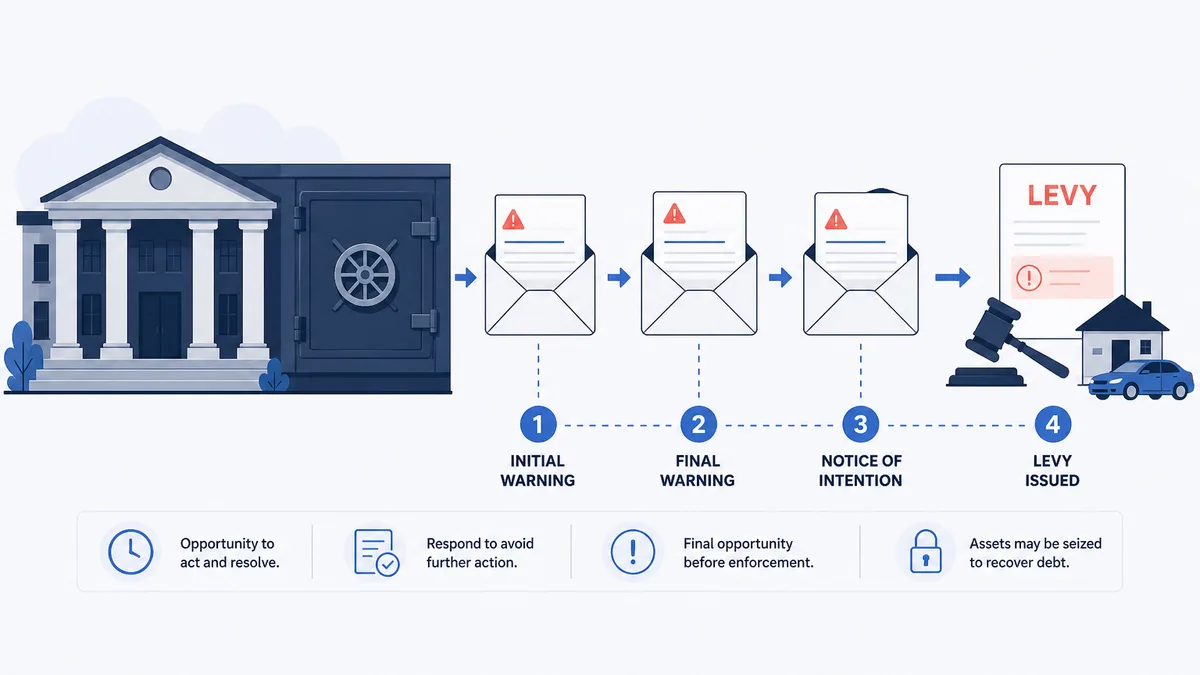
Yes: can the IRS take money from my bank account is a real collection question, not a rumor. After an assessed balance goes unpaid and the agency issues required levy warnings, it may serve a bank levy. The process is usually a sequence of notices, not a surprise on day one. Acting before the final warning stage keeps more options open.
Bank levy sits late in the collection sequence
A bank levy is one way the IRS collects assessed tax that remains unpaid. It is not the first letter most people receive. Ordinary balance reminders and stronger intent-to-levy mailings typically appear first. For a wider view of silence and escalation, read What happens if you ignore an IRS notice.
The agency must generally provide statutory notice of intent to levy and respect waiting periods before certain levy actions. Those rules exist so taxpayers have a chance to pay, dispute, or arrange terms. They are not a guarantee that every person reads every letter in time, especially after a move.
Exact codes and envelopes vary by case, yet the logic often looks like this:
- Balance due bills stating tax, penalty, and interest, with a pay-by date
- Reminder or past-due notices restating that the account is unpaid
- Stronger collection warnings, including notices that discuss intent to levy
- Final levy-warning mailings that explain hearing rights in many cases, sometimes sent with proof-of-mailing methods
- Levy service on a bank (or other property) after prerequisites are met
Two notices that often appear in the warning stretch are CP504 and LT11. Reading those pages helps you recognize where you sit in the sequence. Not every unpaid account reaches a bank levy on a fixed calendar. Staffing, balance size, and whether any payment or reply posts can change pace. The safe assumption is that continued silence after levy warnings raises the chance of action.
What a bank does when a levy arrives
When a levy is served, the bank typically freezes funds up to the levy amount that are in the account at the relevant processing time, then remits according to IRS and banking procedures after any required hold period. Deposits that arrive later may or may not be reached depending on how the levy is written and processed.
Joint accounts raise special questions about whose funds are available. Certain benefit deposits and exempt amounts can also change outcomes. Those edge cases are fact-specific and often need a CPA, enrolled agent, or tax attorney rather than informal advice from a friend.
A levy can disrupt rent drafts, automatic loan payments, or a small-business owner’s personal operating cushion. That disruption is why upstream contact matters more than hoping the freeze is temporary theater. Calling the bank helps you understand timing; the bank still follows IRS instructions and usually cannot release funds on a customer request alone.
People sometimes move money the day they fear a levy. Sudden transfers can create other problems, including questions about fraudulent conveyance in extreme cases, and they do not cure the assessed tax. The more durable fix is resolving the IRS account: payment, an installment agreement, a valid hearing request, or another formal collection alternative that fits the facts.
If your only operating account is the one at risk, ask collection whether a payment plan or hardship review can proceed quickly enough to avoid service, or whether a levy already issued can be released once conditions are met. Get names, dates, and next steps in writing when possible. Verbal optimism without a confirmation letter is a weak plan for rent week.
Also confirm whether state tax agencies have separate collection activity. A federal bank levy and a state levy are different tools. Sorting which letter came from which agency prevents you from calling the wrong office while a deadline on the correct notice keeps moving.
Upstream steps, release, and practical takeaways
Before a levy is issued, useful moves include paying the balance in full when cash exists, requesting an installment agreement you can keep, asking about currently not collectible status when essentials would be blocked (see I owe the IRS and can't pay), correcting a wrong address so warnings actually reach you, and responding to hearing rights by the deadline printed on final levy-warning mailings when those rights apply.
If wages are also at risk, compare that path in Can the IRS garnish wages. Bank and wage levies are related tools with different mechanics. Solving the tax account early can reduce exposure to both.
If you already hold a final levy warning or a CP504-style letter with a near date, treat that date as urgent. Calling after money has left the bank is harder than arranging payment or a hearing request while funds are still under your control. Do not wait for a second reminder once levy language appears.
Levy release can become available when the liability is paid, when an acceptable agreement is in place under IRS conditions, when certain hardship standards are met, or when the levy was improper. Document every call, keep notice copies, and consider licensed help if the levy threatens housing, medicine, or business continuity. Identity theft, wrong-person levies, and disputes about whether required notices were sent are fact-heavy. Those situations are poor DIY territory when large sums moved.
Build a simple folder now, even if no levy has hit: copies of every balance and warning notice, payment confirmations, bank statements for the weeks around any freeze, and notes from IRS calls. That packet speeds conversations with collection and with any licensed professional you hire later.
So can the IRS take money from my bank account? Yes, after assessment and the required warning sequence in ordinary collection cases. Track where you are among balance bills, CP504, and LT11-type final warnings, then pay, arrange terms, or assert hearing rights before levy service. Early structure beats emergency recovery after the bank freeze hits. If money already moved, ask collection what conditions unlock a release, and keep your own timeline notes so you are not relying on memory during a stressful week.
Quick follow-ups
Does the IRS empty the account without any letter first?
Required collection notices and waiting periods normally come first. Skipping mail or ignoring earlier bills is how many people feel blindsided when a levy finally posts.
Will the bank always take every dollar?
A levy can reach funds available when the bank processes it, subject to legal limits and any amounts the bank must hold. Exact results depend on timing and account activity.
Can a payment plan stop a bank levy that already started?
Often you must resolve the levy and satisfy IRS conditions for release. Setting up an agreement earlier is easier than unwinding a levy already in motion.
Upload a photo for a free plain-English explanation of your amounts, deadline, and options.

Founder of ClearNotice · Updated August 2026 · About