Signing for a certified IRS letter is designed to get your attention, and the CP504's language, "intent to levy," "seize your property or rights to property", finishes the job. Take a breath before you panic-pay or panic-hide: the CP504 occupies a very specific slot in the collection sequence. It's the fourth letter, after the CP14 bill and two reminders, and while its warnings are real, its immediate power is narrow. What makes it genuinely important is what it announces: the next letter opens levy authority over your paycheck and bank account. This is the stage where acting is still simple, and where the difference between acting and waiting becomes measured in real assets.
What is a CP504 notice?
A CP504 is the IRS's "Notice of Intent to Levy", a demand for immediate payment of an unpaid balance, required by Internal Revenue Code section 6331(d)before the IRS levies certain property. It's sent by certified mail because the law requires proof it was sent to your last known address, and it follows the unansweredCP501 and CP503 reminders.
Here's the part the alarming language obscures: on the strength of a CP504 alone, the IRS's levy power reaches your state tax refund, and that's essentially it. Wages, bank accounts, Social Security benefits, vehicles, real estate: all of those require one more letter (an LT11 or Letter 1058), which comes with a 30-day window and formal hearing rights. The CP504 is the IRS clearing its legal runway. It's a threat with one tooth today, and a promise of many more if the account stays unresolved.
Why you received it
A CP504 means the automated collection stream has cycled through its polite phase without the account resolving. Concretely, one of these is true:
- Three letters went unanswered. The CP14, CP501 and CP503 came and went, forwarded late, set aside, or underestimated, and the system moved to the certified stage on schedule.
- Your resolution never took effect.A payment that didn't post, a plan application that didn't complete, a check applied to the wrong year. The escalation reads the account, not your intentions.
- A payment plan defaulted. If an installment agreement lapsed, often after aCP523 default notice, the account rejoins the sequence, sometimes directly at this stage.
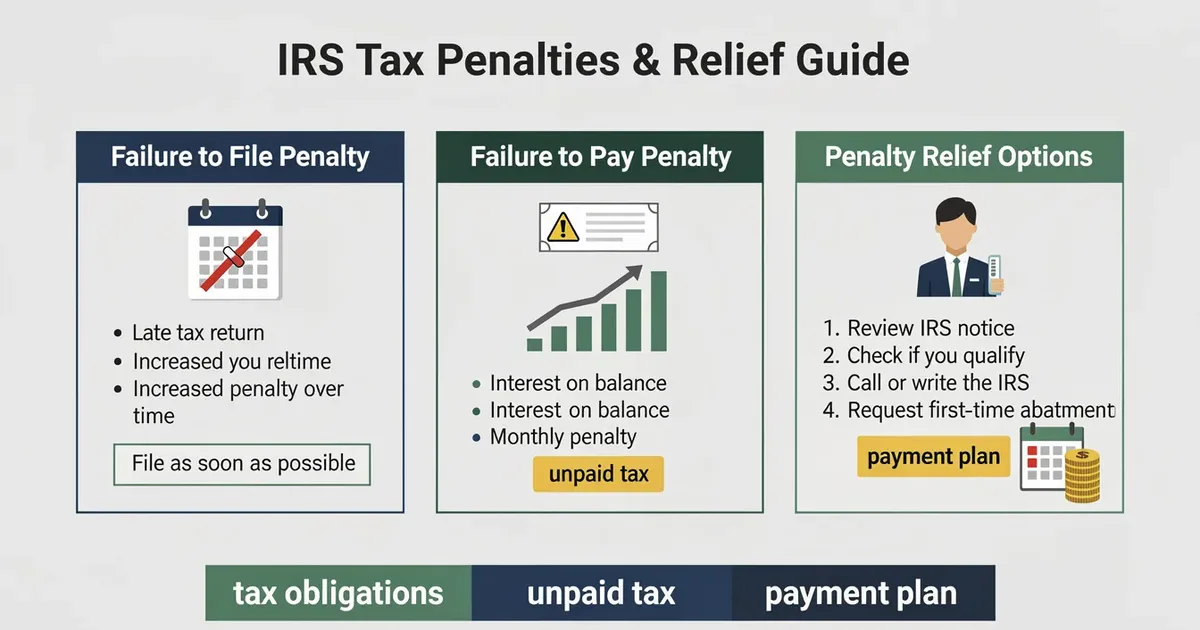
- The balance grew past what you remember.Months of failure-to-pay penalty (0.5% per month) and daily-compounding interest can make the certified letter's number substantially larger than the bill you originally ignored.
How to read your CP504
THE TREASURY
Deeper in the notice you'll find three warnings worth reading precisely. Thelevy paragraphannounces the state refund seizure and says the IRS will "search for other assets", which, read with the law, means after the required final notice issues. The lien paragraph warns a Notice of Federal Tax Lien may be filed: a public record that attaches to your property and makes selling or borrowing against it harder. And the passport paragraph notes that seriously delinquent tax debt (a high, annually indexed threshold) can be certified to the State Department, which may deny a passport application or renewal.
Want this done for your actual notice?
Upload your CP504 and get a free plain-English breakdown of what's actually at risk now, what isn't yet, and your fastest path out of the sequence.
CP504 vs. LT11: the difference that matters
Confusing these two letters is the single most consequential mistake at this stage, in both directions.
The CP504is a section 6331(d) notice: a formal demand that authorizes the state refund levy and sets the legal table. It carries no Collection Due Process rights because none are yet needed, the IRS isn't yet allowed to touch your core assets.The LT11 (or Letter 1058) is the section 6330 final notice: it opens a strict 30-day window to request a Collection Due Process hearing with Form 12153, and once that window closes, the IRS can levy wages, bank accounts, Social Security benefits and more, without further warning.
Read one way: don't let the CP504's drama push you into a bad decision, because your paycheck is not at risk this week. Read the other way: don't let its limits lull you, because the letter that removes those limits is the next one printed. Both misreadings are expensive; the correct response to either is the same, resolve the account now, while no hearing, no deadline litigation and no seized wages are involved.
Your deadline, and what happens next
Pay or make arrangements by the due date printed on the notice. After it, three things can happen in whatever order the system reaches them:
- Your state tax refund is taken. If your state owes you money, the IRS can intercept it and apply it to the debt, no further notice required.
- A federal tax lien is filed. Public, searchable, and attached to everything you own until the debt is resolved and the lien released.
- The final notice issues. An LT11 from the automated system, or a Letter 1058 if a revenue officer has your case, starting the 30-day countdown to full levy authority.
There's no fixed number of weeks between the CP504 and the final notice; it can be quick. Treat the CP504's due date as the operative deadline, not the beginning of another quiet stretch.
Your options at the CP504 stage
How to respond, step by step
Verify the balance, even now
Certified mail doesn't make the number correct. Check your IRS online account: does the base tax match your records, did every payment post, is this the tax year you think it is?
Decide this week, not this month
The CP504 stage rewards speed: a resolution before the lien filing and the final notice preserves options that disappear afterward. Pick pay, plan, dispute or hardship, and commit.
Set up your resolution electronically
Online payment or the online payment agreement application takes effect immediately and leaves confirmation numbers, which matter more at this stage than at any before it.
Request penalty abatement alongside
Months of failure-to-pay penalty are baked into your balance. A clean three-year history (first-time abatement) or reasonable cause can remove them, ask in the same call or letter.
If you dispute, put it in writing with proof
Copies of payment confirmations, transcripts, prior notices. If a levy or lien action seems imminent and wrong, ask about a Collection Appeals Program review, which is designed for exactly this window.
Confirm the escalation stopped
Watch your online account until the payment or agreement shows. If an LT11 crosses your response in the mail, contact the IRS immediately, the 30-day CDP clock runs from its date regardless.
Protecting what the CP504 puts in play
Three assets are specifically exposed at this stage, and each has a concrete protection:
Your state refund.If you're owed a state refund and the debt is valid, assume it's gone unless you resolve first, the intercept is automatic once processed. If the underlying debt is wrong, dispute now: recovering a seized refund after the fact is far slower than preventing the levy.
Your property record.The federal tax lien is the CP504-stage consequence people regret most, because it outlasts the moment, and it can complicate a home sale or refinance long after you've started paying. Entering an installment agreement before a lien is filed is the practical prevention; for some direct-debit agreements on smaller balances, the IRS may even withdraw a filed lien after a run of on-time payments. Ask when you set up the plan.
Your passport.Certification for seriously delinquent tax debt generally doesn't apply once you're in a qualifying payment arrangement, another way the plan, not the lump sum you don't have, is the protective move.
Common mistakes at the CP504 stage
- Panic-paying with money needed for rent or payroll, a sustainable installment agreement protects you just as well as a ruinous lump sum.
- Dismissing it because "they only take the state refund", the LT11 that follows has no such limit, and the lien can be filed meanwhile.
- Ignoring it because you don't expect a state refund, the refund intercept is the smallest consequence; the lien, the passport certification and the final notice are the real stakes.
- Waiting for the LT11 to "deal with it all at once", after the LT11, the same resolution happens under a 30-day legal clock, possibly with a lien already filed.
- Handling a complex situation alone, if the balance is large, spans years, or involves a business, a CPA, enrolled agent or tax attorney is worth engaging now, while the calmer options are still open.
CP504, Frequently asked questions
Can the IRS take my bank account or wages after a CP504?
Is a CP504 the final notice before levy?
What can the IRS actually seize with a CP504?
Does a CP504 affect my passport?
Can I appeal a CP504?
Can I still get a payment plan after a CP504?
Related notices
Browse the complete directory of IRS notices orlook up any notice number.