
CP 30 Notice: Underpayment of Estimated Tax Penalties Explained
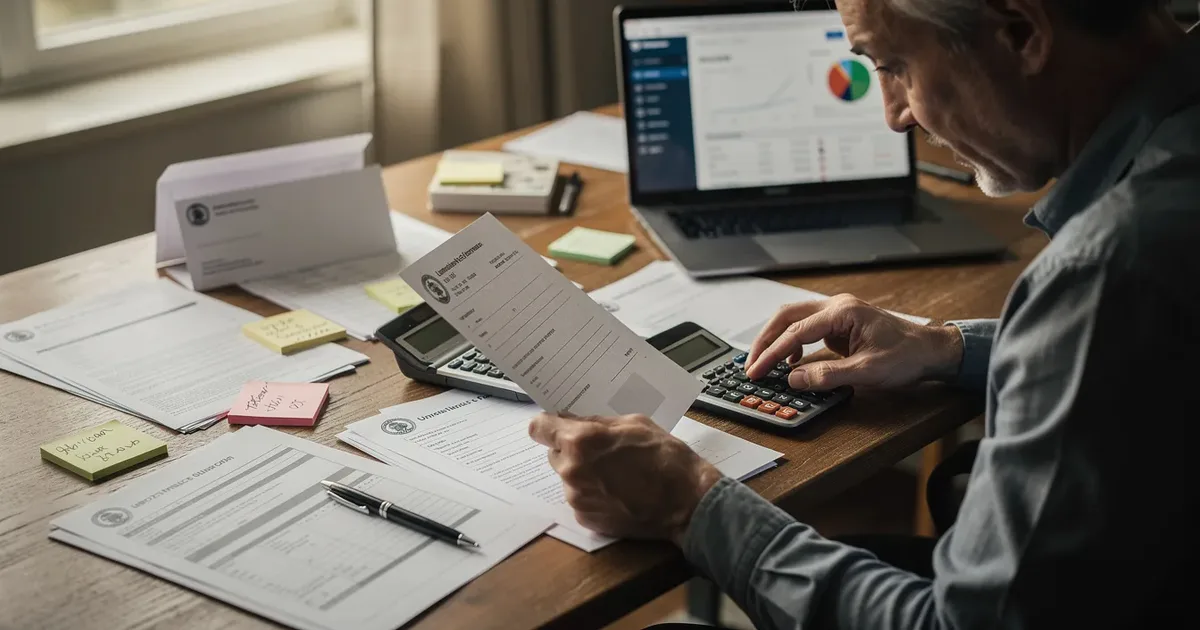
If you opened your mail and found an IRS letter labeled CP30, you're probably wondering what went wrong. A CP30 notice is an IRS letter that says you owe a penalty for underpaying estimated taxes during the year, which usually means you didn’t prepay enough through withholding or estimated tax payments. If you’re a U.S. taxpayer trying to make sense of a confusing IRS notice without a tax or legal background, this guide explains why you got it, how to check the IRS’s calculation, what to do if you agree or disagree, and how to avoid the same penalty in the future.
Because a CP30 can reduce your refund or add more interest and penalties if you ignore it, understanding the notice early helps you protect your money and respond correctly.
Quick answer: Why did I get a CP30 notice?
While CP 30 refers to several different things depending on the field of application-in industrial contexts, CP 30 is a compact, modular concrete mixing plant yielding around 30 cubic meters per hour, and CP-30LO is a flexible vapor retarder coating used in mechanical insulation applications-in the tax world, a cp30 notice means something very specific. A CP30 notice indicates a penalty for underpayment of taxes. The IRS determined that you didn't pay enough tax during the tax year through withholding or estimated tax payments, and it has charged a penalty as a result.
CP30 notices may reduce your anticipated tax refund amount-sometimes all the way to zero. This often comes as an unexpected tax bill after your tax return was filed and accepted without any apparent issues. The IRS may send a CP30 notice weeks after your return is accepted, so the timing alone can be disorienting.
ClearNotice can help you decode the notice by letting you upload it and see a plain-English breakdown of what the IRS is saying, key dates, and what to do next.
Top 3 things to know now:
What CP30 is: A penalty notice for not prepaying enough tax throughout the year.
Do you need to respond? If you agree, pay by the due date. If you disagree, gather your records and consider filing Form 2210.
What if you ignore it? Interest accrues daily, and the IRS may apply future refund offsets or send collection notices.
What is an IRS CP30 notice and what does it mean?
A CP30 notice is an IRS letter about penalties for underpayment of estimated tax tied to a specific tax year-for example, a 2025 tax year notice arriving in mid-2026. It is a penalty notice, not an audit. The IRS sends CP30 notices for late estimated tax payments after processing your return and comparing what you owed against what was prepaid.
The U.S. operates on a "pay as you go" income tax system. You're expected to pre pay taxes as you receive income throughout the year, either through withholding from your paycheck, pension, or wages, or by making quarterly estimated payments. When taxes withheld plus estimated payments fall short of what's required, the IRS charged a penalty under IRC § 6654.
Common triggers include self-employment income with no estimated tax, large investment or gig income, reduced withholding after changing jobs, or a one-time event like a stock sale. The notice typically shows the tax year involved, the penalty amount, any reduction to your expected refund, and an updated balance. This is generated by IRS automated systems and does not reflect suspicion of fraud.
Why you received a CP30: common causes and how to verify
A CP30 is almost always tied to insufficient prepayment of tax via withholding or estimated tax payments, or payments that arrived too late in the year. The IRS charges penalties for late estimated tax payments based on specific thresholds.
Here are the main reasons the IRS assesses an estimated tax penalty:
You didn't prepay at least 90% of the current year's tax shown on your return.
You didn't meet a safe harbor rule-paying 100% of prior year tax (or 110% for higher income taxpayers with adjusted gross income above $150,000, or $75,000 if married filing separately).
You missed quarterly estimated tax deadlines, even if total payment was complete by April 15.
Timing matters. Even if you wrote a large check in January to cover the full balance, the IRS can still assess penalties for quarters where too little tax was paid. Income received unevenly during the year can compound this problem.
To verify, compare the CP30 figures to your filed return. Check your total tax, federal withholding on W-2s and 1099s, and any receipt records for estimated payments. If a payment was applied to the wrong tax year, or a joint return payment was misallocated after a divorce involving your spouse, the IRS figures may not match your records. ClearNotice can walk you through the notice line by line to spot these mismatches.
What to do after receiving a CP30 notice
A CP30 is common, especially for taxpayers with multiple income streams or self-employment income. In most cases, it's straightforward to address. Review your CP30 notice carefully for details-note the tax year, the penalty amount, and any balance or due date printed in the upper right corner of the letter.
If you agree with the penalty: Pay the amount owed by the due date on the notice. You can pay online through IRS Direct Pay, use your irs online account, EFTPS, or mail a check with the payment voucher included. Paying by the deadline stops further interest from accruing on your account.
If you disagree: Gather your records-bank statements, EFTPS confirmations, W-2s, 1099s-and compare them to what the IRS shows. Complete Form 2210 to annualize income for penalty reduction if your income was received unevenly during the year, using the annualized income installment method. You can file this form to determine whether the IRS overstated the penalty. Penalties may be reduced if income is unevenly received. You can also contact the IRS directly or work with a tax professional to explain the discrepancy.
You can request penalty relief under certain conditions. Reasonable cause exceptions include serious illness, natural disaster, or retirement-related disruptions. If you have a clean penalty record for the prior three years, first-time penalty abatement may apply. Generally, there is no deadline for responding to a CP30 notice, but ignoring a balance leads to interest accrual, future collection notices, and potential refund offsets.
ClearNotice can help you understand whether you likely qualify for relief and prepare to talk to an irs agent, but it does not replace a CPA, EA, or tax attorney-consult a tax pro when formal representation is needed.
How to avoid CP30 estimated tax penalties next year
Avoiding a CP30 next year comes down to making accurate, timely estimated tax payments throughout the year. The IRS requires timely estimated tax payments throughout the year, and you can avoid penalties by making timely estimated tax payments that match your actual tax liability.
Adjust your withholding. If you expect changes-marriage, a second job, a side business, or you've retired-update your Form W-4 so the right amount of tax is withheld from each paycheck. Ensuring enough tax is paid through withholding or estimated payments is the single most effective way to protect yourself.
Make quarterly estimated payments. You may need to pay estimated tax, and Form 1040-ES explains who should do so and how to calculate it. Estimated tax payments are generally due quarterly: April 15, June 15, September 15 of the current year, and January 15 of the following year. Missing these dates is what triggers most CP30 notices.
Know the safe harbor rules. For most taxpayers, paying at least 90% of the current year's tax or 100% of prior year's tax avoids the penalty. If your adjusted gross income exceeds $150,000, the threshold rises to 110%. Special rules apply to farmers and fishermen. If you owe less than $1,000 after credits and withholding at tax time, you're generally in the clear.
Run a mid-year checkup. In July, project your total income for the year, subtract what you've already paid, and determine whether you need to increase payments. This is especially critical if you receive income from freelancing, investments, or gig work where withholding doesn't cover your liability.
Taxpayers can use IRS CP notices to identify tax shortfalls and make necessary corrections. By reviewing how this year's penalty was calculated-something ClearNotice makes simple-you can better calibrate your withholding and estimated tax for next year so you never see another CP30 in your mail.
Keep reading
 Penalties & abatement
IRS Insufficient Funds Penalty: What to Do Next: IRS Guide
If your IRS payment bounced, a dishonored payment penalty may already be on your account. This guide explains how the IRS insufficient funds penalty works and what to do fast.
 Penalties & abatement
IRS Underpayment Penalties: What You Need to Know: IRS Guide
The IRS charges underpayment penalties when you don't pay enough tax throughout the year. This plain-English guide explains how the penalty is calculated and how to avoid it.
 Penalties & abatement
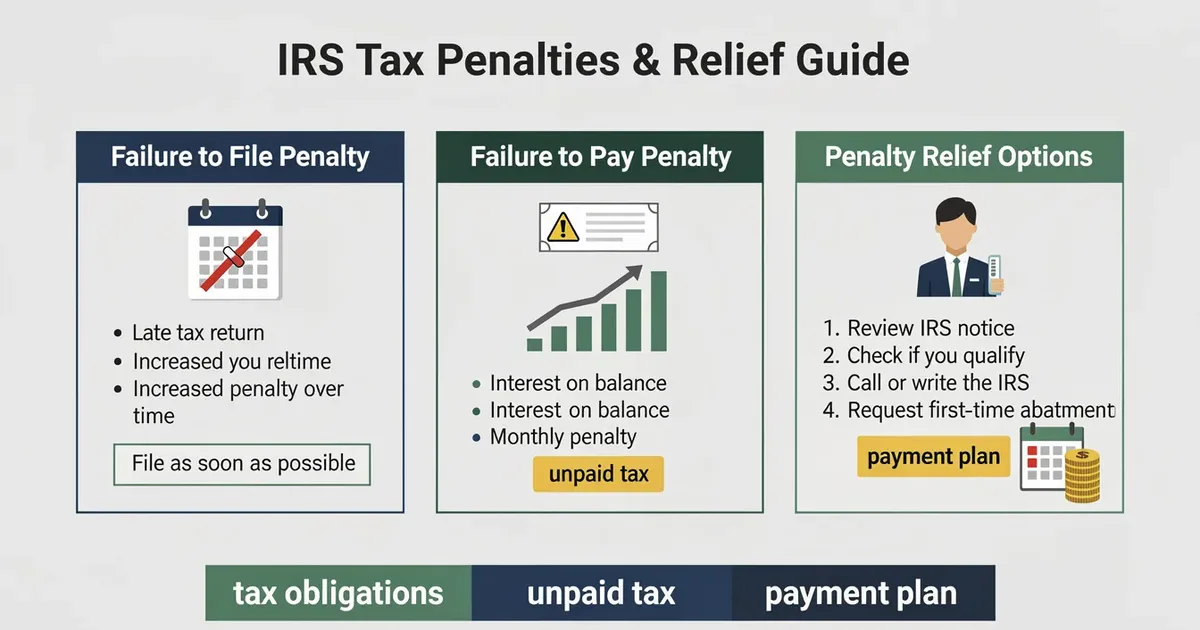
Penalties for IRS: Failure to File, Pay & Penalty Relief
Received an IRS notice about a penalty? This guide breaks down the most common IRS penalties in plain English, including how they are calculated and your options for relief.