
The IRS changed my refund. Can I disagree?
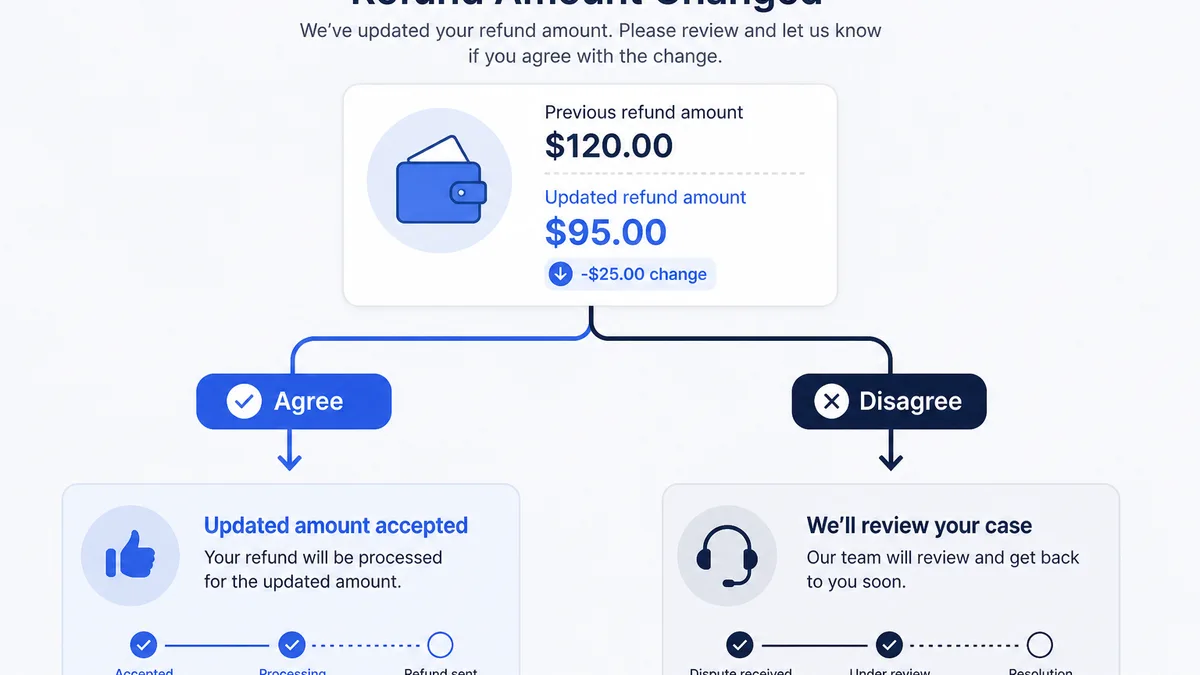
When the IRS changed my refund, the letter is often a math-error correction such as a CP12 (refund changed) or a CP11 (balance due after changes). You can usually disagree by the date on the notice, commonly about 60 days. Agreeing means no reply and waiting for the revised result. Disagreeing means contacting the IRS on time, explaining why the change is wrong, and keeping your records ready.
What “changed my refund” usually means
Automated processing compares your return to IRS records and internal math checks. When something fails those checks, the agency can adjust figures and mail an explanation. Typical themes include credit recomputation, dependent validation problems, withholding mismatches, and arithmetic inconsistencies.
Two common notice families:
- CP12: the IRS corrected the return and your refund amount changed (higher, lower, or newly created as an overpayment story)
- CP11: corrections created or changed a balance you owe rather than a simple refund story
Both are related to math-error style authority. Neither letter is automatically the same as a full audit. Both still deserve a careful read because the dispute clock is real.
Your two main choices: contest or accept
Accept the change
Accepting is often correct when:
- The notice explanation matches a mistake you can see on your copy
- A credit was clearly overstated relative to IRS records you now understand
- A dependent’s identification issue is genuine and you cannot support the original claim
- The dollar difference is small and the facts are not worth a dispute
If you accept a CP12 correction, you generally do not need to mail a reply. Update your records to the corrected figures. Watch for the revised refund on the timeline the notice describes, unless an offset applies the money elsewhere.
Contest the change
Contesting fits when your documents support the original figures, or when the IRS database story is incomplete. Examples:
- You have school records and residency proof for a dependent the system rejected
- Advance credit amounts on the notice do not match what you actually received
- Withholding on the notice ignores a corrected W-2 you can produce
- A credit limitation was applied using facts that do not match your filing status or income
Disagreement is not rudeness. It is a procedural right the notice itself describes.
The roughly 60-day dispute window
Math-error notices commonly give you a date by which to contact the IRS if you disagree. That window is often about 60 days from the notice date, but the printed date on your letter controls.
Why the window matters:
- A timely dispute can require the IRS to reverse the math-error change
- Reversal can preserve stronger appeal paths if the agency later tries to re-assert the adjustment through normal deficiency procedures
- Missing the window can leave only slower repair options
Put the response date on a calendar the day the letter arrives. “I’ll look at this after busy season” is how people lose easy rights.
How to disagree without creating a mess
- Read every changed line on the CP12 or CP11
- Compare each line to your filed return and source documents
- Call or write using the contact path on the notice before the deadline
- State clearly that you disagree and list the items you contest
- Send clear copies of only the records that support those items
- Keep mailing proof and a call log with dates and names if provided
You do not need a poetic essay. You need a accurate match between the disputed line and the exhibit.
Calling after the printed deadline and hoping for the same automatic reversal path is risky. If the date is close, prioritize contact first, then follow with documents. Do not wait for a perfect binder while the window closes.
Contest versus amend
People mix these tools:
- Timely notice disagreement: challenges the math-error change under the letter’s rules
- Amended return (Form 1040-X): changes your own filed positions for other reasons, on a different track
- Underreporter responses (for example CP2000 later): proposals based on information returns, with their own reply forms and deadlines
If the only issue is “the IRS changed my refund on a CP12 and my paperwork supports the original credit,” start with the CP12 dispute instructions. Jumping straight to an amendment can add confusion when the agency already thinks it “corrected” the year.
What happens to the money while you decide
On a refund-side correction:
- If you accept, the corrected refund is generally scheduled unless another debt offsets it
- If you disagree in time, processing follows the dispute path; timing varies
On a balance-side correction such as many CP11 cases:
- Interest and failure-to-pay concepts can apply to unpaid amounts under ordinary rules
- Paying disputed tax to stop growth is a judgment call; some people pay and still contest, others contest first when facts are strong
If you cannot pay an assessed amount that remains after review, payment plans and other options still exist. Disagreement and payment planning can run on parallel tracks when needed.
Building a mini evidence file
Useful exhibits by issue type:
- Dependents: Social Security cards, school or medical records, residency proof
- Credits: Form 8862 situations only when required, receipts, provider TINs, advance payment records
- Withholding: W-2s, 1099s, corrected payer statements
- Identity of income: statements showing an amount was not yours
Label pages simply. Highlight the figures that match the contested notice lines. Flooding the IRS with unrelated bank history slows review.
When to get help
Licensed help is useful when several credits move at once, when a dispute denial arrives, when mixed community-property or injured-spouse facts appear, or when a CP11 balance is large. An enrolled agent, CPA, or tax attorney can also tell you when acceptance is the rational choice so you do not burn the window on a weak fight.
Bottom line
The IRS changed my refund is often a math-error letter such as CP12 or a related CP11 balance change. You can usually disagree by the notice date, commonly about 60 days. Accept when the explanation matches your records. Contest when your documents support the original figures, and do it before the printed deadline. Keep the dispute focused on the changed lines, save proof of contact, and treat the window as a hard calendar item rather than a soft suggestion.
Quick follow-ups
Do I have to respond if I agree with the change?
Usually no. If a CP12-style correction looks right, you typically take no action and wait for the corrected refund unless another debt offsets it.
What if I miss the dispute window?
Some automatic reversal and Tax Court paths tied to math-error procedures can be lost after the notice deadline. Later fixes may still exist but can be slower and narrower.
Is disagreeing the same as filing an amended return?
Not always. Timely disagreement with a math-error change follows the notice instructions. An amended return is a different tool used in other situations.
Upload a photo for a free plain-English explanation of your amounts, deadline, and options.

Founder of ClearNotice · Updated August 2026 · About