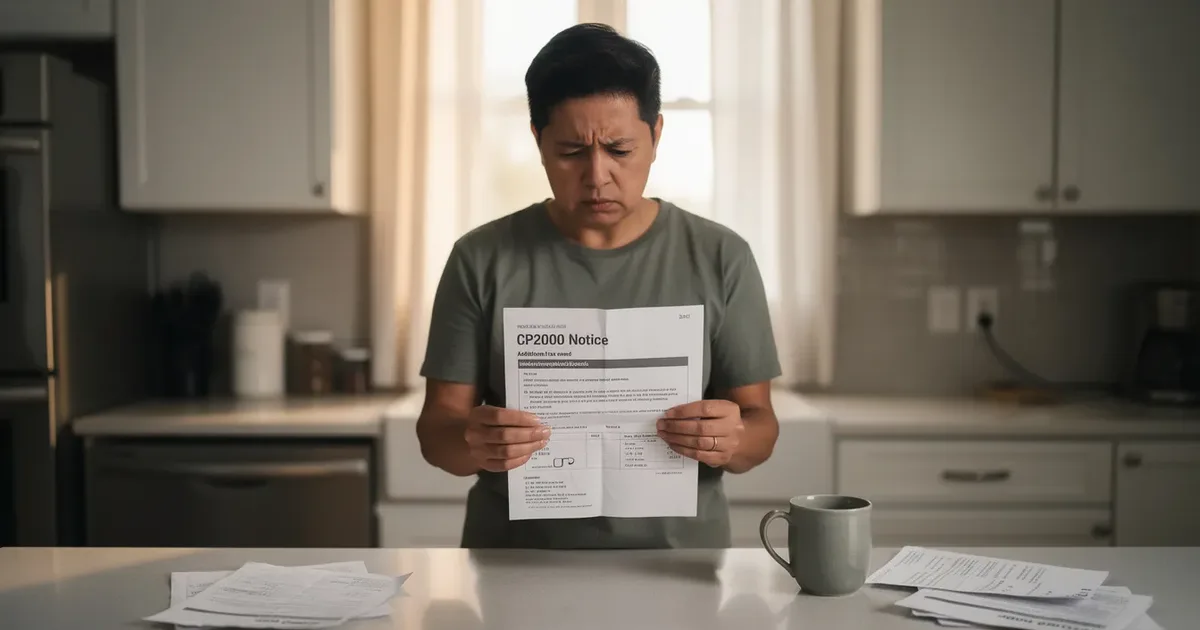
The IRS's Automated Underreporter program has two gears. The one most people meet is theCP2000, a computed proposal with dollar amounts, penalties and a response form. The CP2501 is the earlier, quieter gear: the system found a mismatch between your return and its third-party documents, but instead of calculating a tax change, it's writing to ask what's going on. Getting the question instead of the proposal is genuinely favorable, the cases routed here are often bigger or more tangled, and the IRS is offering you the first move. Played well, the first move is also the last one.
What is a CP2501 notice?
A CP2501 tells you that income or payment information the IRS received from third parties doesn't match what you reportedon your tax return. Employers file W-2s, banks file 1099-INTs, brokers file 1099-Bs, payment platforms file 1099-Ks, all under your Social Security number. When the totals on your return don't line up with that stack, the Automated Underreporter system flags the year, and for certain cases it opens with this inquiry rather than a computed proposal.
The critical feature: nothing has been proposed, assessed or billed.There's no "amount due" to agree or disagree with, just a list of items the IRS couldn't reconcile, and a response form asking you to explain. Your job isn't to defend against a number; it's to make the mismatch make sense: where that income actually appears on your return, why it isn't taxable, what the correct amount is, or, sometimes, that the third party's report is wrong or isn't yours.
Why you received it: the usual mismatches
- Income reported in a place the computer didn't look. Business income from a 1099-K or 1099-NEC folded into a Schedule C line, brokerage proceeds summarized on Schedule D, reported by you, but not where the matcher expected it. The most common case, and the easiest to answer.
- A form you never received.A 1099 sent to an old address, an employer you forgot mid-year, a savings account's interest, genuinely missing from the return.
- Gross-versus-net confusion. Third parties report gross figures: full proceeds of stock sales, full platform payments before fees and refunds. Your return may correctly reflect the net, the response is where you show the reconciliation.
- A third party's error.Duplicated 1099s, wrong amounts, a payer who botched a correction, it happens, and the payer's corrected form is your evidence.
- Income that isn't yours. A W-2 or 1099 under your SSN from an employer you never worked for is a signal of employment-related identity theft, a different response track (Form 14039) that matters to start promptly.
CP2501 vs. CP2000: why the difference matters
Both come from the same underreporter program, but the position they put you in is very different. A CP2000 arrives with the IRS's math already done, a proposed additional tax, often a 20% accuracy-related penalty, interest computed. Even when you win, you're arguing against a printed number. A CP2501 arrives before the math, your explanation shapes the file before any calculation hardens into a proposal.
The practical consequences: at the CP2501 stage there's no proposed penalty to fight, no recomputed notices bouncing back and forth, and, resolved well, often no further correspondence at all beyond a closing letter. Answer poorly or not at all, and the same items return as a CP2000 with amounts attached, computed on the least favorable reading (gross proceeds, zero basis, no expenses). The work to answer the CP2501 completely today is essentially the same work you'd do for the CP2000 later, minus the penalties, the tighter posture, and the extra months.
How to read your CP2501
THE TREASURY
For each listed item, the notice shows the payer's name, the document type, and the amount reported to the IRS. Build your response around that exact list, item by item, in order.Publication 5181is the IRS's own detailed guide to this process, and your notice's response options will include the Document Upload Tool (with an access code printed on the letter), a fax number for your processing center, and a mailing address.
Want your mismatch decoded line by line?
Upload your CP2501 and get a free plain-English breakdown of what each flagged item is, where it belongs on your return, and what your response needs to show.
Your deadline, and what silence produces
Reply on the response form by the date printed on your notice. Need more time to chase a corrected 1099 or old brokerage statements? Call the number on the noticebeforethe date, extensions on underreporter inquiries are routinely granted when asked. What you shouldn't do is let the date pass silently, because the machine's next move is mechanical: the unexplained items get run through the calculator, and aCP2000 arrives proposing tax on all of them, typically at gross amounts, with an accuracy-related penalty riding along. Unanswered further, the path continues to a CP3219A statutory notice of deficiency and its unforgiving 90-day Tax Court window. Every station on that line is more expensive than a complete answer at this one.
Your response options
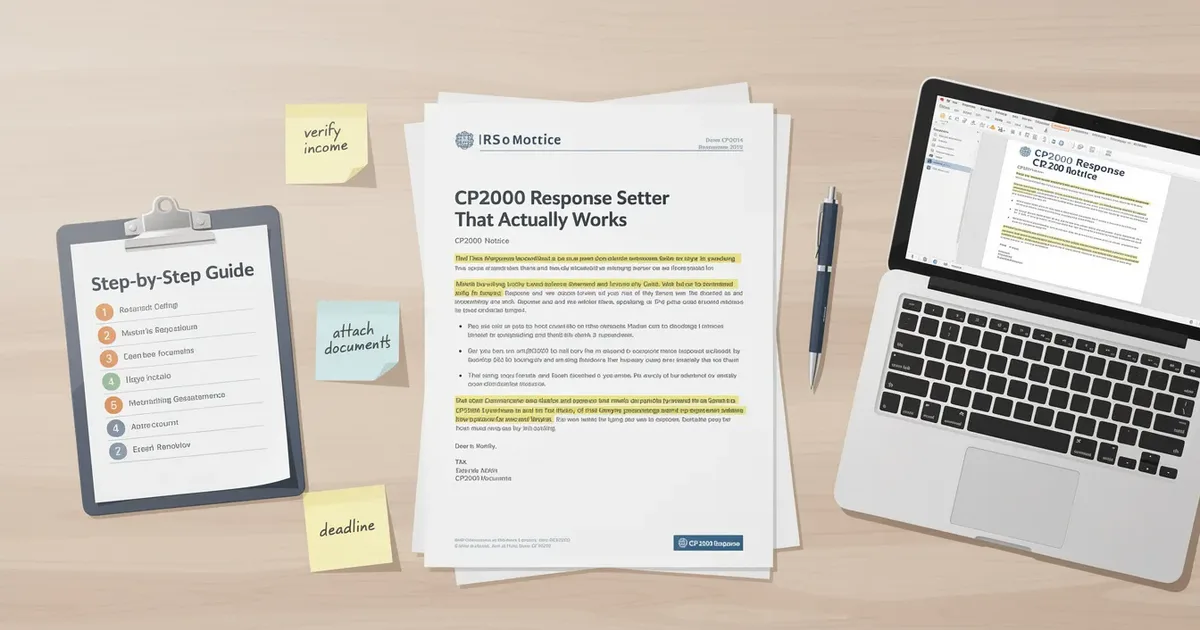
How to respond, step by step
Reconcile every item against your return
For each payer and amount on the list, find where it lives on your return, or establish that it doesn't. Your own filed return plus the source documents are the whole toolkit.
Pull the source documents
W-2s, 1099s, brokerage statements, platform summaries. For gross-vs-net items, get the statement that shows the reconciliation, fees, refunds, basis.
Write one clear paragraph per item
"The $14,200 reported by [payer] appears on Schedule C, line 1, as part of the $47,350 total." Factual, specific, one item at a time. No essays, no emotion.
Complete the response form and attach copies
The form, not a loose letter, is what the AUR unit processes. Attach copies (never originals), each labeled to the item it supports.
Send it traceably, before the date
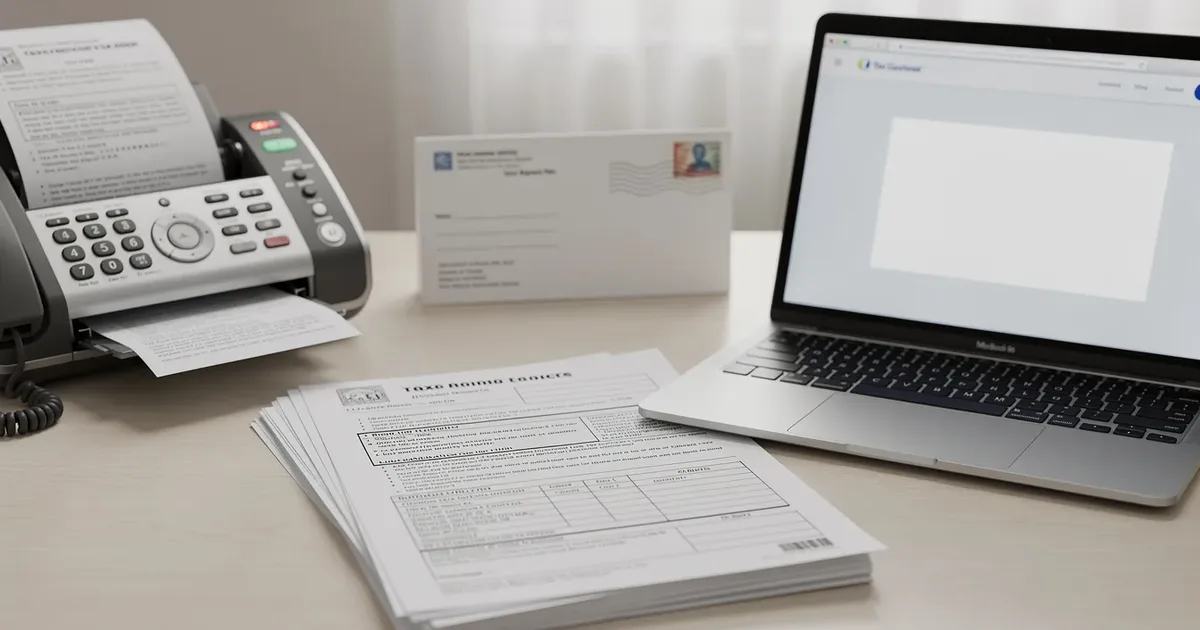
Document Upload Tool with your notice's access code (fastest), fax to your center's listed number, or certified mail to the address on the notice. Keep copies and proof of the date.
Expect an answer in weeks, not days
The IRS typically replies with a closing letter, a request for more detail, or, if unpersuaded, a CP2000 narrowing to the contested items. A complete first response makes the closing letter the likely outcome.
Common mistakes with a CP2501
- Ignoring it because there's no dollar amount, the missing number is the gift; silence is how it gets filled in against you.
- Answering some items and skipping others, unaddressed lines graduate to the CP2000 alone if they must.
- Filing a 1040-X instead of responding, unless your notice directs it, an amended return outside the response process can cross wires with the AUR unit; lead with the response form.
- Explaining without documents, "it's on my Schedule C" with the schedule attached closes cases; the same sentence alone invites a follow-up.
- Missing the identity-theft signal, a payer you've never heard of isn't a paperwork quirk; it's a Form 14039 situation that gets worse with time.
CP2501, Frequently asked questions
What is a CP2501 notice?
How is a CP2501 different from a CP2000?
How long do I have to respond to a CP2501?
What happens if I ignore a CP2501?
How do I send my CP2501 response?
Do I need to file an amended return for a CP2501?
Related notices
Browse the complete directory of IRS notices orlook up any notice number.