
Why is my refund less than expected?
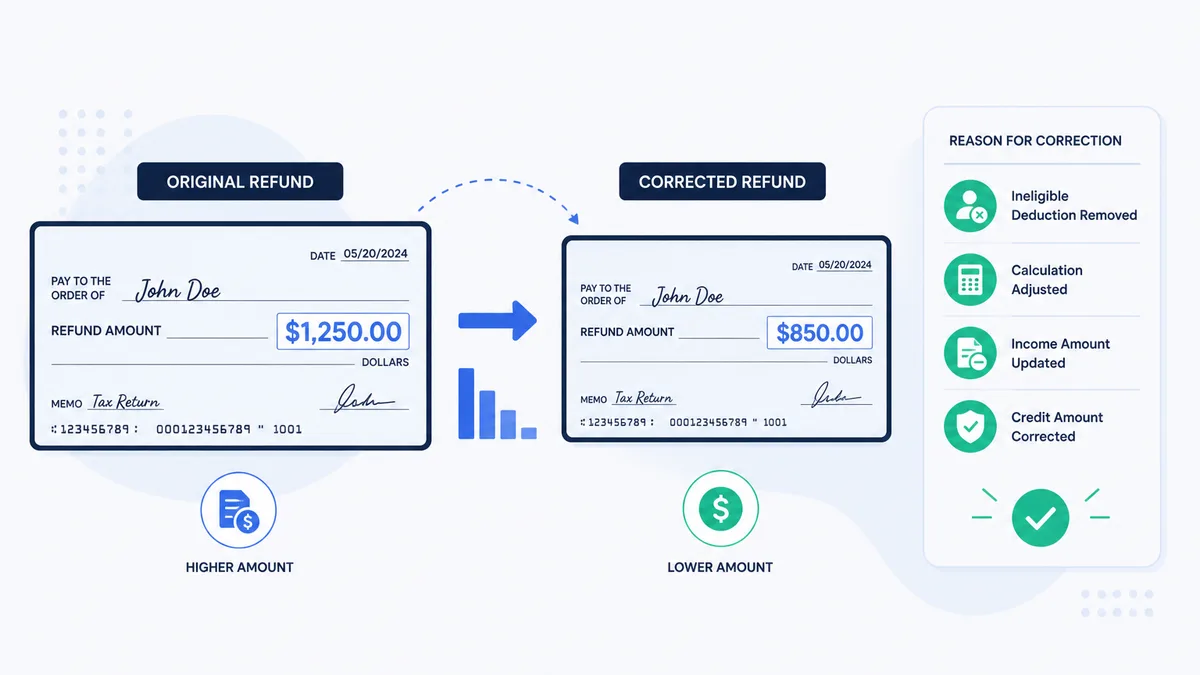
A refund less than expected is common, and it is not always a sign that you made a serious mistake. Five frequent causes are math or credit corrections by the IRS, offsets that pay other debts, withholding that came in lower than your draft return assumed, review-related adjustments after a hold, and simple differences between tax software estimates and the filed return. Identify which cause fits before you amend, call, or dispute.
Start with the paper trail, not the feeling
When the deposit is smaller than the number you circled in February, gather:
- The filed return copy
- Any IRS notice that arrived around the same time
- Where’s My Refund messages
- Your IRS online account refund and balance screens, if you use them
- Bank deposit details (amount and date)
Then identify the notice code with notice lookup if an envelope arrived. A CP12 points to a corrected refund after the IRS changed return figures. Other letters point to offsets, reviews, or underreporter proposals. Guessing without the code wastes time.
Cause 1: Math and credit corrections
The IRS can change arithmetic, certain credits, and related figures under math-error type processes. Common triggers include:
- Credit amounts that do not match IRS records of eligibility or advance payments
- Dependent identification that fails validation checks
- Addition errors or inconsistent entries across schedules
- Recovery rebate or similar credit reconciliations when databases disagree with your claim
A CP12 is a frequent letter in this family. It explains what changed and what refund the IRS now shows. If the explanation matches your records, you may simply update your files and wait for the corrected amount. If the explanation looks wrong, you generally have a limited window (often described as about 60 days from the notice) to disagree under the instructions on that letter.
This cause changes the return figures themselves. It is different from an offset that leaves your return alone but redirects the money.
Cause 2: Debts and offsets
Sometimes the IRS agrees with your refund math and still sends you less because part of the overpayment paid another debt. Offsets can involve federal tax debts from other years, and in many cases certain federal non-tax debts or state income tax debts under Treasury offset rules.
Clues that an offset is involved:
- A letter saying your refund was applied to another liability
- Online account notes showing an offset
- A deposit that matches “refund minus a round debt amount”
If the debt is yours and correct, the smaller deposit may be the system working as designed. If the debt is wrong, belongs to a spouse in ways that injured-spouse rules may cover, or was already paid, follow the dispute path on the offset notice rather than filing a random amended return for the original refund line.
Cause 3: Withholding and estimated payments that did not match the draft
Many “expected” refunds come from an early software run in January. Then:
- A final paycheck changes
- A 1099 arrives late
- Estimated payments were recorded on a different date than you thought
- A state refund worksheet mixed into a federal estimate
By filing day the true withholding and payments may be lower than the draft, so the live refund shrinks even if the IRS accepts the return as filed. Compare Form 1040 payment lines to your W-2 box 2 totals and estimated payment records before assuming the agency cut your refund.
Cause 4: Review holds that later adjust the amount
A review is not always a full audit. Pre-refund reviews can pause a refund while income, withholding, or credits are checked. After the review, outcomes vary:
- Full release of the amount you claimed
- A request for documents
- An adjustment notice that changes the refund
If you earlier received a review letter and later received a smaller amount plus an explanation notice, you are often in this branch. Waiting patiently through a “do not call yet” window is different from ignoring a document deadline on a follow-up letter.
Cause 5: You compared the wrong number
Less dramatic, still common:
- Looking at a state refund estimate while watching the federal deposit
- Forgetting fees you authorized a preparer to deduct from the refund
- Expecting a rebate or credit that belonged to a prior year
- Double-counting a payment that was already refunded or applied
Rebuild the expected number from the filed return’s refund line, not from memory of a hallway conversation with a preparer.
If a notice sets a date to dispute a correction and that date passes, some formal reversal paths get harder. Read the deadline on any CP12 or related adjustment letter before you decide the smaller refund is “just how it is.”
How to choose the next step
Use this quick map:
- No notice, deposit matches filed return: your expectation was probably off; update your notes for next year
- Offset letter: address the debt or injured-spouse path, not a blind amendment
- CP12 or similar correction: compare each changed line to your documents; accept or dispute within the window
- Review then adjustment: follow the latest letter’s instructions
- Underreporter proposal later in the year: that is a different process from a spring refund surprise; respond to that notice on its own terms
What not to do in the first 48 hours
- File an amended return before you know which cause applies
- Mail a stack of unrelated bank statements when no documents were requested
- Pay a caller who claims they can “release the full refund today”
- Ignore a dispute date while you wait for a friend to interpret the letter
- Assume every shortfall is identity theft without reading the actual explanation
Identity issues are real, but they have their own letters and steps. Most smaller-than-expected refunds are corrections, offsets, or expectation gaps.
When professional help is worth it
Bring in an enrolled agent, CPA, or tax attorney when credits are complex, multiple years collide, an offset involves mixed spouses’ debts, or a dispute package needs careful exhibits. For a straightforward CP12 that matches a clear W-2 typo you already understand, many people handle the accept-or-dispute choice themselves.
Putting the five causes together
A refund less than expected usually traces to math or credit corrections, debt offsets, withholding that never matched the draft, review-driven adjustments, or a wrong comparison number. Match the cause to the notice, then accept, dispute, or fix records on purpose. Start with notice lookup and the CP12 guide when a corrected-refund letter is in hand, and keep your filed return beside the deposit so the story stays factual instead of stressful guesswork.
Quick follow-ups
Is a smaller refund always an IRS correction?
No. Software estimates, last-minute withholding changes, or a debt offset can also shrink what you receive even when the IRS accepted your figures.
How do I tell an offset from a math change?
Offset letters explain that part of your refund paid another debt. Math or credit correction notices explain line changes on the return itself.
Should I amend right away if the deposit looks low?
Not before you identify the cause. Read any notice, check Where’s My Refund and your online account, then decide whether to accept, dispute, or amend.
Upload a photo for a free plain-English explanation of your amounts, deadline, and options.

Founder of ClearNotice · Updated August 2026 · About