
The IRS took my refund to pay a debt. Which debt?
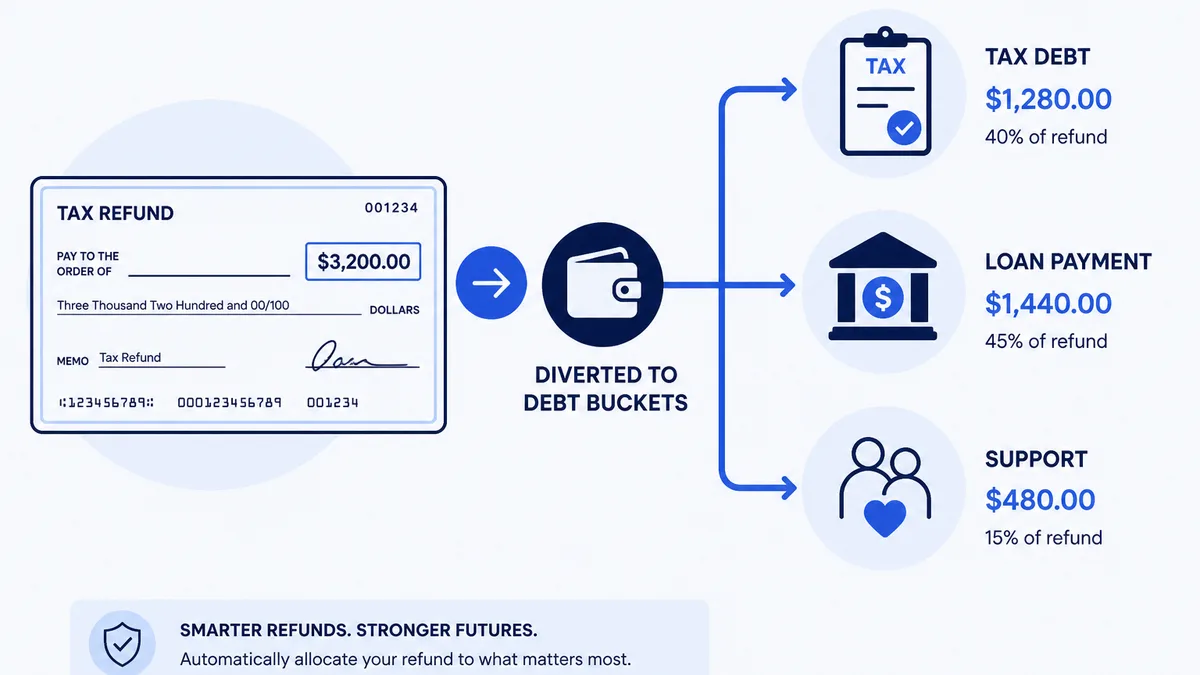
When the IRS took my refund to pay a debt, the payment was redirected through Treasury offset rules before it reached your bank. The refund math on your return may still look correct even though the deposit is smaller or zero. Common targets are past-due federal tax, certain federal non-tax debts, state income tax debts, and in some cases child support. The notice names the debt type. Match the letter to your records before you amend or dispute.
Offsets versus return corrections
People sometimes confuse two different stories. A correction changes the refund amount because the IRS adjusted lines on your return. An offset leaves your return figures alone but sends part or all of the overpayment to another creditor.
If the IRS took my refund under offset rules, you may still receive a letter such as CP49 explaining that your refund paid another liability. Identify the code with notice lookup so you do not treat an offset like a math-error dispute.
Which debts can take a tax refund
Federal law sets priority among debts that can intercept refunds. Not every bill you owe can reach a tax overpayment. The notice and Bureau of the Fiscal Service records usually identify the category.
Past-due federal tax
Unpaid tax from other years is a frequent offset source. If you owed tax for a prior year and did not pay in full, the IRS may apply this year’s refund to that balance. You may still receive a smaller refund if the debt was less than the overpayment, or nothing if the debt consumed the entire amount.
Clues:
- CP49 or similar offset language referencing internal revenue balances
- Online account showing a prior-year balance moving toward paid
- Offset amount that matches a round tax due figure you remember
If you already paid that tax bill, gather proof before you assume the offset is correct.
Federal student loans
Defaulted federal student loans can trigger refund offsets through the Department of Education. The offset notice typically names the loan program and may reference a guaranty agency or servicer.
This category catches filers who forgot a loan went into default years ago. A zero refund with no math correction on the return is a hint to check student loan status as well as tax balances.
Past-due child support
States report qualifying child support debts to the Treasury offset program. Offsets for child support can apply on joint returns when one parent owes arrears. Special injured spouse procedures may help the non-debt spouse recover their share in some situations, but the rules are technical and form-driven.
State income tax debts
Many states participate in reciprocal offset arrangements for state income tax debts. The notice may name the state revenue department as the recipient agency.
Other federal non-tax debts
Certain other federal debts, such as some agency claims, can participate under applicable statutes. The notice should name the creditor agency. If the name is unfamiliar, call the number on the letter after you gather account identifiers.
Reading CP49 and related offset mail
CP49 tells you that part or all of your refund was applied to a debt. It usually states:- The original refund amount before offset
- The amount taken
- The remaining refund, if any
- The type of debt or agency involved
Keep this letter with bank records. It is the starting point for disputes and for injured spouse claims when those apply.
Where’s My Refund may mention an offset before the paper letter arrives. Your IRS online account can also show offset details in many cases.
When the offset is wrong
Offsets are automated. Errors happen when:
- You paid the debt before filing but the creditor database lagged
- The debt belongs to someone else with a similar name or Social Security number mix-up
- You filed injured spouse relief but the offset hit the full joint refund anyway
- Bankruptcy or other legal events should have stopped the offset timing
Follow the dispute instructions on the notice. Contact the creditor agency listed, not a random phone number from social media. For tax debts, the IRS can explain application; for student loans, the Education Department or your servicer may be the first call.
Waiting months to challenge an offset because you assumed “nothing can be done” can narrow some relief paths. Read the notice date and any appeal or injured spouse deadlines promptly.
Injured spouse: when only one partner owes
On a joint return, both spouses’ income and withholding typically combine into one refund. If only one spouse owes a qualifying debt, the other may file Form 8379, Injured Spouse Allocation, to request their share of the refund. Timing matters. File with the original return, with an amended return, or after an offset depending on your situation and the form instructions.
This is not the same as innocent spouse relief for understated tax on the return itself. Injured spouse rules focus on who keeps the refund portion tied to their own withholding and payments.
How offsets relate to other refund surprises
If the deposit is short but no offset notice appears, the cause may be a return correction instead. See refund less than expected for math fixes and review adjustments.
If the IRS later sends a letter saying it changed refund lines, that path is separate from a pure offset. IRS changed my refund covers dispute windows on correction notices.
When the offset creates a remaining tax bill you still cannot pay, payment plan options are described in owe the IRS and can't pay.
What not to do
- File an amended return solely to “get the refund back” without addressing the debt
- Ignore CP49 because the deposit already happened
- Pay a third party who promises to erase a legitimate offset by phone
- Assume state and federal offsets are the same program with the same rules
Preventing future offsets
Offsets repeat until the underlying debt is resolved, settled under program rules, or discharged in a qualifying legal process. Fixing the source debt stops next year’s intercept more reliably than hoping the computer skips you.
For federal tax debts, setting up a payment arrangement or paying in full updates records over time. For student loans, rehabilitation or consolidation options may clear default status when you qualify under current program rules.
When professional help fits
Injured spouse claims, mixed offsets on joint returns, bankruptcy timing, and multi-agency debts benefit from enrolled agents, CPAs, or tax attorneys who read transcripts. Straightforward CP49 letters that match a debt you already knew about often need no professional step beyond paying or disputing with the named agency.
Bottom line
If the IRS took my refund to pay a debt, read CP49, confirm the code through notice lookup, and identify whether the money went to past tax, student loans, child support, state tax, or another listed creditor. Dispute errors with proof, consider injured spouse relief when only one spouse owes, and treat the notice as the map for where your refund went.
Quick follow-ups
Can the IRS take my whole refund for one debt?
Often yes, up to the refund amount available for offset. If the debt exceeds the refund, you receive nothing from that overpayment and the debt may remain.
Does my spouse's debt always take my refund too?
On a joint return, offsets for certain debts can affect the full refund. Injured spouse rules may apply in some cases when only one spouse owes the debt.
How do I find which agency got the money?
The offset notice and your IRS online account usually name the debt type and creditor agency. Bureau of the Fiscal Service administers many federal offsets.
Upload a photo for a free plain-English explanation of your amounts, deadline, and options.

Founder of ClearNotice · Updated August 2026 · About