
I owe the IRS and can't pay. What are my options?
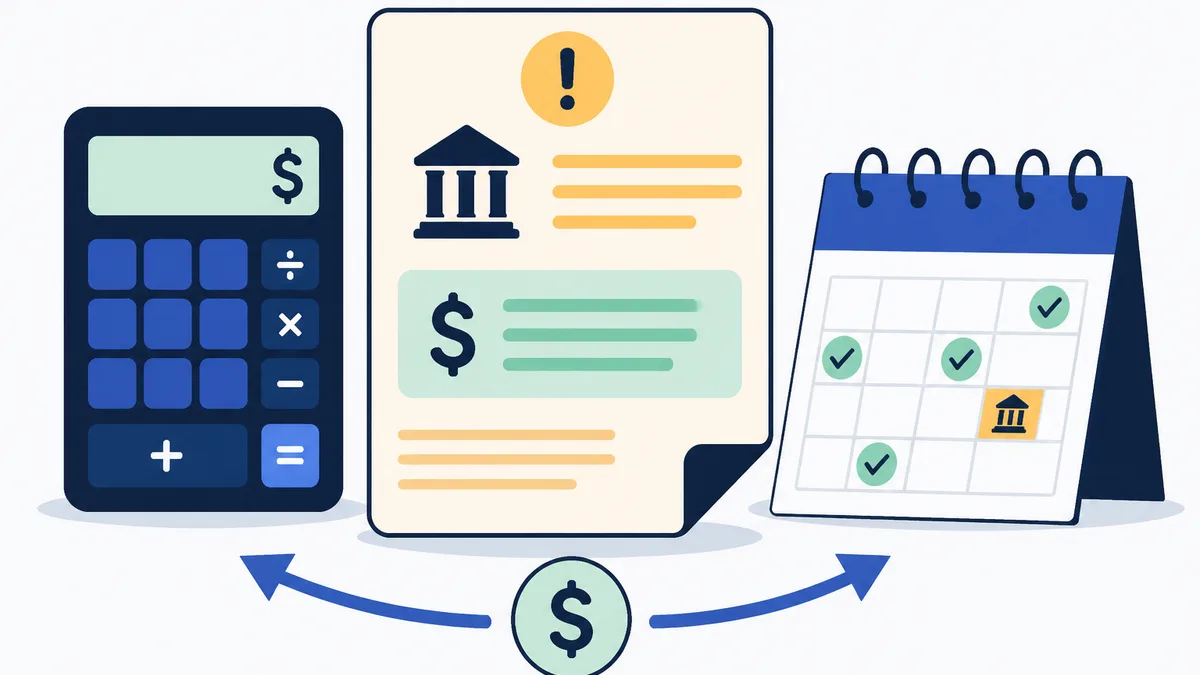
If you owe the IRS and can't pay the full amount right away, you still have structured paths: short-term payment arrangements, longer installment agreements, currently not collectible status when you truly cannot pay essentials, and, in narrower cases, an offer in compromise. Full payment remains the cheapest path when cash becomes available. Waiting without a plan usually raises the total through penalties and interest.
Start with what the bill actually says
A first balance notice is often a CP14. Later letters can escalate the tone and the collection tools available to the agency. Before choosing a path, confirm:
- The tax year or years listed
- Tax, penalty, and interest broken out separately
- Any payment due date printed on the page
- Whether the amount still matches payments you already made
Posting delays happen. If you paid recently, keep proof and compare future account transcripts before assuming the balance is wrong forever.
Four real options, ranked by common situations
These are not ranked as moral judgments. They are ranked by how often they fit ordinary personal tax balances when cash is tight.
Option 1: Pay in full as soon as you can
When you can clear the balance from savings, a short loan from a low-interest source, or an upcoming deposit, paying in full stops further failure-to-pay growth on that amount. Interest rules and penalty rules still apply up to the payment date, so earlier is generally cheaper than later. This option is not always realistic. It remains the baseline against which other choices are measured.
Option 2: Set up a payment plan (installment agreement)
If you can afford monthly payments but not a lump sum, an installment agreement is the path many taxpayers use. Two common entry points are:
- Form 9465, Installment Agreement Request, filed by mail when online tools are not a fit
- Online Payment Agreement through IRS.gov when your account and amount qualify for self-service setup
Plans can be short-term (paying within a limited window) or longer monthly schedules. Setup fees and user fees may apply depending on the type of agreement and how you apply. Direct debit plans sometimes carry different fee rules than other payment methods.
An installment agreement does not erase the debt. It organizes repayment while penalties and interest may continue under IRS rules. Staying current on future returns and on the agreed payments is part of keeping the agreement in good standing. Default can reopen stronger collection steps.
Option 3: Currently not collectible (CNC) status
CNC is for situations where paying the tax would prevent you from covering basic living expenses under IRS financial standards. It is not automatic forgiveness. Collection may pause while the status holds, yet interest can still accrue, and the IRS can review your finances later. CNC generally requires a detailed look at income, expenses, and assets. Many people work with a licensed professional when completing those forms because the documentation is personal and precise.
CNC can fit when income is low relative to necessary expenses. It is a poor fit when you have clear ability to make meaningful monthly payments. Misstating finances to force CNC creates serious risk.
Option 4: Offer in compromise (OIC), used carefully
An offer in compromise asks the IRS to accept less than the full balance based on doubt as to collectibility, doubt as to liability, or effective tax administration in limited hardship settings. Acceptance is not guaranteed. Application fees, required initial payments in many cases, and a full financial disclosure are part of the process. The IRS compares your offer to what it believes it could collect through other means.
Treat OIC as a specialized path, not a slogan. Marketing that promises “pennies on the dollar” for everyone oversimplifies. If your facts are complex, a CPA, enrolled agent, or tax attorney can help you evaluate whether an offer is even plausible before you spend application money.
What waiting actually costs
Leaving a balance untouched does not freeze the clock. Failure-to-pay penalties and interest generally continue under published rates and rules. The exact dollar growth depends on your balance, dates, and penalty type. ClearNotice’s penalty calculator helps you see how failure-to-pay and related figures can compound over months so the cost of delay is visible, not abstract.
Collection intensity can also rise over time: reminders, stronger collection notices, liens, and levy actions in later stages. A formal plan or CNC request is usually clearer than hoping letters stop on their own.
If a collection deadline or levy warning appears on a later notice, ignoring the date can lead to bank or wage levies under IRS procedures. Contacting the number on the letter or establishing an agreement before levy action is far safer than assuming the agency will wait indefinitely.
How to compare options for your cash flow
Ask practical questions:
- Can I clear the balance within a few months without skipping rent, food, medicine, or utilities?
- Can I commit to a monthly amount I can sustain for the plan length?
- Are my necessary expenses already consuming nearly all income under a realistic budget?
- Is there a genuine liability dispute, or is the debt amount mostly undisputed?
Your answers point toward full payment, an installment agreement, CNC exploration, or, less often, an OIC discussion. Mixed answers are common. Partial payment now plus a plan for the rest is also a pattern people use when cash arrives unevenly.
Documents that make any path smoother
Whatever option you explore, gather:
- The latest balance notice and any payment confirmations
- Recent pay stubs or benefit statements
- Bank statements that show typical monthly cash flow
- A simple list of rent or mortgage, utilities, food, insurance, and court-ordered payments
- Copies of the returns for the years listed on the bill
Organized papers shorten phone calls and reduce errors on Form 9465 or online applications.
Business, payroll, and multi-year balances
Trust fund recovery penalties, unpaid employment taxes, and stacks of years with large combined balances often need professional review. Personal installment tools may not fit every business collection case. If payroll taxes are involved, licensed help early can prevent worse personal exposure.
Putting the pieces together
When you owe the IRS and can't pay in full, the productive move is choosing a documented path rather than treating silence as a strategy. Start by confirming the bill (often via CP14 guidance), estimate the cost of delay with the penalty calculator, then compare installment agreements, CNC, and OIC against your real monthly capacity. Full payment when possible remains the cleanest exit. For facts that do not fit standard tools, a licensed tax professional can map options to your transcripts and local collection posture without relying on slogans.
Quick follow-ups
Will the IRS stop contacting me if I cannot pay today?
Unpaid balances generally keep accruing penalties and interest, and collection letters may continue. Choosing a formal path is usually clearer than silence.
Is an installment agreement the same as forgiveness?
No. An installment agreement spreads the balance over time. Interest and some penalties can still apply while you pay.
Can I apply for a plan before I finish gathering every bank statement?
Online Payment Agreement tools often need basic income and expense facts. More detailed financial forms appear when the amount or your situation requires them.
Upload a photo for a free plain-English explanation of your amounts, deadline, and options.

Founder of ClearNotice · Updated August 2026 · About