
Can the IRS garnish wages from my paycheck?
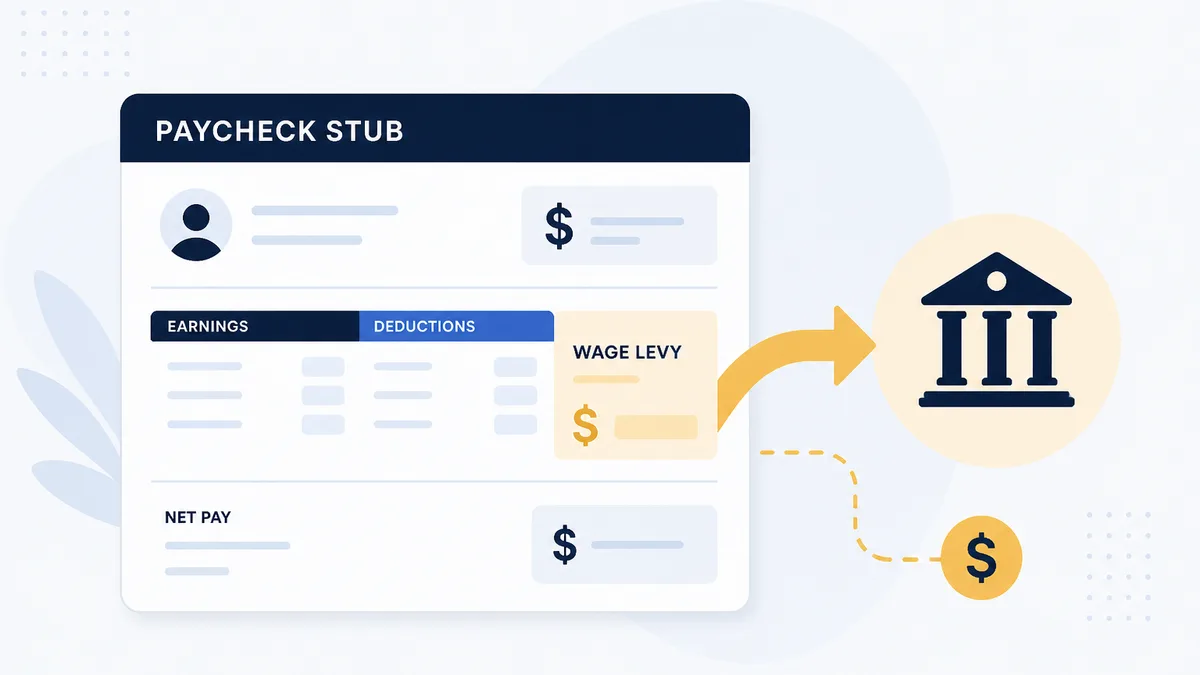
Yes: can the IRS garnish wages is a fair fear when unpaid tax sits for a long time. After required notices and waiting periods, the agency may issue a continuous wage levy to your employer. Part of each paycheck can be sent to the IRS until the debt is resolved or the levy is released. Upstream payment arrangements usually beat fighting a levy already in place.
When a wage levy becomes possible and how much it takes
A wage levy (continuous levy on salary or wages) is a collection tool for assessed, unpaid tax. It generally follows earlier balance letters and intent-to-levy warnings. Many taxpayers first see stronger language on notices such as CP504 and later a final warning package often associated with LT11 and Collection Due Process rights.
If those warnings were mailed to an old address, people sometimes learn about the levy only when payroll shrinks. Updating your address with the IRS and employers reduces that shock, but it does not erase an assessed balance. Wage levy is related to, yet distinct from, a bank levy. For the deposit-side risk, see Can the IRS take money from my bank account.
Unlike some private garnishments with simple percentage caps, IRS wage levies use exemption amounts tied to your filing status and the number of dependents claimed on the levy form your employer receives. Your employer calculates take-home pay under those instructions and remits the non-exempt portion.
Practical effects people notice:
- Net pay can drop sharply compared with ordinary withholdings
- The levy can continue from paycheck to paycheck until released
- Bonuses or supplemental wages may be reached under the same levy instructions
- Multiple jobs can mean multiple levy instructions if more than one employer is served
There is no single public percentage that fits every household. The Form 668-W series instructions and exemption tables in effect when the levy is served control the math. Guessing from a friend’s story is unreliable. If dependents were omitted on the employer paperwork, take-home pay can be lower than the rules allow until you correct the claim carefully and lawfully.
Self-employed people who do not receive W-2 wages face a different collection pattern. Accounts receivable levies, bank levies, or other tools may matter more than a classic paycheck levy. Still, the upstream lesson is the same: unpaid assessed tax plus ignored warnings can unlock enforced collection against money you rely on each month.
Seasonal workers should plan ahead for months with smaller paychecks. A wage levy that is manageable in a peak month can become severe in an off season. If your income swings, say so when you propose an installment amount so the plan reflects a payment you can keep year-round, not only in high season.
Avoiding a wage levy, and what to do if one starts
The cleanest protections happen before the employer is served:
- Pay the balance when you can.
- Set up a durable installment agreement; start with How do I set up an IRS payment plan.
- If essentials would fail under any meaningful payment, review options in I owe the IRS and can't pay.
- Use Collection Due Process or equivalent hearing rights by the deadline on final warning mailings when those rights apply.
- Stay reachable: file returns on time and keep a current mailing address on file.
A plan accepted before levy service is usually simpler than negotiating release after payroll already diverted funds. Partial voluntary payments without a formal agreement can help in some cases, yet they do not always stop a levy that is already authorized.
Once a wage levy is active, waiting for the next paycheck “to see what happens” can deepen hardship. Contact the IRS promptly, ask what is required for levy release, and consider licensed help if housing, medicine, or child support obligations are at risk. Employers cannot ignore a valid levy because the employee asks them to.
Release may follow full payment, acceptance of an installment agreement under IRS conditions, certain hardship determinations, or proof the levy was improper. You typically work with IRS collection, not only with payroll. Bring recent pay stubs showing the levy effect, a simple budget of necessary living costs, copies of the levy notices and any prior installment paperwork, and proof of dependent status if exemption claims need correction.
Wrong exemption claims on the employer form can leave too little take-home pay. Correcting those claims carefully matters; inventing dependents is unlawful. Business owners who pay themselves irregular draws, gig workers classified as independent contractors, and people with multiple employers can face messy levy patterns. Those facts often justify a CPA, enrolled agent, or tax attorney who can speak with collection using accurate transcripts.
Employer role, privacy, and a clear next step
Your employer receives instructions and remits funds. Payroll staff may learn that a federal tax levy exists. That can feel uncomfortable, yet compliance is normally mandatory. Focus energy on resolving the tax account rather than on workplace embarrassment alone. If identity theft created the balance, say so early and follow IRS identity theft procedures while you also address levy pressure. Dual tracks (identity case plus collection) are easier with professional coordination.
While a levy is active, rebuild a bare-bones budget around the reduced net pay. Tell essential creditors early if a payment will be late because of the levy. That honesty does not fix the tax debt, yet it can reduce cascading fees while you work the IRS issue. If child support or another court-ordered payment shares the same paycheck, bring that paperwork to any collection discussion so the full picture of take-home constraints is clear.
So can the IRS garnish wages from a paycheck? Yes, through a continuous wage levy after the warning sequence that includes notices like CP504 and LT11 in many cases. Learn the exemption math from the levy forms, but prioritize preventing service with payment or a formal plan. If a levy already hit payroll, seek release conditions quickly instead of hoping the next stub returns to normal on its own. Keep written notes of every IRS call, including the date, the employee ID if given, and the next action you were told to take.
Quick follow-ups
Is an IRS wage levy the same as a private creditor garnishment?
No. Federal tax levy rules differ from many state court garnishments. Employer instructions and exemption worksheets follow IRS forms, not a typical judgment creditor script.
Will my employer refuse the levy?
Employers generally must comply with a properly served IRS wage levy. Refusing can create separate problems for the employer.
Can I keep some take-home pay during a wage levy?
IRS exemption rules and the levy form instructions determine how much of each paycheck is protected. The protected amount depends on filing status and dependents claimed on the levy paperwork.
Upload a photo for a free plain-English explanation of your amounts, deadline, and options.

Founder of ClearNotice · Updated August 2026 · About