
CP2000 Accuracy-Related Penalty: How to Avoid, Fight, and Fix It
Overview: CP2000 Accuracy Penalty in Plain English
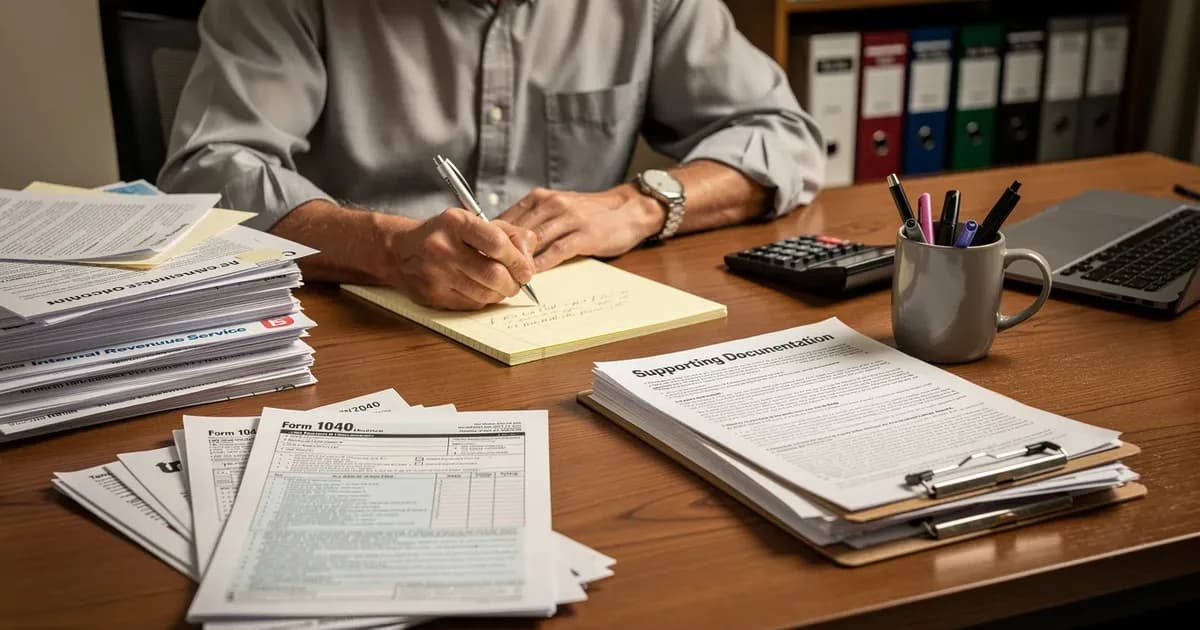
If you just opened a CP2000 notice and saw the words "accuracy-related penalty," take a breath. A CP2000 notice is not a bill or an audit. It's a proposal from the Internal Revenue Service suggesting that the income reported on your tax return doesn't match what third parties told the IRS. The CP2000 notice is a proposal for adjustments to reported income and not a final tax bill, but it can include a 20% accuracy penalty on top of any additional tax the IRS thinks you owe.
The accuracy penalty is governed by Internal Revenue Code Section 6662. On a CP2000 notice, it typically shows up as a line item equal to 20% of the proposed tax increase. A CP2000 notice may suggest additional tax due and include an accuracy-related penalty for issues like negligence or substantial understatement of your tax liability.
This article breaks down what the CP2000 accuracy-related penalty is, why the IRS adds it, and the practical steps you can take to challenge or remove it. You'll learn timelines, response options, penalty calculation basics, and reasonable cause arguments. ClearNotice helps taxpayers understand IRS notices - including CP2000 letters - by translating the legal language into plain English and outlining what to do next.
What Is an IRS CP2000 Notice and How Does the Penalty Fit In?
A CP2000 notice is an "underreported income" letter generated by the IRS automated underreporter unit when your tax return doesn't match data from third-party forms like W-2s, 1099s, and information statements filed by financial institutions. The IRS uses computer matching to generate CP2000 notices, so receiving one doesn't mean someone flagged you personally.
A typical IRS CP2000 notice includes several key parts:
A summary of proposed changes on the first page
Explanation pages showing which income documents or deductions triggered the mismatch
A response form you sign and return
A deadline, usually 30 days from the date listed on the notice (60 days if you live abroad)
The accuracy related penalty appears inside the CP2000 as a separate line - usually labeled "20% accuracy-related penalty" - calculated on the additional tax owed the IRS proposes. You typically have 30 days to respond to a CP2000 notice.
These are proposed changes, not final assessments. You can agree, partially agree, or disagree before anything becomes binding. But if you ignore the notice, responding late may lead to a statutory notice of deficiency, which starts formal proceedings and makes the penalty much harder to remove.
Understanding the IRS Accuracy-Related Penalty (Section 6662)
Internal Revenue Code Section 6662 authorizes the IRS to impose an additional charge when you underpay tax because of certain errors. In simple terms, accuracy-related penalties are based on tax understatements caused by negligence, disregard of tax laws, or a substantial understatement of income tax.
The standard rate is 20% of the underpayment tied to the inaccurate position. A 40% penalty may apply for gross miscalculations - specifically gross valuation misstatements where claimed value or cost basis is 200% or more of the correct amount - though these situations are uncommon in routine CP2000 cases.
Typical triggers include:
Negligence or careless disregard of IRS rules
Substantial understatement of income tax (underreporting by more than 10% of the correct tax or $5,000, whichever is greater)
Valuation or basis errors that inflate deductions or understate other income
The penalty applies only to the portion of the underpayment attributable to the inaccurate position, not your entire tax bill for the tax year. The accuracy penalty is treated separately from interest accrued on the tax underpayment, and penalties accrue interest in addition to unpaid taxes. This means the penalty increases the total amount owed due to compounded interest on underpaid taxes - making delays costly.

How CP2000 Notices Are Generated: IRS Wage and Income Matching
Every year, employers, banks, brokerages, and payment platforms file W-2s, 1099s, and other forms under your social security number or taxpayer identification number. These records flow into the IRS wage and income transcripts database, which gradually fills in during the year after each tax year. For example, forms for the 2025 tax year populate through much of 2026.
Once that data is compiled, the IRS automated underreporter unit compares it against your filed tax return. Common mismatches that lead to CP2000 notices and potential accuracy penalties include:
Missing 1099-NEC contractor or gig income
Unreported 1099-B stock or crypto sales
1099-K platform payments not reflected on your return
Retirement distributions (1099-R) reported incorrectly - rollovers treated as fully taxable, for instance
You can use IRS wage and income transcripts to check for mismatches before filing, and you should monitor IRS transcripts every two weeks for discrepancies if you suspect missing forms. Report all income accurately to prevent CP2000 notices in the first place. Understanding this automated process helps explain why CP2000 notices are frequent and mechanical - not personal accusations of fraud.
How the CP2000 Accuracy-Related Penalty Is Calculated
Here's a step-by-step look at how the IRS arrives at the accuracy penalty amount on a CP2000:
The IRS identifies unreported income or incorrect deductions on your return
It calculates the proposed tax - the additional tax you'd owe if the proposed changes are correct
It applies a 20% accuracy related penalty to the portion of the underpayment deemed negligent or substantially understated
Interest and additional interest are calculated separately, running from the original due date of the return
Simple example: The IRS proposes $5,000 in additional tax based on unreported income. The 20% accuracy-related penalty adds $1,000. Interest on unpaid taxes and penalties accrues from the original due date until paid in full - so if the original return was due April 15 of the prior year, interest has been building since then.
The IRS may apply the 20% to all or only part of the underpayment, depending on which items they consider negligent. For larger mismatches or complex investments, the IRS might evaluate whether the 40% gross valuation misstatement category applies, but most CP2000 cases involve the standard 20% rate.
The proposed amount shown on the CP2000 is still a proposed assessment. The IRS may waive the accuracy-related penalty if the taxpayer proves reasonable cause for the error, and you can dispute both the proposed tax and the penalty before anything becomes final.
Common CP2000 Situations That Lead to Accuracy-Related Penalties
Most CP2000 accuracy penalties come from a handful of recurring patterns, not intentional fraud. Here are the scenarios the IRS sees most often:
Omitted interest or dividends: A 1099-INT or 1099-DIV from a bank or brokerage you forgot about, where the amounts reported by financial institutions don't appear on your return
Unreported gig or freelance income: 1099-NEC forms from clients you worked for briefly, or platform payments you assumed were too small to matter
Stock or crypto trades: 1099-B forms where proceeds are reported but cost basis isn't, making gains look far larger than they actually were
1099-K confusion: Double-counted income or personal transfers misclassified as business revenue, inflating both more taxes and proposed penalties
Retirement misreporting: Rollovers treated as taxable distributions, early withdrawal exceptions not claimed, or incorrect 1099-R entries
If you see the same issue appearing across prior years, correct errors before the IRS sends a CP2000 notice for those years too. Taxpayers should review discrepancies between their tax returns and IRS notices to determine the correct action, and consider whether an amended return for earlier years makes sense.
Reasonable Cause: How to Challenge or Remove the Accuracy Penalty
The IRS can waive accuracy-related penalties if the taxpayer shows reasonable cause and acted in good faith. This is the primary tool for challenging a CP2000 accuracy penalty.
Common reasonable cause arguments include:
Reliance on a qualified tax professional who was given complete information - though merely hiring a preparer isn't enough. In Larochelle v. Commissioner (2022), the US Tax Court denied penalty relief because the taxpayers didn't provide adequate information to their preparer or review the completed return
Confusing or contradictory forms from payers or the IRS itself
Serious illness, fire, or natural disaster that destroyed records
Genuine efforts to file an accurate return using available information
Circumstances like relying on incorrect advice from professionals can be grounds for demonstrating reasonable cause - but you need documentation showing you provided all relevant facts to the advisor. Simply not reading instructions or ignoring known income does not qualify.
A penalty abatement request should include a concise written explanation, supporting documentation (engagement letters, correspondence, medical records if applicable), and references to the specific CP2000 notice and tax year. Taxpayers can file for first-time penalty abatement if they have a clean compliance history, but note that first-time abatement usually applies to failure-to-file and failure-to-pay penalties, not directly to accuracy-related penalties. Penalty relief through reasonable cause remains the main path for contesting a CP2000 accuracy penalty.
How to Respond to a CP2000 Notice When an Accuracy Penalty Is Included
You have 30 days from the date listed on the notice to respond. Missing this window can mean the IRS issues a next notice or, worse, a notice of deficiency that forces you into tax court to dispute the changes.
There are three basic response paths, and each allows you to separately address the penalty:
If You Agree
Sign the response form and arrange payment for the proposed tax. You can set up a payment plan if needed. Even if you agree with the underlying adjustment, a taxpayer can challenge just the penalty - attach a written statement requesting removal of the accuracy-related penalty for reasonable cause and include supporting documentation.
If You Partially Agree
Check the partial agreement box on the form. Attach your own calculations - for example, corrected cost basis on stock sales - and include a separate explanation that either disputes the penalty entirely or seeks partial penalty relief. This is common when the IRS disagrees with your basis but you have brokerage records that tell a different story.
If You Disagree
Respond point by point to the IRS proposed changes. Include copies of W-2s, 1099 forms, brokerage statements, income transcripts, or any other proof. Taxpayers can argue against the IRS calculations by providing correct documentation proving their original filings were accurate. Spell out clearly why both the proposed adjustment and the accuracy penalty are wrong. You can contest penalties in your CP2000 response - taxpayers must provide documentation to support their claims against the proposed changes in a CP2000 notice.
You should not file an amended return as your primary response to a CP2000. Use the response form and attach your evidence.

Payment Options: Handling the Tax and Penalty if You Owe
Even if you plan to request penalty abatement, interest continues to accrue on the unpaid balance. Planning how to pay is important once the IRS assesses the CP2000 changes.
Common payment options include:
Option | How It Works |
|---|---|
Full payment | Pay the entire proposed amount at once to stop further interest |
Short-term arrangement | Pay within 180 days without a formal installment agreement |
Long-term installment agreement | Monthly payment plan spread over up to 72 months |
Setting up an installment agreement does not automatically remove an accuracy-related penalty or cover penalties separately - those are independent requests you make in writing or by calling the IRS office handling your case.
If you later win penalty relief or a reduction to the proposed changes, the IRS will adjust the account and may issue a refund. But ignoring a CP2000 notice can push the case into IRS Collections, where IRS wage garnishments or levies may occur. Timely action is always safer, even if you cannot pay in full today.
Do You Need an Amended Return for a CP2000 Accuracy Penalty Issue?
A CP2000 response is usually handled with the IRS response form and supporting documents, not with Form 1040-X. You should not file an amended return as your primary CP2000 response.
An amended return is helpful in limited situations:
You discover additional unreported income, credits, or deductions unrelated to the CP2000 mismatches
You need to correct the same issue across multiple tax years
Your tax professional identifies errors beyond what the CP2000 covers
Filing an amended return instead of using the response form can send the case to a different IRS unit, potentially slowing resolution and complicating further correspondence about the accuracy-related penalty. If you do file one alongside your CP2000 response, clearly reference the tax year and write "CP2000" at the top so the IRS can connect the filings.
Consider professional guidance - a tax attorney, a tax professional, or a tool like ClearNotice for understanding what the notice means - before deciding on this route.
Preventing Future CP2000 Notices and Accuracy Penalties
Preventing a second CP2000 for the same issue is critical. Repeated mismatches evaluated on a case by case basis can hurt your credibility with the IRS and make reasonable cause arguments harder to win in future years.
High-level prevention strategies:
Keep a payer checklist: Track every employer, platform, and brokerage that should send you forms
Wait for all forms: Don't file until every expected W-2 and 1099 arrives. File an extension and verify income before April 15 if forms are missing
Pull IRS transcripts: Request an IRS wage and income transcript before filing if you've moved, changed jobs, or worked for many platforms. Use it to avoid mistakes and catch discrepancies early
Double-check investments: Verify cost basis and sales proceeds for stock, crypto, and other investments to avoid large corrections
Watch for tax identity theft: If transcripts show income you don't recognize, investigate immediately
ClearNotice can help you understand IRS notices quickly so you can fix issues for the current year and reduce the odds of seeing the next letter about the same problem.
How ClearNotice Helps You Decode a CP2000 Accuracy Penalty
ClearNotice is an online tool that translates confusing CP2000 letters and other IRS correspondence into straightforward language - including explanations of any accuracy-related penalties and additional penalties listed on the notice.
When you upload your CP2000 notice to ClearNotice, you get:
A plain-English summary of the proposed changes and what the underreporter notice means
A clear breakdown of deadline dates and any proposed penalties
A step-by-step checklist covering whether to agree or disagree, what income documents and supporting documentation to gather, whether reasonable cause may apply, and which deadlines cannot be missed
ClearNotice does not replace legal or tax advice. It gives taxpayers the clarity they need to carefully review their situation and decide whether to handle the response themselves, seek a tax professional, or escalate complex cases. If the IRS sends you a CP2000 with an accuracy penalty and you're not sure what it all means, upload your notice to ClearNotice before your response window closes. Understanding what you're dealing with is the first step to fixing it.
Keep reading
 CP2000 & income mismatch
CP2000 Response Time: What to Expect From IRS | ClearNotice
Sent your CP2000 response and still waiting? Most taxpayers hear back within 30 to 90 days. Here is exactly what happens after you respond and when to follow up.
 CP2000 & income mismatch
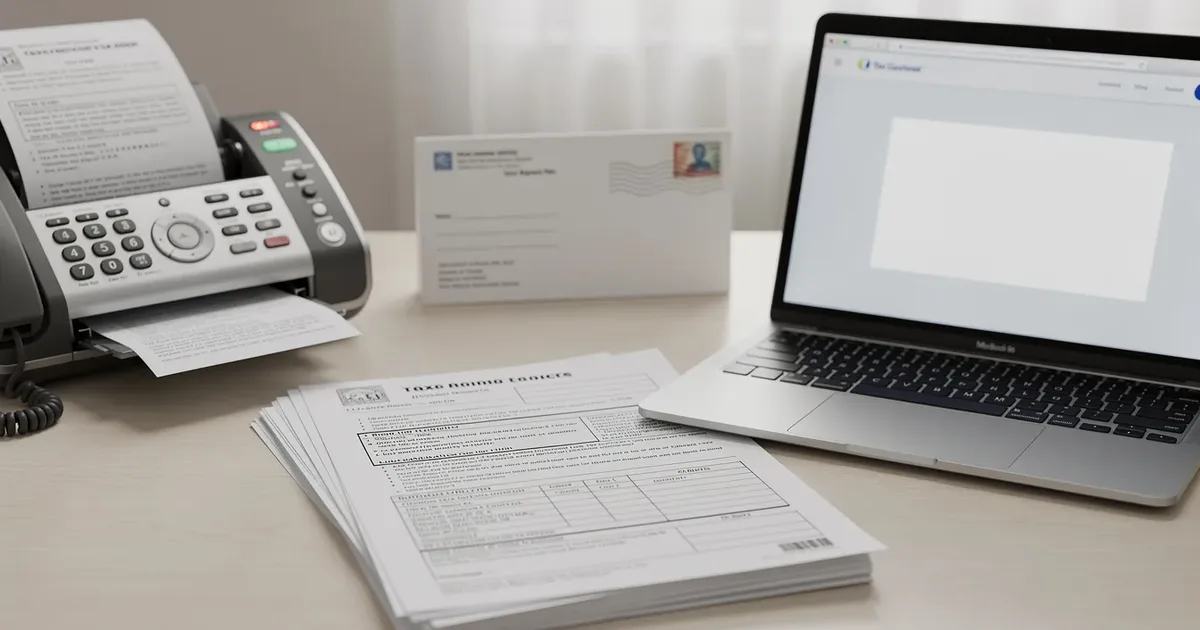
CP2000 Response: Upload, Fax, or Mail Ranked | ClearNotice
The IRS gives you three ways to respond to a CP2000 notice: upload, fax, or mail. This guide ranks all three by speed so you can pick the fastest option your notice allows before your 30-day deadline runs out.
 CP2000 & income mismatch
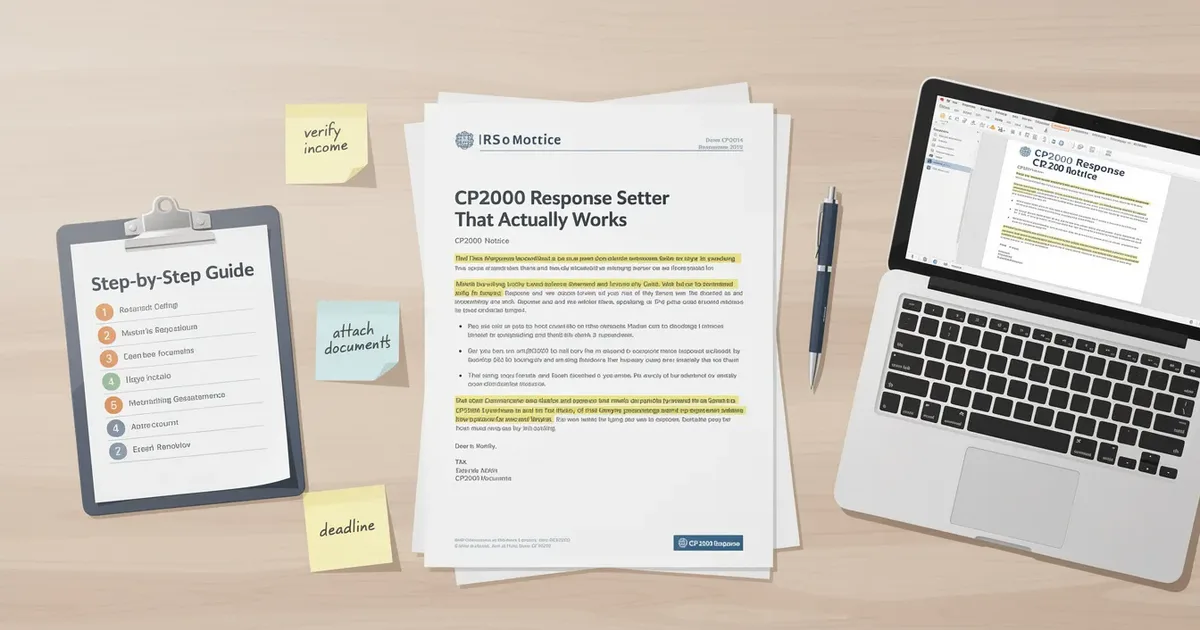
CP2000 Response Letter Sample: Step-by-Step | ClearNotice
A CP2000 notice is a proposed IRS adjustment, not a final bill. This guide gives you a complete CP2000 response letter sample you can adapt, including a full disagreement letter and document checklist.