
CP2000 How Long Response: Timeline, What Happens Next, and When the IRS Replies
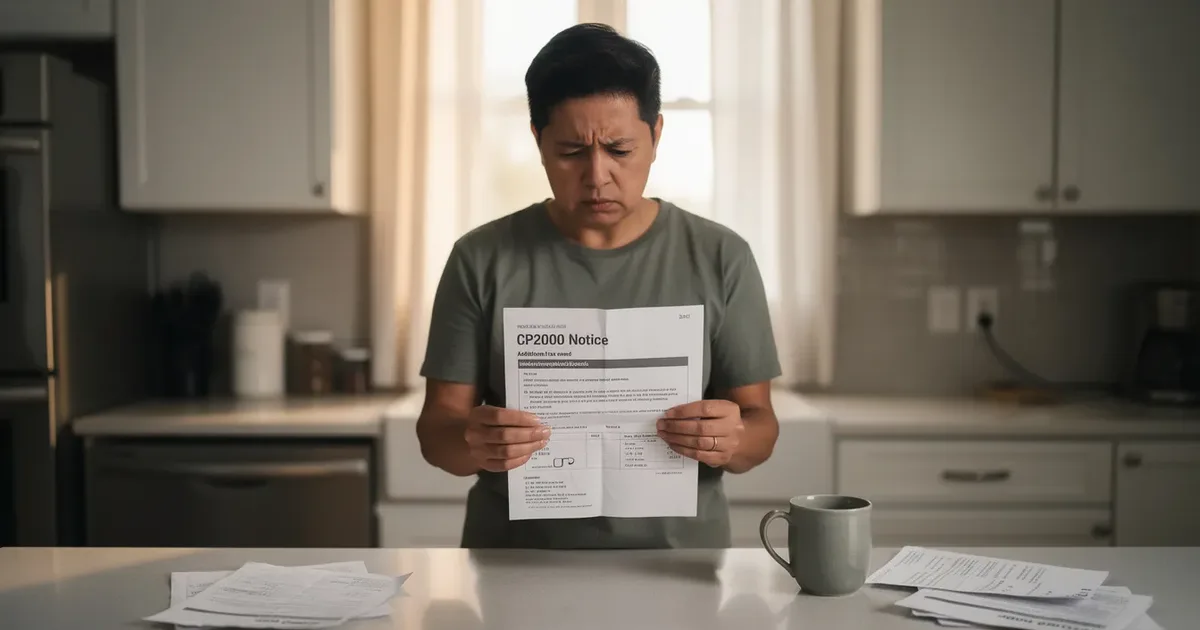
If you just pulled a CP2000 notice out of your mailbox and your first question is "how long do I have to respond?"-the short answer is usually 30 days from the notice date. But the full picture involves several overlapping deadlines, waiting periods, and escalation points that many taxpayers never see coming. This guide walks you through every stage, from the moment the Internal Revenue Service mails the notice to the day the case is finally closed.

CP2000 Response Deadline: How Long Do You Have to Reply?
You usually have 30 days to respond to a CP2000 notice. That response deadline is printed on page 1 of the letter, and it controls everything that happens next.
A critical detail that catches many taxpayers off guard: the deadline runs from the notice date, not the day you received or opened the envelope. If the notice sat in a pile of junk mail for two weeks, the clock was already ticking.
Here is how that plays out in practice:
A CP2000 notice dated June 1, 2026, sent to a U.S. address, would typically carry a response deadline of July 1, 2026.
If the taxpayer is outside the United States, the CP2000 often allows 60 days, pushing that same deadline to approximately July 31, 2026.
If you need a bit more breathing room, you can request a 30-day extension to respond to your CP2000 by calling the phone number listed on the notice before the original deadline expires.
Failing to respond by the response deadline usually means the IRS treats the proposed adjustment as accepted. At that point, the IRS can assess additional tax, proposed penalties, and additional interest without your input.
ClearNotice helps users upload their CP2000 notice and instantly see the exact response deadline highlighted and explained in plain English-no guessing required.
How Long the IRS Takes to Respond After You Send Your CP2000 Reply
Once you mail or upload your response, the waiting begins. The IRS usually does not send immediate confirmations upon receipt of a CP2000 response, because your reply may first be logged into an automated system before any acknowledgement is issued, so silence in the first couple of weeks is normal-not a sign that something went wrong.
The IRS aims to send a substantive or interim reply within 30 days of receiving a CP2000 response. In practice, most sources indicate a typical IRS response window of 30 to 90 days after sending a CP2000 response. Here is what to expect:
Acknowledgement letter: Roughly 2 to 4 weeks after submission, some taxpayers receive a short "we received your information" letter, though this is not guaranteed.
Simple cases: A straightforward CP2000 response typically resolves in 60 to 90 days.
Complex cases: Complex CP2000 cases can take six months or longer to resolve, especially when the disagreement involves multiple income documents or investment transactions.
There is no exact published IRS deadline to finish reviewing a CP2000 response. Submitting documents during peak tax season can cause heavy backlogs and extra delays that push resolution timelines well beyond the ranges above.
ClearNotice encourages users to keep copies and track mailing or upload dates, and offers follow-up guidance if no response arrives within expected time frames.
CP2000 Timeline at a Glance: From Notice Date to Final Notice
To make the full lifecycle concrete, here is a typical sequence using example dates:
April 15, 2025: Tax return filed for the 2024 tax year.
February 1, 2026: The IRS system detects a mismatch and the IRS sends a CP2000 notice.
March 3, 2026: Response deadline (30 days from notice date).
March–April 2026: IRS acknowledges receipt (if at all) and begins the review period.
June–August 2026: IRS completes review and issues a final notice showing the additional tax owed, or sends a letter accepting your explanation.
If unresolved: The IRS may escalate to a statutory notice of deficiency (CP3219A), triggering a 90-day window to petition tax court.
One detail that surprises many taxpayers: interest accrues daily on any unpaid tax balance after a CP2000, and that interest starts from the original return due date-not from the CP2000 notice date. Paying earlier, even before the case is fully resolved, can reduce total interest and additional tax owed.
ClearNotice visually maps this timeline so users can see what happens next and when each deadline arrives.
What Your CP2000 Notice Actually Is (and Is Not)
A CP2000 notice proposes changes to your tax return based on income discrepancies between what you reported and what the IRS received from employers, banks, financial institutions, and other third parties. The IRS uses third-party data to generate CP2000 notices-matching W-2s, 1099s, and similar income documents against the amounts reported on your filed return.
What a CP2000 notice is:
A proposed adjustment to your tax liability under the Automated Underreporter (AUR) program
An automated notice inviting you to agree, partially agree, or disagree
A description of the IRS proposes changes and additional tax the IRS believes you may owe
What a CP2000 notice is not:
A CP2000 notice is not a final bill or an audit-it is not a full IRS audit in the traditional sense
Not a final notice or a tax bill demanding immediate payment
Not proof that you did anything wrong; sometimes the reporting error is on the third party's side
ClearNotice's core service is decoding exactly what the CP2000 is saying in plain English so you know whether you likely owe more taxes or whether the IRS may be wrong about the underreported income.
How Much Time You Really Have Before Things Escalate
The formal response deadline is usually 30 days, but the real risk window stretches much further-and not in your favor. Responding late may limit your options with the IRS significantly.
Here is the escalation chain if you do nothing:
After the 30-day deadline passes: The IRS treats the proposed changes as accepted and can assess additional tax.
Statutory notice of deficiency (CP3219A): Failure to respond can lead to a statutory notice of deficiency. The IRS may issue a statutory notice of deficiency after 90 days if the matter remains unresolved. This gives you 90 days (150 days if abroad) to petition the U.S. tax court-a hard legal deadline under IRC §6213(a), not just an internal IRS target.
Collections: Once the additional tax is assessed and unpaid, other IRS notices follow-CP14, CP501, CP503, and potentially a final notice of intent to levy (CP90).
Liens and levies: The IRS department handling collections can file a federal tax lien or start levies on wages and bank accounts.
Penalties can reach 20% of the underpaid tax for non-willful cases under IRC §6662. Willful underreporting can incur a fraud penalty of up to 75%. These numbers make it clear why responding within 30 days-even if you disagree-keeps more options open, including the ability to negotiate penalties, explore payment options, and appeal within the IRS.
How to Respond Within the CP2000 Response Deadline
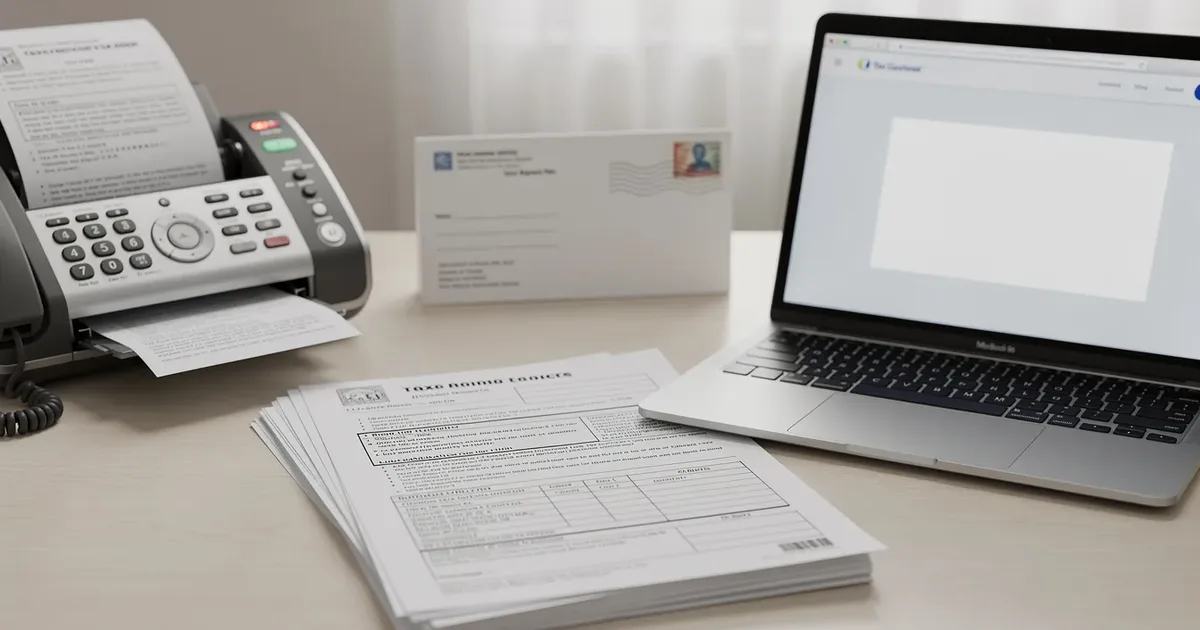
How you respond matters less than responding on time. Multiple submission methods are available:
IRS Document Upload Tool (fastest): Use the access code printed on your notice to submit electronically through the IRS online system.
Fax: Send your response to the fax number on the notice. An online fax service works if you do not have a physical fax machine.
Mail: Send your response to the address listed on page 1 of the CP2000. The IRS recommends using certified mail or the fax number on the CP2000 notice for submissions so you have proof of delivery. If your notice came from IRS Holtsville NY, make sure you use the exact return address printed on the letter.
When completing the response form included with your notice:
Check "agree," "partially agree," or "disagree"
Include a signed statement explaining why you disagree (if applicable), along with supporting documentation such as income transcripts, cost basis records from financial institutions, or corrected forms from employers
For joint returns, both spouses must sign the response form, or the IRS can treat it as incomplete
Include your social security number or taxpayer identification number on every page you send
ClearNotice can walk you step by step through filling out the response form and drafting a short letter explaining your position, tailored to your situation.

Typical IRS Review Time by Scenario
The IRS processing time for a CP2000 notice ranges from 30 to 180 days, depending heavily on whether you agree, partially agree, or fully disagree with the proposed changes.
Full agreement with payment: Full agreement with a CP2000 notice typically takes 30 to 60 days for processing. The tax examiner updates your account, and you receive a final bill reflecting the additional tax owed plus interest.
Partial agreement: Partial agreement submissions require 90 to 120 days for IRS manual review. A tax examiner must review each item you accepted and each item you disputed, which takes longer than a simple "yes."
Full disagreement with documentation: Full disagreement cases involving substantial evidence may take 120 to 180 days or longer. If the IRS needs more information, they may send another letter adding 30 to 60 days to the timeline before they make a final decision.
You can check CP2000 status via your IRS online account by looking for transcript codes that show additional tax assessments or adjustments. You can also call the number on your CP2000 notice for status updates.
ClearNotice helps users interpret transcript activity and understand whether the IRS accepts their explanation, the IRS rejects it, or is still in the middle of the review period.
What Happens If You Ignore the CP2000 or Miss the Deadline?
Doing nothing is usually the worst option and does not make the same issue disappear. Ignoring a CP2000 notice allows the IRS to assess additional taxes without your input, and ignoring a CP2000 notice can lead to automatic tax adjustments on your account.
Here is the typical sequence after a missed deadline:
Assessment: The IRS finalizes the proposed adjustment as though you agreed. The IRS issues a bill for the additional tax owed, including penalties and additional interest.
Collection notices: If unpaid, the IRS sends escalating notices-CP14 (initial balance due), CP501, CP503, and eventually CP504.
Final notice of intent to levy: A CP90 or LT11 warns that the IRS may seize assets.
Liens and levies: The IRS can file a federal tax lien against your property or levy wages and bank accounts, which dramatically raises the financial and emotional stakes.
Responding on time-even a short signed statement with missing documentation you plan to supplement later-is almost always better than silence.
ClearNotice can still help after missed deadlines by explaining the new notice (such as a CP3219A) and outlining remaining options like appeals, audit reconsideration, or requesting a payment plan.
How Long Can the IRS Pursue CP2000-Related Additional Tax?
Under IRC §6501, the IRS generally has three years from the date a tax return was filed (or the due date, whichever is later) to assess additional tax. Most CP2000 notices appear well within this window-typically 12 to 18 months after filing.
Issuing a CP2000 does not restart the three-year clock. But as the deadline approaches, the IRS may speed up and issue a statutory notice of deficiency to lock in assessment rights before time runs out.
Once the IRS does assess the additional tax, the collection statute is much longer-generally ten years from the date of assessment. That is a long time for an unpaid balance to grow with interest.
In rare cases where income was substantially understated (more than 25%) or fraud is involved, longer or indefinite assessment periods may apply. But most CP2000 cases involve ordinary mistakes-other income from a forgotten 1099, unreported income from a side gig, or a cost basis error on investment transactions.
Responding promptly is the best way to prevent a simple CP2000 from turning into a multi-year tax problem that affects your financial interests.
Do You Need an Amended Return or Is the CP2000 Response Enough?
Many taxpayers instinctively reach for Form 1040-X when they get a CP2000, but that is usually the wrong move. Do not file an amended return in response to a CP2000 unless you have changes beyond what the notice covers.
Here is a simple decision framework:
CP2000 is fully correct, no other changes needed: Use the CP2000 response form. The IRS typically prefers this and it stays within the same IRS department handling your case.
You have additional income, deductions, or credits to report beyond the proposed adjustment: An amended return (Form 1040-X) may be appropriate, but submit it alongside your CP2000 response form-not instead of it.
You only file a 1040-X without responding to the CP2000: This goes to a different IRS unit and can slow things down considerably, or cause the IRS to treat your case as non-response.
If you filed your own records and realize the income reported on your return was indeed wrong, a simple agreement on the response form is faster and cleaner than an amended return.
ClearNotice can help you decide whether your specific situation calls for a simple CP2000 response, an amended return, or both together.
What the Final Notice Looks Like and How Long It Takes
The "end of the road" for most CP2000 cases is a final notice summarizing the IRS's decision. What that looks like depends on how things played out:
If the IRS accepts your agreement: You may receive a final notice within 4 to 12 weeks showing the official additional tax owed plus updated interest and penalties.
If the IRS partially accepts your disagreement: The final notice will outline which items were adjusted and which were not, along with the resulting balance.
If the IRS fully accepts your disagreement: You will receive a letter confirming no changes-and no additional tax owed.
If you still disagree with the final notice, time-sensitive appeal rights may apply. Missing those deadlines can limit you to audit reconsideration (a slower, less favorable process) or paying first and then seeking a refund.
ClearNotice helps users understand whether a letter is a routine balance-due notice, a final notice of deficiency, or some other important IRS notice-and what clock is now running.
Payment Options When Additional Tax Is Assessed
Once the IRS finalizes the additional tax from a CP2000, the focus shifts from "Do I owe?" to "How do I pay?" Here are the primary payment options:
Pay in full: Use IRS Direct Pay, a debit or credit card, or mail a check or money order with the payment voucher from your final bill.
Installment agreement: If you cannot pay at once, you can set up a payment plan through the IRS online system. Short-term plans (120 days or fewer) and long-term installment agreements are both available.
Offer in Compromise: In rare cases where you truly cannot pay the full amount, you may qualify to settle for less.
Paying within 30 days of the billing notice can reduce additional interest and penalties, even if the CP2000 itself was resolved earlier. The bill may include accuracy-related penalties, and taxpayers can sometimes request penalty abatement for reasonable cause or first-time abatement.
ClearNotice can help you understand the breakdown of additional tax owed, penalties, and interest on your final notice and prepare questions before calling the IRS or a tax pro.
When to Get Professional or ClearNotice Help with CP2000 Delays
Long silence from the IRS after you respond to a CP2000 can be stressful. Here is when to take action:
Follow up with the IRS directly if:
More than 90 days have passed with no letter or transcript change
You sent your response during tax season and suspect backlogs
You want to confirm the IRS received your documents
Consider the Taxpayer Advocate Service if:
The IRS has not responded after repeated follow-ups
You are facing financial hardship due to the unresolved tax issues
Seek professional help from tax professionals or a tax attorney if:
The proposed additional tax is substantial (five figures or more)
You have multiple years of CP2000 notices about the same issue
The IRS rejects your response and issues a CP3219A
The case involves complex situations like unreported income from foreign accounts or other financial interests
ClearNotice fits into this picture as the first line of defense. It does not replace a CPA or attorney, but it quickly decodes the IRS notices you are getting, flags deadlines like the response deadline or petition deadline, and suggests what type of professional help-whether a free consultation with a tax pro or full representation by a tax attorney-makes sense next. You can check the authorization section of your notice to understand who can speak to the IRS on your behalf.
While IRS timelines can be slow and unpredictable, staying on top of each notice and deadline-with tools like ClearNotice-usually leads to a better and less costly outcome than hoping the IRS forgets.
Keep reading
 CP2000 & income mismatch
CP2000 Accuracy Penalty: What It Is and Next Steps
A CP2000 notice can include a 20% accuracy-related penalty on top of proposed extra tax. This guide explains what triggers it, how the IRS calculates it, and what your response options are.
 CP2000 & income mismatch
CP2000 Response Time: What to Expect From IRS | ClearNotice
Sent your CP2000 response and still waiting? Most taxpayers hear back within 30 to 90 days. Here is exactly what happens after you respond and when to follow up.
 CP2000 & income mismatch
CP2000 Response: Upload, Fax, or Mail Ranked | ClearNotice
The IRS gives you three ways to respond to a CP2000 notice: upload, fax, or mail. This guide ranks all three by speed so you can pick the fastest option your notice allows before your 30-day deadline runs out.