
How to Write a Letter to IRS (With Examples for Common Situations)
You opened your mailbox, found an IRS notice, and now you need to write back. A letter to the IRS is a structured written response to a tax notice or issue that identifies you, references the notice, states whether you agree or disagree with the IRS, and includes any supporting documents needed to address proposed changes, payments, audits, or disputes.
If you’re a U.S. taxpayer trying to make sense of confusing IRS correspondence without a tax or legal background, this guide walks through exactly how to structure, write, and send that response. You’ll learn how to identify the notice and its deadline, handle common situations such as income discrepancies, audits, collection notices, and payment plans, and track your mailed reply so it is processed correctly. A clear, timely letter can help you avoid extra tax, penalties, liens, or levies while protecting your right to explain or challenge the IRS’s position.
1. Before You Write: Understand Your IRS Notice and What's at Stake
Most letters to the IRS are direct responses to a specific irs notice, not unsolicited correspondence. Every notice the IRS sends carries a CP or LTR number printed in the top right corner of the first page. That identifier tells you which IRS process generated the notice, what rules apply, and where your reply should be routed. Before writing a single word, locate that number and write it down.
Here are the most common reasons someone needs to write back to the IRS:
CP2000 "Request for Verification of Unreported Income": the IRS received information from employers, banks, or brokers that doesn't match what was reported on the tax return.
Letter 525 (30-day examination letter): the IRS proposes changes after a mail audit and gives 30 days to respond or request an appeals conference.
Letter 531 / Letter 3219 (Notice of Deficiency, also called the "90-day letter"): the IRS formally proposes additional tax and gives 90 days to petition U.S. Tax Court.
CP90 / Letter 1058 (Final Notice of Intent to Levy): the IRS warns it will seize wages, bank accounts, or other property to collect unpaid tax.
CP523: default on an existing installment agreement.
CP11 / CP12: the IRS changed or corrected the return without the taxpayer filing an amendment.

Review the IRS notice carefully and keep it for records. Open the "Summary of Proposed Changes" or "Explanation" section and compare it line by line with the filed tax return for the tax year in question. If the notice references your 2023 Form 1040 that you filed on or about April 15, 2024, pull up that return and check every figure the IRS cites.
Pay close attention to the deadline printed on the notice. The IRS uses 15-day, 30-day, and 90-day windows depending on the notice type. Letter 525 gives 30 days from the notice date. Letter 531 gives 90 days (150 days if you're outside the U.S.). CP90 gives 30 days to request a Collection Due Process hearing. These deadlines run from the date printed on the notice, not the date you received it. Respond by the due date to guarantee your appeal rights.
Ignoring the notice can lead to the IRS assessing extra tax, adding penalties and interest, filing a federal tax lien, or starting levy actions. A clear, timely reply often keeps options open for payment plans, appeals, or corrections.
Follow the instructions in the notice to identify what the IRS expects, then take any requested action within the stated deadline. Send your letter as soon as possible to increase your chances of a favorable outcome.
ClearNotice can help before you start writing. Upload your IRS notice to get a plain-English summary of what it means, the exact deadline, and a structured checklist of what your response letter should cover. That checklist makes sure you don't miss a required element or misread a deadline.
2. Core Elements of a Professional Letter to the IRS
Writing a letter to the IRS requires clear organization and precise details. Regardless of which notice you received, an effective response follows a predictable structure. Use a business letter format for your IRS correspondence so the examiner or agent can locate your information quickly.
Here are the components every response letter needs:
Date and IRS address
Include the IRS's address and your contact information in the letter. Copy the IRS mailing address exactly as shown on your notice (for example, "Internal Revenue Service, Austin, TX 73301-0002"). Date the letter the same day you sign it.
Taxpayer identification
Include your full name and current address in your letter to the IRS. List your phone number and the last four digits of your Social Security Number or Employer Identification Number. If responding about a joint return, include both names and both partial SSNs.
Reference line
Add a reference line under the address block:
Re: Response to CP2000 dated May 10, 2026; Tax Year 2024
or
Re: Letter 531 (Notice of Deficiency), Tax Year 2022
State the tax year and notice number in your IRS correspondence so the agent can pull up the correct file immediately.
Opening paragraph
The first paragraph should state whether you agree or disagree with the IRS's proposed changes and note that you are submitting this letter by the deadline printed on the notice.
Body of the letter
How you handle the body depends on your situation:
If you agree with the IRS: Confirm agreement with the changes. Mention how you will pay any balance due (lump sum, installment agreement request via Form 9465, etc.). Reference any enclosed payment or form.
If you partially agree: Clearly state which items or dollar amounts you agree with and which you dispute. Reference line numbers or descriptions from the IRS computation report so the examiner can match your letter to their worksheet.
If you disagree: Explain your disagreement with IRS inquiries factually and concisely. For example: "The IRS did not credit Form W-2 wages of $42,310 from Employer ABC, reported on line 1a of my 2023 Form 1040." Include supporting documentation when disputing an IRS notice. Attach readable copies of supporting documents to your IRS letter.
Keep the tone neutral. IRS employees process thousands of responses; they focus on tax law and the facts in the file, not emotional language.
Signature
Sign and date the letter when sending correspondence to the IRS. Individuals should sign in ink. Joint filers (married filing jointly) generally both sign if the notice relates to a joint tax return.
Enclosures
Attach a copy of the IRS notice you are responding to. List every attachment at the bottom of the letter. Identify additional documents by noting "Enclosure(s)" at the end:
Enclosures: 1. Copy of CP2000 notice dated May 10, 2026 2. 2024 Form 1099-INT from First National Bank 3. Copy of the tax return (2024 Form 1040, pages 1–2) 4. Pay stub dated March 31, 2024
Only send copies, never originals. If pages get separated during IRS processing, originals are gone for good.
Your letter should track specific numbers and terms used in the IRS notice (such as "underreported income," "unreported 1099-NEC," or "notice of deficiency") so the IRS employee can connect it to their internal systems. Include information that directly addresses each item the IRS raised.
Keep a copy of everything you send to the IRS for your records. Save a signed personal copy of the letter and all attachments in a dedicated "IRS; Tax Year 20XX" folder. Mail the package via certified mail with return receipt so you have proof the IRS received the response before the deadline.
3. Writing to the IRS for Common Tax Return and Notice Situations
The exact content of your letter changes depending on the type of notice. Below is guidance organized by scenario, focusing on what each letter should contain rather than on full sample text. Every example assumes you've already set up the letter with the core elements from Section 2.
Responding to a CP2000 (unreported income mismatch)
A CP2000 notice means the IRS received information returns (W-2s, 1099s) from third parties that don't match what you reported. This is not a bill; it is a proposal. According to IRS Publication 5181 and the CP2000 guidance page, taxpayers who respond with complete documentation often resolve the issue without escalation.
Your letter should:
Reference the CP2000 date and the tax year (for example, "CP2000 dated June 5, 2026, regarding Tax Year 2024").
Address each category the IRS lists: wages, interest, dividends, brokerage income, gig income.
For each item, either confirm that the IRS is correct or explain the discrepancy. Common explanations include income reported under a different SSN due to an employer error, a corrected 1099 that reduced the amount, or income that belongs to another taxpayer (such as a former spouse).
Attach copies of corrected forms, bank statements, or broker statements that support your position. If you agree, sign the response form enclosed with the notice and note how you plan to pay any amount owed.
Responding to an examination notice (Letter 525, 692, or 915)
These 30-day letters follow an IRS audit. The IRS proposes specific adjustments to the tax return for a given tax year.
Organize the letter by issue, matching the IRS's own structure: "Issue 1: Schedule C Vehicle Expenses," "Issue 2: Charitable Contribution Deduction."
Under each issue, restate the IRS finding, then provide your position with facts. For example, if the IRS reduced a charitable deduction from $8,400 to $0 because receipts were missing, attach dated receipts, acknowledgment letters from the charity, and bank statements showing the payments.
If you partially agree, separate agreed items from disputed items with clear labels and dollar amounts.
If you broadly disagree with all proposed changes, state that you request an appeal conference with the IRS Office of Appeals.
When the IRS changed or corrected the return without a full audit
Notices like CP11 or CP12 inform you that the IRS changed or corrected your tax return due to a math error or a similar automatic adjustment. Compare the IRS-changed figures to the original return line items. Check Adjusted Gross Income on line 11, tax on line 16, and credits on the relevant lines of Form 1040.
If you agree with the correction, review the updated tax return and keep a copy of the corrected version with your records, then write a brief confirmation. Pay any amount due by the specified due date and keep copies of everything in case the issue comes up in future years. If you disagree, write a concise explanation identifying the specific line the IRS got wrong. Reference the original return figures and attach a copy of the tax return pages that show your numbers.
Collection notices: CP90, CP297, Letter 1058, or CP523
These are the most urgent. A CP90 or Letter 1058 is a final notice before the IRS levies wages, bank accounts, or other property. A CP523 means you defaulted on an installment agreement.
Acknowledge in the letter that you received the "Final Notice of Intent to Levy" or "Installment Agreement Default" and that you want to prevent enforced collection.
If you received a CP90, you have 30 days from the notice date to request a Collection Due Process hearing by filing Form 12153. Mention this request in your letter and include the completed form. The form requires your signature, taxpayer identification, the tax period involved, reasons for your dispute, and a proposed collection alternative.
Summarize your financial situation briefly: a job loss in March 2026, a medical emergency in 2025, reduced income. Propose an alternative such as a new installment agreement at $200 per month starting on a specific date.
Include Form 433-A (Collection Information Statement) if you're requesting currently-not-collectible status or an offer in compromise.
Deficiency notices: Letter 531 and Letter 950
If the taxpayer wants to preserve the right to go to U.S. Tax Court without paying first, the critical deadline is the 90-day period on the notice. Under 26 CFR §301.6213-1, you must file a petition in Tax Court by that deadline. A letter alone does not substitute for a petition.
That said, you can still send a letter explaining why you disagree and providing documentation, especially if you also plan to work with the IRS Office of Appeals. If you're unsure whether to petition, consider professional help or a tool like ClearNotice to understand the legal consequences of missing the 90-day window.
Requesting or modifying a payment plan
When you agree you owe the tax but can't pay in full:
Describe your monthly income and essential expenses in summary form.
State the exact amount you propose to pay each month and the date you can start (for example, "$300/month beginning January 15, 2027").
Enclose Form 9465 (Installment Agreement Request) or note that you submitted the request online through the IRS payment portal.
Reference any previous installment agreement CP notices if you're asking to reinstate or modify an existing plan.

ClearNotice's explanations can serve as a starting point, but customize the letter with your specific facts: dates, amounts, employer names, bank names. The IRS verifies your claims against its own records, and generic language slows that process down.
4. Sending, Tracking, and Following Up on Your IRS Letter
Writing the letter is half the task. Properly sending and tracking the response protects the taxpayer's rights and creates proof of compliance if questions come up later.
Mailing best practices
Follow the instructions and mailing address provided on the IRS notice. Mail to the exact address printed on the notice's "contact stub" or "respond to" section, not to a generic IRS address. Different notice types route to different processing centers.
Use a certified mail service to send your IRS correspondence for proof of delivery. USPS Certified Mail with return receipt requested is the standard. Keep the receipt.
Put your name, last four digits of your SSN, and tax year on each page and attachment in case pages get separated during processing.
Digital options
Some notices allow you to reply through your IRS online account or secure messaging. In those cases, you can upload a PDF version of the letter and scanned attachments. Consider enrolling in IRS online services for future tax return years to receive certain notices electronically and monitor balances and payment history.
ClearNotice complements the IRS's online account by decoding uploaded PDF notices and summarizing exactly what the IRS is asking for before you respond. You can use ClearNotice's main navigation to find explanations for any CP or LTR number.
How long to keep tax records
Keep copies of the IRS notice, your response letter, delivery proof, and all supporting documents for at least three years from the date the tax return was filed or two years from the date the tax was paid, whichever is later. For issues involving fraud, large losses, or deficiency notices, keep records for up to seven years. These records include historical content that is useful if the IRS sends a follow-up notice, reopens an issue, or if a future tax professional needs to see what was already submitted.
What to expect after mailing
Many IRS correspondence responses take 6 to 12 weeks for a reply, sometimes longer during peak filing season (January through April).
Do not send duplicate letters unless the IRS indicates the original wasn't received. Multiple letters on the same issue can slow processing.
If no response arrives after the time frame listed on the notice, contact the IRS at the phone number printed on that notice. Have your letter copy and tracking information ready.
Verifying follow-up communications
The IRS initiates contact by mail, not by text, social media, or standard email. If you receive an unexpected follow-up, verify it by logging into IRS.gov directly. Look for the locked padlock icon in your browser's address bar to confirm you're on the real site. Call 800-829-1040 if you suspect a scam rather than responding to numbers in suspicious messages. If a supposed IRS notice doesn't carry a recognizable CP or LTR number, treat it with suspicion and confirm with the IRS before sending any personal information.
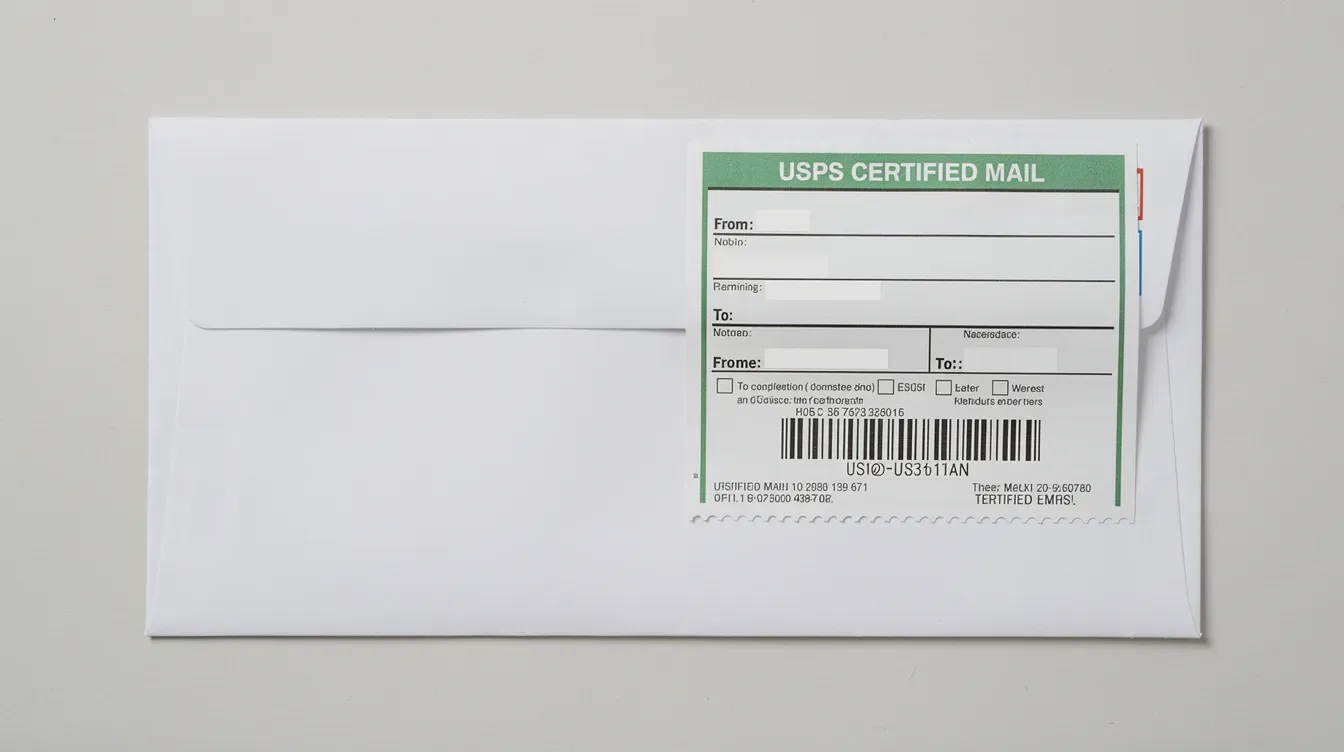
A clear, organized letter combined with good documentation and tracked delivery resolves many IRS notice issues before they escalate to collections or court. If you're looking at an IRS notice right now and aren't sure where to start, upload it to ClearNotice. You'll get a plain-English breakdown of what the notice means, the exact deadline you're working against, and a tailored checklist for what your letter to the IRS should include.
Keep reading
 Deadlines & how to respond
CP2100A Notice: What It Means and What To Do Next
A CP2100A notice is an IRS letter alerting businesses to fewer than 50 TIN mismatches on their Form 1099 filings. Learn what it means, how to respond on time, and how to avoid costly penalties.
 Deadlines & how to respond
Sample of Letter to IRS: CP2000, Appeal & Payment Plan
Writing back to the IRS does not have to be intimidating. This guide provides ready-to-use sample letters for common IRS notices like CP2000, covering proper format, deadlines, and the most common mistakes to avoid.