
US Department of Treasury Mail: What It Means and What To Do

Opening That Treasury Envelope: Quick Triage
If you received mail marked "U.S. Department of the Treasury," take a breath. That envelope is most likely an official IRS notice about your tax return, a Treasury check for a refund or federal benefit, or in rare cases a scam imitation. Ignoring it never helps, and opening it quickly is the fastest way to see whether you need to respond, cash a payment, or protect yourself from fraud.
Correspondence is processed and handled by the U.S. Department of the Treasury, which oversees agencies like the IRS and distributes payments for the Social Security Administration and other programs. Your letter or check could relate to a tax refund, social security benefits, or another federal payment. For taxpayers who get confusing IRS or Treasury mail and want a plain-English explanation without tax or legal jargon, this guide shows how to identify what you received, understand common Treasury and IRS letters, spot scam red flags, and know what to do next.
ClearNotice helps taxpayers understand IRS notices in plain English, so you can quickly determine what the government is asking, what your deadline is, and how to respond before missed deadlines turn into bigger tax problems.
The approach is simple: open it, identify it, act on it.
Why You Got Mail From the U.S. Department of the Treasury or Internal Revenue Service
IRS letters are legally sent under the "Department of the Treasury" heading. Outgoing communications are generally prepared through the responsible Treasury office, and the U.S. Department of the Treasury manages mail operations through specialized operating bureaus. Treasury handles significant operational responsibilities including federal financial and economic policy, but the mail in your hand is typically about one of these topics:
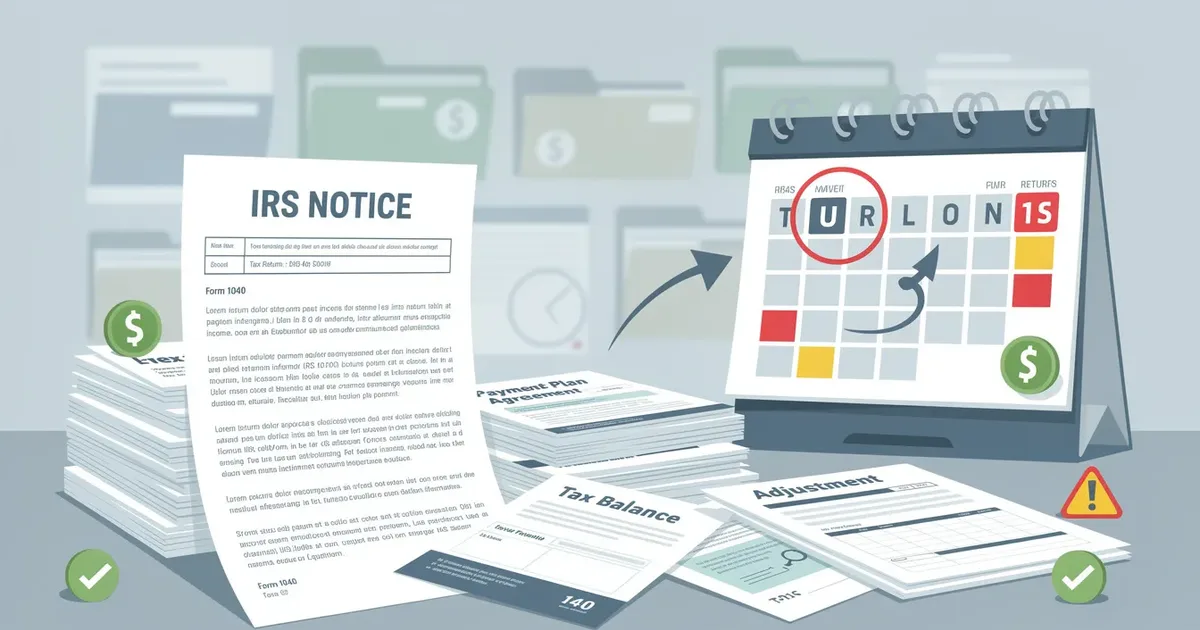
Balance due or late payment. A notice like CP14 means the IRS believes you owe money based on a filed tax return. It is essentially a first bill for taxes, penalties, and interest.
Return adjustments. A CP2000 notice means the IRS used third-party records to compare what you reported and found a mismatch. This is a proposed correction, not a final bill, and you can agree or respond with documentation.
Identity verification. Letters like 5071C or 4883C ask you to confirm you filed a return before the agency will release a refund or direct deposit. The IRS suspended over 1.9 million returns in 2024 for this reason.
Federal benefit payments. The Treasury department issues payments for social security, veterans' benefits, and other programs. A paper check can be issued if your bank account information is invalid or expired, or if the agency does not have electronic payment details on file.
Other correspondence. Treasury also accepts Freedom of Information Act requests via mail, and the Office of Public Correspondence handles communications addressed to senior Treasury officials. Mail is reviewed to determine which Treasury component has responsibility. If a payment was sent by mistake, verify the source before taking action. Treasury must manage correspondence under federal records laws, and it treats incoming and outgoing correspondence as official government records.
Tax-related correspondence typically should be directed to the IRS rather than to Treasury's main office. If you need help understanding why the government agency contacted you, ClearNotice can decode the specific notice number for you.
How To Identify What You Received: Treasury Check or Other Documents
After you open the envelope, determine whether you are holding an IRS notice, a treasury check, or something suspicious.
Find the notice or letter number. Look at the top right corner of the first page. You will see identifiers like CP14, CP12, CP2000, CP90, 5071C, 4883C, or LT11. This number tells you exactly what the IRS is asking.
Note the tax year and form. The page will reference a specific tax year and form (such as Form 1040). It will also show any balance due or change to a tax refund.
Check for official formatting. Real IRS letters display the heading "Department of the Treasury / Internal Revenue Service," a date, and a section stating "What you need to do by" a specific date. That deadline is your clock.
Identify a check. A treasury check from the fiscal service includes the payee name, amount, issue date, and the paying agency, so confirm who it is meant to pay and why. Authentic Treasury checks have specific security features including watermarks and microprinting. The Treasury Check Verification System checks authenticity, and you can call 855-868-0151 to identify the issuing agency.
Read the first paragraph. Letters about direct deposit changes, returned deposits, or payment reissues will state which government bureau is responsible.
Use the notice number to search on IRS.gov or upload the letter to ClearNotice for a plain-language explanation.
Is It a Scam or Is It Real Treasury Mail?
Real IRS and Treasury communications about your taxes arrive first by USPS mail, not by email or text message. Scammers frequently imitate official wording. Treasury enforces strict anti-phishing protocols regarding correspondence security, and email records management policies require preservation in accordance with federal records requirements.
Red flags of a scam: Demands for payment by gift cards, wire transfers, cryptocurrency, or peer-to-peer apps. Threats of immediate arrest, deportation, or license revocation. These are not part of legitimate IRS contact.
What real mail never asks for: Your full social security number, bank PINs, passwords, or credit card numbers by email, text, or social media. If someone asks via those channels, it is wrong and likely fraudulent.
Legitimate markers: A real notice includes a letter number, an address matching IRS.gov contact information, and payment instructions directing you to the United States Treasury or authorized portals on a dot gov website.
Check authenticity: A missing watermark indicates a suspicious treasury check. If you are unsure, verify through official phone numbers on IRS.gov, ssa.gov, or treasury.gov rather than any number printed on a questionable letter.
Links and attachments: If a letter asks you to click a link or send personal data by email, go directly to official government websites instead. Use USPS Informed Delivery to confirm what mail was actually sent to your address.

What To Do Next, Step by Step for Direct Deposit or Paper Check
Acting promptly matters. IRS letters list specific response or payment deadlines, and legal frameworks establish a "Mailbox Rule" for timely filing based on the postmark date.
Open and confirm the sender. Check for "Department of the Treasury," "Internal Revenue Service," "Social Security Administration," or another agency name on the first page.
Write down key details. Note the date on the notice, the deadline to respond, the tax year, any amount due, and any change to your tax refund or direct deposit status.
Respond through official channels only. Log in to your IRS account through IRS.gov, send documents to the address printed on the notice, or call the phone number on the letter. Specific inquiries generally require mailing to designated offices or processing centers rather than the main address. Certain communications involving taxpayer information and legal issues receive special handling. Sensitive personal information should not be sent through unsecured postal mail.
Identity verification letters. Follow the instructions exactly. Use the IRS identity verification website or call the listed number. Have your copy of the filed return, W-2 forms, and prior-year records ready.
Unexpected checks. Unexpected checks may result from tax corrections or payment errors. Confirm whether a check connects to a tax refund, social security benefits, or another program before you cash it, and leave it uncashed while you verify why it was sent if it seems unexpected or incorrect. Report lost or stolen checks to the paying agency.
Use ClearNotice. Upload your IRS notice to understand what the letter means, what action to take, and how to prepare before you contact the IRS or a tax professional. Treasury may maintain correspondence tracking systems to ensure inquiries are addressed, but having your own clear plan saves time.
FAQ About U.S. Department of the Treasury Mail
Here are common questions people ask after receiving Treasury or IRS mail.
Is Department of the Treasury mail always from the IRS? No. Treasury mail can relate to IRS matters, social security payments, veterans' benefits, federal loans, or other programs handled through a treasury bureau like the fiscal service. Any us department under Treasury may send correspondence.
What if the envelope contains a check? Many paper checks relate to a tax refund or social security benefits, but recipients should confirm the source before cashing, especially if the amount does not match their records. You will receive information on the check claims process if you file a claim. Complete required forms to process your claim, and call 1-855-868-0151 for claim status updates.
Should I be worried if I receive an IRS notice? Apparently not in most cases. The majority of notices are routine: a request for information, a confirmation of a change, or a reminder that you owe a balance. Prompt attention usually keeps penalties and interest lower.
What happens if I ignore Treasury or IRS mail? Ignoring letters can lead to added penalties, continued refund holds, enforced collection actions, or delays in releasing federal payment disbursements. Your refunds may stay on hold until you respond.
Can I choose direct deposit instead of future Treasury checks? Yes. Taxpayers and beneficiaries can update their bank account and direct deposit information with the IRS, Social Security Administration, or other agencies. Electronic payments are faster and safer than paper checks, and as of September 30, 2025, most federal payments have shifted away from paper.
How can ClearNotice help with an IRS letter I just opened? Upload your IRS notice to ClearNotice to see what the notice number means, understand your deadline, review possible responses, and prepare questions before you contact the IRS or a tax person. The service explains your letter in plain language so you can take the right action in the right place, on time.
Keep reading
 Just got a letter (panic guides)
Got a Heavy Package From IRS? Here Is What It Means
A shipping alert about a heavy package from IRS sounds alarming, but it almost never means what you think. This guide explains what those packages really are and what to do next.
 Just got a letter (panic guides)
IRS Notices and Letters: What to Do Next: IRS Guide
Getting a letter from the IRS can be alarming, but most IRS notices and letters are routine. This guide walks you through exactly what to do, step by step, in plain English.
 Just got a letter (panic guides)
IRS Notice Codes Explained: What Each Letter Means
An IRS letter can be alarming, but every notice includes a specific code that tells you exactly what it is about. This guide explains how IRS notice codes work, what the most common ones mean, and your immediate next steps.