
IRS Scam Letter: How to Tell a Fake IRS Letter from a Real IRS Notice in 2026
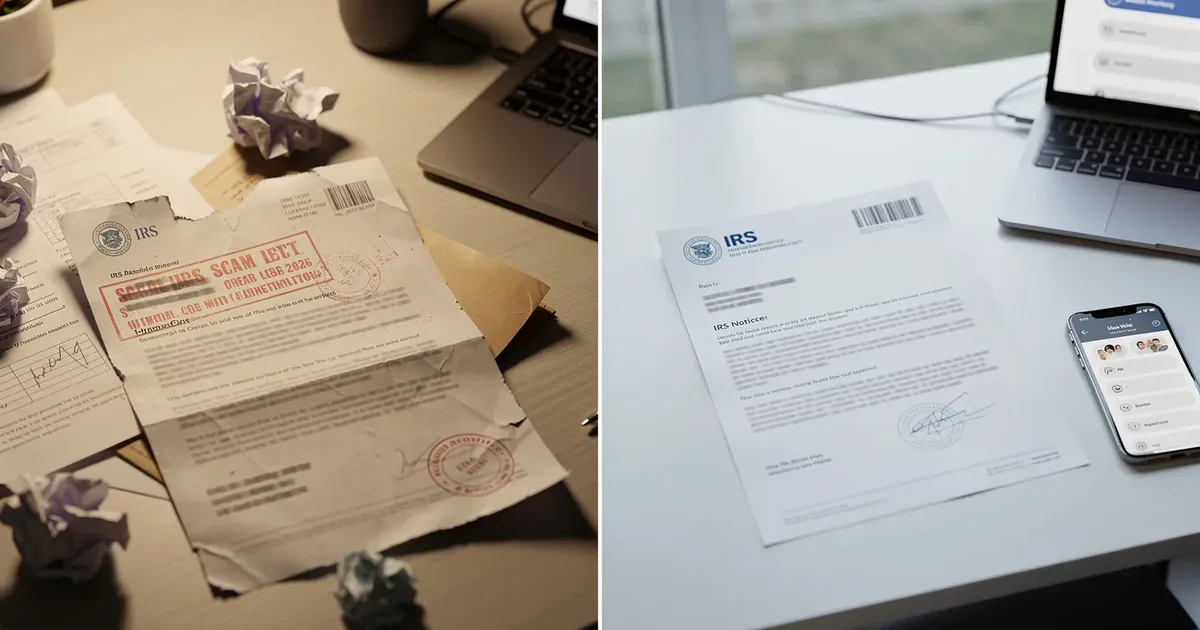
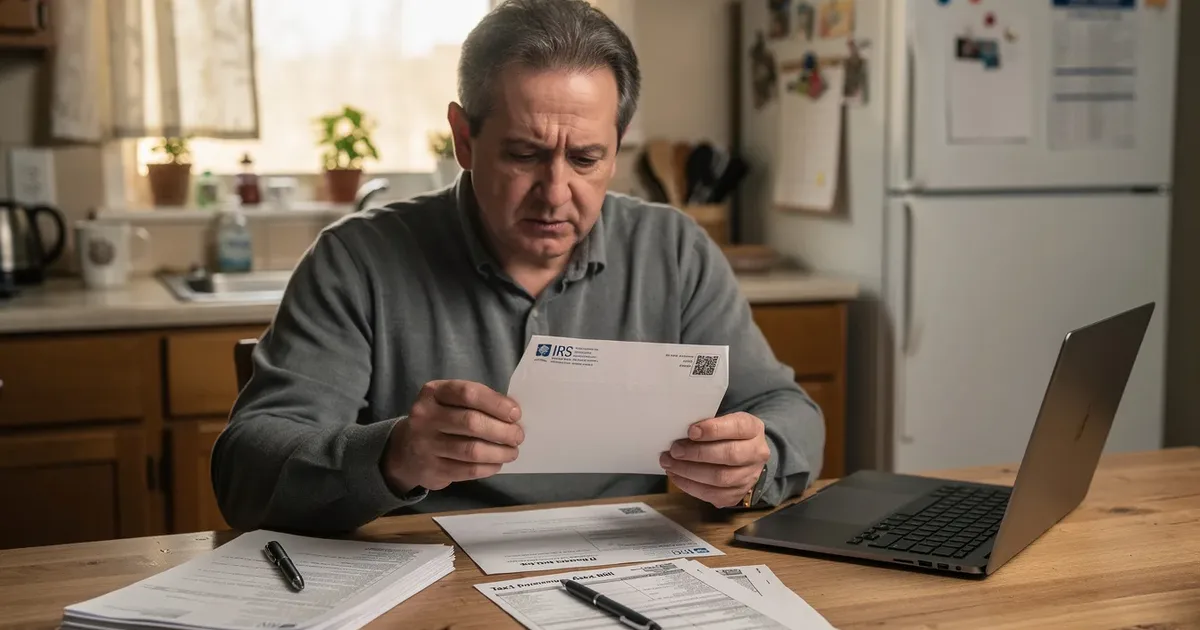
A suspicious IRS letter just showed up in your mailbox, and your stomach dropped. Before you pick up the phone, send a payment, or hand over any personal and financial information, take a breath. This guide walks you through exactly how to separate a real IRS notice from a fake IRS letter, what scams are circulating right now, and what to do no matter which side of the line your letter falls on.
Answer First: What To Do If You Just Got a Suspicious IRS Letter
The IRS primarily contacts taxpayers through mailed letters. That's how real IRS correspondence has always worked, and it's still true in 2026. The problem is that scammers know this too. Fake IRS letters surged by 60% in 2024, and the trend has only accelerated. Many of these fraudulent letters now mimic real IRS notices so closely that even careful readers can be fooled.
If you're holding a letter that feels off, here are your immediate steps:
Do not call any phone number printed on the letter until you verify it independently through IRS.gov.
Do not scan QR codes from the letter. They may redirect you to phishing sites.
Do not send money, gift cards, or cryptocurrency to anyone claiming to be an IRS representative.
Do not email or mail photos of your ID, Social Security card, or tax documents in response.
Do not log in to any website listed on the page. Suspicious web addresses that do not end in irs.gov should be viewed with caution.
Before doing anything else, look for two critical details on the letter: the notice number (such as CP14, CP2000, LTR 5071C, or CP53E) and the tax year it references (for example, "Tax Year: 2023"). If those are missing or vague, that's already a red flag.
Your safest next move is to verify the notice using your IRS online account at IRS.gov or by calling 800-829-1040, which is the official IRS contact number. Never use the phone number from the suspicious IRS letter itself.
You can also upload the letter to ClearNotice, a tool built specifically to help taxpayers decode IRS letters. ClearNotice gives you a plain-English breakdown of what the notice says, highlights deadlines, and flags inconsistencies before you respond.

How Real IRS Letters Work in 2025–2026
Understanding how the IRS communicates is your first line of defense. As the U.S. tax administration, the IRS almost always reaches out through the U.S. Postal Service first. The IRS may call only after sending a written notice first. It does not begin contact through email, text message, or social media messages.
A real IRS letter has a consistent layout:
The IRS logo or Department of the Treasury seal at the top
Your full legal name and mailing address
The last four digits of your SSN or ITIN (never the full number)
A specific tax year (e.g., 2023 or 2024)
A CP or LTR number in the upper-right corner
Common real notices you might receive include CP14 (balance due), CP2000 (underreported income), CP53E (direct deposit could not be completed), CP12 (math error with refund change), and LTR 5071C (identity verification request).
Legitimate IRS letters may contain details like the taxpayer's name and tax year involved, state exactly why the IRS is writing, and spell out how much you allegedly owe. Real IRS letters provide specific instructions and deadlines, typically 21 or 30 days to respond. They also explain your appeal or dispute rights.
Payment instructions in a real IRS letter always point to official payment options: IRS.gov/payments, Direct Pay, EFTPS, or checks payable to "United States Treasury." The IRS never demands payment via gift cards or prepaid debit cards.
Why Fake IRS Letters Are Surging in 2024–2026
Reports of fake IRS letters and tax scams have climbed sharply since the 2024 filing season. Scammers exploit taxpayer anxiety during tax season, taking advantage of confusion around pandemic-era credits, 2023-2025 refund delays, and new electronic refund rules. Over 1 million Americans received fake IRS letters in 2024, and victims may lose substantial amounts of money to scammers operating these schemes.
In 2025 alone, reported losses to government impersonation scams reached roughly $920 million according to Federal Trade Commission data. Cheap printers and AI text tools now make it easy for criminals to replicate fonts, the IRS logo, and references to real forms like Form 1040 or Form W-8BEN. The result is fraudulent notices that look disturbingly authentic.
Scammers target specific groups: older taxpayers, recent immigrants, small-business owners with EINs, and people with visible tax liens or public records. Fake IRS communications can lead to identity theft that takes months or years to resolve. These scams do not come from the real tax administration. They are separate criminal attempts to steal money, Social Security numbers, or bank account details.
Fake IRS mail is often coordinated with phone calls, texts, or emails impersonating "IRS collections" or the "Taxpayer Advocate Service," creating a multi-channel pressure campaign designed to force payment before you can think clearly.
Real IRS Letter vs Fake IRS Letter: The Core Differences
Here's a concrete side-by-side comparison of what separates real IRS correspondence from a suspicious letter:
Identity details:
A real IRS letter uses your full legal name and shows only the last four digits of your SSN.
A fake letter may say only "Dear Taxpayer" or display your full SSN to frighten you into responding.
Taxes and dates:
A legitimate IRS letter will reference your tax year (e.g., 2022 or 2023) and connect to your filed return.
A fake IRS letter might mention vague "unpaid taxes from 2019–2026" or use impossible deadlines like "pay within 24 hours." Scammers often use impossible deadlines to pressure victims.
Notice numbers:
Real IRS letters include a CP or LTR number you can search on the official IRS notice database.
Fake IRS letters may have no notice number, a made-up code like "CP-9045X," or recycle a real number with completely wrong content.
Tone:
Real IRS notices are firm but procedural, referencing Internal Revenue Code sections and explaining due-process rights.
Fake letters lean on threats. Scammers often threaten immediate arrest for non-payment in fake IRS communications. Threats of deportation or involvement of police in fake IRS letters are common tactics as well.
Payment instructions:
Official IRS payment instructions direct you to IRS.gov/payments or checks to "United States Treasury."
Fake IRS letters often contain urgent payment demands via Zelle, PayPal, Bitcoin, wire transfers, or a prepaid debit card. The IRS does not demand immediate payment via gift cards or prepaid cards.

Red Flags That Your IRS Letter Is Probably Fake
Treat this as a checklist. If you spot even one of these in a suspicious IRS letter, stop and verify before responding.
Tone red flags:
Aggressive threats like "you will be arrested today" or "federal agents are en route"
Promises of "secret" government programs or "immediate refund release" if you act today
Language designed to threaten arrest, suspend your license, or demand payment under duress
Content red flags:
No tax year listed anywhere on the letter
Wrong name, wrong middle initial, or wrong address
Claims about a "criminal warrant" without citing any Internal Revenue Code sections or due-process rights
A letter claiming you owe taxes for years you never filed
Formatting red flags:
Blurry IRS logo, strange fonts, uneven margins
Typos like "Internel Revenue Servise" or odd capitalization
A return address that doesn't match known IRS processing centers
Communication red flags:
Instructions to text a cellphone number or use WhatsApp
Requests to email documents to a free email account (Gmail, Yahoo) rather than an irs.gov domain
Follow-up contact via social media messages from supposed IRS agents
Data-grab red flags:
Requests for your full Social Security number, full bank account number and PIN, or online banking login
Demands for photos of your driver's license, passport, or credit card
Any request for personally identifiable information that the IRS would already have on file
Specific Fake IRS Letter Scams Circulating in 2025–2026
Scammers continuously adapt, but several recurring fake IRS scams are especially active right now.
Fake "unclaimed refund" letters. These claim a 2023 or 2024 refund is being held and will only be released if you provide your bank account and routing numbers by mail or QR code. Because millions of taxpayers experienced refund delays, this scam thrives on confusion. Scammers frequently use fake IRS letters to collect personal information this way.
Fake "tax debt relief" letters. These promise to wipe out your outstanding tax balance or "enroll you in a 2025 Biden Fresh Start Program" if you immediately call a toll-free sales line and pay a processing fee. They are not affiliated with any official IRS program.
Fake "lien and levy" letters. These mimic the real Notice of Federal Tax Lien but direct payment to a non-Treasury address or a private bank account. The IRS language is copied but the payment destination gives it away.
CP53E-style scams. Because CP53E is a real and widespread notice (the IRS mailed over 3 million CP53E notices during the 2026 filing season), scammers now send fake versions claiming your direct deposit failed. They demand you "re-verify" by entering bank details on a website with a similar-looking URL that is not IRS.gov.
Fake private collection letters. Some letters imitate private debt collection letters but skip the required IRS notice CP40 and instead push you to call a collection number printed on the page. Phishing emails often ask for personal information or contain malicious links that accompany these mailed notice scams.
How to Use IRS Online Account to Verify Any IRS Letter
Your IRS online account is a secure portal at IRS.gov where you can view balances, payment history, digital copies of IRS notices, and transcripts for tax years going back several years. Taxpayers can verify balances by logging into their IRS online account, making it one of the fastest ways to check whether a letter is legitimate.
Here's how to use it safely:
Access your online account only by typing "irs.gov" directly into your browser or using a saved bookmark. Never follow links, QR codes, or phone camera scans from a letter or email.
Once logged in, check outstanding balances, notices issued, transcripts for the specific tax year, and recent payment activity.
Compare what your account shows against the letter in your hand. Does the notice number match? Does the balance amount match? Does the tax year matches what's in your records?
If the notice number, balance, or tax year in the letter does not appear in your online account records, that's a major red flag for a fake IRS letter.
Save or print a screenshot of what your taxpayer's account shows when investigating. This documentation helps when calling the IRS directly or uploading the letter to ClearNotice.

The 3-Step Process to Confirm a Real IRS Letter Before You Pay
Use this simple framework before sending a single dollar or sharing any personal or financial information.
Step 1: Inspect the letter. Look for a valid CP or LTR letter number, accurate personal information (name, last four of SSN), a clear tax year, and official payment options pointing to U.S. Treasury. If anything looks generic, theatrical, or designed to force payment through fear, treat it as suspicious.
Step 2: Confirm against independent IRS sources. Cross-reference the details using your IRS online account, the IRS "Understanding Your Notice or Letter" tool on the official IRS website, and official phone numbers from IRS.gov (such as 800-829-1040). Verify suspicious IRS letters by calling 800-829-1040, not by using any number printed on the letter.
Step 3: If still unsure, get help before responding. Speak to the IRS directly using official channels, or upload the IRS letter securely to ClearNotice for a neutral explanation in plain English. A tax professional, enrolled agent, or CPA can also help you interpret a complex mailed notice.
Never rely on the phone number, website URL, email address, or QR code printed on a suspicious IRS letter when verifying it. Always go to the source independently.
What To Do If You Already Responded to a Fake IRS Letter
Many people only realize they've been scammed after calling, sending documents, or even paying. If that's you, quick action can still reduce the damage.
Financial steps:
If personal or banking information is shared with scammers, contact your bank immediately to stop or reverse payments.
Flag suspicious transactions and close or change compromised bank account numbers.
Check statements daily for unauthorized charges.
Identity protection steps:
Place fraud alerts or credit freezes with Equifax, Experian, and TransUnion.
Monitor your credit reports and consider using IdentityTheft.gov for a step-by-step recovery plan.
Tax-related identity theft can follow quickly after a scam, so act fast.
IRS-specific steps:
File IRS Form 14039 (Identity Theft Affidavit) if you believe someone may file a return using your SSN.
Request an IP PIN from the IRS for extra filing protection.
Keep suspicious IRS letters for evidence before reporting. Do not shred them yet.
Reporting the scam:
File a complaint with the Treasury Inspector General for Tax Administration (TIGTA).
People should file a complaint with the Federal Trade Commission if they suspect fraud.
Report IRS phishing emails to phishing@irs.gov.
Taxpayers should report suspicious IRS communications using the IRS Report Phishing Guide.
Contact your state attorney general's office with dates, dollar amounts, and phone numbers used.
Even after dealing with the scam, make sure any real tax issues are still addressed. Use ClearNotice or a tax professional to ensure legitimate deadlines aren't missed because of the distraction.
Mail, Phone, Email, and Text: How Fake IRS Scams Tie Together
Fake IRS letters are often just one piece of a larger coordinated attack. These tax scams use multiple channels over days or weeks to build pressure.
The common sequence works like this: first a letter arrives by postal service, then a follow-up call from a supposed "agent" who references the letter, then a text message or email with a link to a fake payment page posing as IRS or Treasury. Each contact reinforces the last, making the scam feel more credible.
The IRS does not initiate contact through unsolicited emails or texts. The IRS primarily contacts taxpayers by mail, not email or text. Any suspicious message arriving through those channels about balances due or refunds should be treated as fraudulent until verified through official IRS channels.
Document all contacts: dates, caller IDs, email addresses, and social media handles. But stop engaging the moment you suspect a scam. Do not click links in unexpected IRS emails or texts.
Some fake IRS operations impersonate "private debt collection" activities. While the IRS does occasionally use private collectors for old debts, those legitimate collectors must follow strict IRS rules and can be verified through IRS.gov resources. A real private collector will have been preceded by an IRS notice CP40.
Protecting Your Personal and Bank Account Information From IRS Impersonators
The real IRS already holds much of your tax data and will not ask for sensitive details like full bank account logins, debit PINs, or password resets in a mailed notice. If a letter asks for those things, it's a fake letter.
Never send the following in response to an unexpected IRS letter:
Online banking credentials or your personal account login
An entire bank account number and routing number written on a blank page
Access codes or one-time passwords sent by your bank
Photos of your credit card, driver's license, or passport
Your full Social Security number on an unsecured form
Legitimate payment to the IRS is always initiated by you via IRS.gov/payments or mailed checks to "United States Treasury." Routing money to a personal bank account, a payment app, or buying gift cards is a clear sign of a fraudulent letter. The IRS never demands payment via gift cards or prepaid debit cards, period.
Using an IP PIN, strong unique passwords for your IRS online account, and multi-factor authentication reduces the risk of tax-related identity theft even if some financial information was previously exposed.
Store real IRS letters in a secure place. Shred clearly fake IRS letters only after you've reported them, so they don't confuse others in your household.
How ClearNotice Helps You Decode and Verify an IRS Letter
ClearNotice is a consumer-focused digital service built to explain IRS notices in plain English for U.S. taxpayers who don't want to wade through confusing IRS language and legal jargon.
The workflow is straightforward:
Upload a photo or PDF of your letter.
ClearNotice automatically identifies the notice type (CP14, CP2000, CP53E, LTR 5071C, or a suspicious IRS letter) and highlights key sections like deadlines, dollar amounts, and response instructions.
The service flags common scam patterns, such as requests for unusual payment methods, non-IRS URLs, or missing notice numbers, and prompts you to verify with your IRS online account or call the IRS directly when something looks off.
ClearNotice does not replace the IRS or a tax attorney. It helps you understand whether a letter appears consistent with real IRS correspondence before you share account details or send money. Think of it as a first checkpoint between the mailbox and your response.
When You Should Get Professional Tax Help for a Real IRS Letter
Not every scary-looking IRS letter is fake. Some are real and serious, and delaying your response can lead to liens, levies, or wage garnishments.
You should consider professional tax help if your letter involves:
An audit or examination notice
A large outstanding tax balance spanning multiple tax years
Unfiled returns the IRS is aware of
Complex foreign income or foreign bank account reporting issues
Business payroll taxes or trust fund recovery penalties
A qualified tax professional can call the IRS directly on your behalf, interpret technical IRS language in notices, and help you pursue options like payment plans, penalty relief, or Offers in Compromise.
Don't ignore real deadlines while checking for scams. Use ClearNotice to understand the letter quickly, then decide whether to bring in a CPA, enrolled agent, or tax attorney.
Caution: avoid "tax relief" companies that guarantee specific outcomes, demand large upfront fees, or pressure you based on a phone pitch that started with what might have been a fake IRS letter. If initial contact came through aggressive sales tactics rather than official channels, walk away.
FAQs About IRS Scam Letters and Fake IRS Notices
How can I tell if an IRS letter is real or fake? A real IRS notice includes a valid CP or LTR number you can search on IRS.gov, accurate personal data (name, last four of SSN), a clear tax year, and payment instructions directed to the United States Treasury. You can confirm any notice through your IRS online account. Fake notices typically lack these details or demand payment through unusual payment methods.
Can a scammer know my Social Security number and still send a fake IRS letter? Yes. Data breaches have exposed millions of Social Security numbers. A scammer knowing your SSN does not prove a letter is real. The IRS shows only the last four digits in correspondence and uses multiple verification steps before taking action on a taxpayer's account.
Does the IRS ever ask for my bank account details by mail? The IRS may send a CP53E notice asking you to update direct deposit information, but you do so only through your IRS online account at IRS.gov, never by phone, email, or writing bank account details on a form and mailing it back. The IRS does not ask for login credentials, debit PINs, or full account data on paper.
What should I do if I'm outside the U.S. and get an IRS letter? The same principles apply. Verify the notice number and tax year, log into your IRS online account through IRS.gov, and use international phone numbers listed on the official IRS website. Be extra cautious because slower international mail gives scammers more time to follow up with calls or emails before you can verify.
Can ClearNotice tell me if my letter is a scam? ClearNotice can highlight inconsistencies and red flags, such as invalid CP numbers, non-IRS URLs, demands for pay immediately via gift cards, or missing tax year references. However, the final legal authority rests with the IRS. ClearNotice helps you understand a letter and decide your next step, but verification with the IRS directly is always recommended.
The best defense against an IRS scam letter is knowing what a real one looks like. If a letter landed in your mailbox and something feels off, trust that instinct. Verify through your IRS online account or 800-829-1040 before you respond, pay, or share anything. And if you want a quick plain-English breakdown of what that letter actually says, upload it to ClearNotice to see exactly what you're dealing with before you make your next move.
Keep reading
 Just got a letter (panic guides)
Got a Heavy Package From IRS? Here Is What It Means
A shipping alert about a heavy package from IRS sounds alarming, but it almost never means what you think. This guide explains what those packages really are and what to do next.
 Just got a letter (panic guides)
IRS Notices and Letters: What to Do Next: IRS Guide
Getting a letter from the IRS can be alarming, but most IRS notices and letters are routine. This guide walks you through exactly what to do, step by step, in plain English.
 Just got a letter (panic guides)
IRS Notice Codes Explained: What Each Letter Means
An IRS letter can be alarming, but every notice includes a specific code that tells you exactly what it is about. This guide explains how IRS notice codes work, what the most common ones mean, and your immediate next steps.