
CP2000 from a 1099-K (PayPal, Venmo, eBay): Are You Really Taxed?

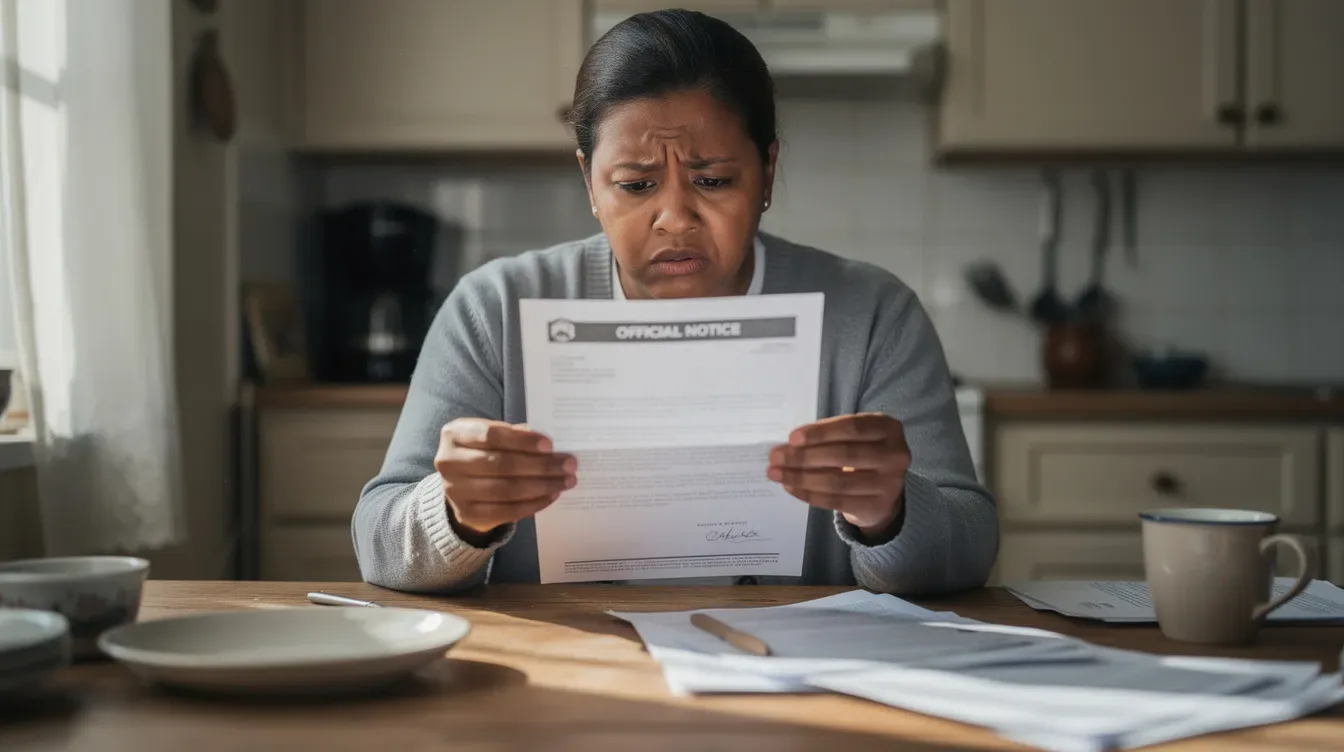
If a CP2000 notice just landed in your mailbox referencing a 1099-K from PayPal, Venmo, or eBay, your first reaction is probably panic. Take a breath. That notice does not necessarily mean you owe thousands in back taxes. Here's what you actually need to know.
Quick Answer: Does a CP2000 Mean You Owe Tax on Your 1099-K?
A CP2000 is an "underreported income" notice the IRS sends when income reported by third parties doesn't match what you put on your tax return. A CP2000 notice is not a formal audit; it is an inquiry about reported income. The IRS computer flagged a gap, and it's asking you to explain.
Receiving a 1099 K does not automatically mean you owe taxes on every dollar listed. The taxability of reported 1099-K payments depends on the nature of the transaction. You only pay taxes on net taxable income: business income after deductible business expenses, or gain when you sell personal property above what you originally paid.
The IRS matching system doesn't know which payments were legitimate business transactions, which were reimbursements from friends splitting a dinner bill, which were personal items sold at a loss, or which were money moved between your own accounts. The CP2000 is their way of asking for an explanation. Personal transactions are not taxable and should not trigger a 1099 K in the first place.
Ignoring a 1099 K or a CP2000 can lead to IRS penalties and compounding interest. But many taxpayers who receive these notices can reduce or eliminate the proposed balance with proper documentation. ClearNotice helps decode CP2000 notices and gives step-by-step, deadline-focused guidance so you know exactly what to say back to the IRS.
How the IRS Treats PayPal, Venmo, and eBay 1099-K Transactions
The IRS is paying close attention to third party payment platforms like PayPal and Venmo, eBay, Etsy, and Stripe. If you accept payments through any of these services, here's how the IRS categorizes what flows through them:
Payments for selling goods or services are generally considered taxable income and must be reported on your income tax return.
Casual sales that generate a profit, such as selling concert tickets above face value, may also be taxable.
Purely personal items sold at a loss, reimbursements, and gifts are generally not taxable.
These payment apps decide when to issue a form 1099 K based on federal reporting thresholds, which have shifted repeatedly in recent years. PayPal and Venmo specifically treat payments tagged as "goods and services" as reportable goods and services transactions, while "friends and family" transfers are typically excluded from 1099-K reporting. But all actual income is still potentially taxable regardless of how it's tagged.
The 1099 K form reports only the total amount of gross payments processed. It says nothing about your actual income tax liability. The IRS expects you to separate business income, personal transactions, and non-taxable amounts on your return. At ClearNotice, we regularly see CP2000 notices where the IRS assumed the full 1099-K total was other income or business income, even though many entries were personal or non-taxable.
What Is Form 1099-K and How Do Reporting Thresholds Work?
Form 1099 K is a third party network and payment card reporting form used by third party settlement organizations like PayPal, Venmo, eBay, Square, and merchant processors. It is issued for third-party network transactions involving payments you receive for goods and services.
What's on it:
The filer (the platform)
The recipient (you)
Gross payment volume by month (part ii shows monthly breakdowns)
Your last four SSN/EIN digits
No breakdown distinguishing personal vs business, no deduction for refunds or fees
Here's how the federal reporting threshold has evolved:
Tax Year | Threshold | Notes |
|---|---|---|
Before 2022 | $20,000 + 200 transactions | Original rule for third party network transactions |
2022 | $600 (delayed) | American Rescue Plan Act lowered it, but IRS postponed enforcement |
2024 | $5,000 | Transitional threshold; starting in 2024 the threshold is $5,000 for 1099 K |
2025+ | $20,000 + 200 transactions | Restored by the One, Big, Beautiful Bill Act (signed July 2025), retroactive to 2022 |
States may have lower 1099 K reporting thresholds than the federal level. Massachusetts uses a $600 threshold, and Illinois has used $1,000 plus four or more transactions. A lower reporting threshold at the state level can generate extra forms even when the federal requirement isn't met.
The reporting threshold only determines whether you receive a 1099 K. It does not determine whether you owe tax. You must report all income received, regardless of 1099-K issuance. The IRS expects all income, regardless of source, to be reported on your tax return.
When 1099-K Amounts Really Are Taxable Income
The most common CP2000 outcome is that at least some of the 1099-K total is legitimately taxable. Payments for selling goods or services through third party platforms are business income when you're operating with the intent to make a profit.
This typically includes:
Regular reselling or dropshipping on eBay or Facebook Marketplace
Freelance or gig payments received through PayPal (consulting, tutoring, design work)
Income earned by independent contractors and sole proprietors through payment apps
Other self-employment income where you process payments regularly
This income belongs on Schedule C for sole proprietors and single-member LLCs. Watch out: 1099 K reporting often overlaps with other forms like 1099-NEC or 1099-MISC, and double-counting is a common CP2000 trigger when taxpayers file one form's income but not the other.
Example: A 2024 eBay seller has $18,000 in gross sales on a 1099-K. Their inventory costs were $11,000, and shipping and platform fees totaled $2,000. Only the $5,000 net profit is subject to income tax and self-employment tax. If they reported $18,000 gross and $13,000 in business expenses on Schedule C, the return matches the 1099-K and no CP2000 should result. But if they reported only the $5,000 profit without showing the gross, the IRS sees a $13,000 gap and proposes additional tax on the full amount.
When 1099-K Amounts Are Not (or Only Partly) Taxable
This is where many taxpayers get tripped up. You may receive a 1099 K even for non-taxable transactions, and the IRS computer will treat everything as income unless you explain otherwise.
Selling personal items at a loss. If you sell personal property for less than you paid, there is no taxable income. Selling personal items at a loss does not produce taxable income, even if reported on a 1099-K. The loss isn't deductible either under current income tax rules.
Example: You bought a couch for $1,200 in 2020 and sold it on Facebook Marketplace in 2024 for $300 via PayPal. The 1099-K shows $300, but since you sold at a loss, you owe nothing. Without documentation of your original purchase price (your basis), though, the IRS may treat the entire $300 as a gain.
When personal items do create taxable income: if you sell collectibles or personal property for more than your original cost, the profit is usually a capital gain reported on Form 8949 and Schedule D.
Reimbursements and non-income transfers. Money from friends or family for personal reasons is typically not taxable. Common scenarios include:
A roommate paying their share of rent or utilities via Venmo
Splitting a dinner bill, shared trips, or concert tickets costs
Family members who send money as gifts
None of these create income tax liability even if the platform accidentally included them on a 1099-K. If this happened, gather messaging screenshots, bank statements, or your lease agreement showing the true nature of those payments. Taxpayers should review transactions to differentiate between taxable and non-taxable payments before responding to any IRS notice.

Why You Received a CP2000 Based on a 1099-K
The IRS Automated Underreporter (AUR) system matches every 1099-K and other third-party report against the income tax return you filed. The IRS sends a CP2000 notice when income reported by third parties differs from your tax return.
Common reasons for a mismatch:
You didn't report the 1099-K income anywhere on the return
You reported only net profit on Schedule C, but the IRS system only sees the gross from the 1099-K
You entered business income on the wrong line or schedule, so the matching program didn't find it
The 1099-K itself is wrong (wrong SSN, wrong total amount, or activity belonging to another person)
A typical CP2000 related to a 1099-K will show the tax year in question, the payer name (PayPal, Venmo, eBay Payments), your proposed increase in income, recalculated tax, and any penalties and interest calculated from your original return due date.
You generally have 30 days from the date on the notice to respond (60 days if you're outside the U.S.). Taxpayers must respond to a CP2000 notice by the specified deadline to avoid penalties. Responding on time preserves your appeal rights and limits further IRS collection actions. ClearNotice's IRS notice decoder helps users identify which 1099-K lines the IRS is relying on and what documentation to gather before responding.
How to Respond to a CP2000 Notice for 1099-K Income
A CP2000 is a proposal, not a bill or an audit. You have the right to agree, partially agree, or disagree.
Here's your step-by-step approach:
Read the notice carefully. Identify the tax year, the proposed changes, and the response deadline.
Compare 1099-K totals in the CP2000 against your own detailed records: platform statements, bank deposits, bookkeeping software, and your original tax return.
Sort each payment into categories: business income, sale of personal property, reimbursements, gifts, or transfers between your own accounts. Categorize transactions as personal to avoid 1099 K issues for non-business amounts.
Recalculate your actual taxable income if the IRS included non-taxable items or failed to account for expenses, fees, or cost basis.
Decide whether you fully agree, partially agree, or disagree with the IRS computation.
If you disagree, send back:
The CP2000 response form with the appropriate box checked
A written explanation in plain language
Supporting documents: sales records, purchase receipts showing basis, screenshots from PayPal or Venmo showing "friends and family" payments, business expense logs, or a corrected form if you obtained one from the platform
Documentation like receipts and records should be maintained to support tax filings. If your return truly underreported business income, agreeing and paying promptly (or setting up a payment plan) can help you avoid larger IRS penalties. Consider consulting a tax professional if the proposed adjustment is significant or involves multiple tax years beginning with the year in question.

Preventing Future CP2000 Problems from 1099-Ks
The best way to deal with a CP2000 is to never get one. Here are practical steps for every small business owner, side hustler, or casual seller.
Use app settings correctly:
Tag PayPal and Venmo payments appropriately as "friends and family" versus "goods and services" - don't let your roommate's rent payment look like payments received for services transactions
On eBay and similar platforms, keep personal sales separate from ongoing business activity
Keep detailed records year-round:
Maintain spreadsheets or accounting software tracking business income and expenses alongside 1099-K totals
Keep receipts proving the original cost of personal items in case of later questions, especially for higher-value items
Separate personal and business activity:
Use separate business accounts or profiles where small businesses and side hustles receive payments
Keep personal and business wallets distinct inside apps
Avoid mixing roommate reimbursements with side-hustle income in the same account
Before you file each calendar year:
Reconcile all 1099 K forms, 1099-NEC, and 1099-MISC to your books
Note which portions of 1099-K amounts are reimbursements or personal property sales at a loss, so you can explain them later under current reporting rules and reporting requirements
Ignoring a 1099-K can lead to IRS penalties. Being proactive about how you receive payments, track expenses, and file your return is the simplest way to stay ahead of the IRS matching system.
ClearNotice can help you interpret any future IRS letter about 1099 K reporting, CP2000s, or related underreporter notices, keeping you on top of deadlines and helping you avoid other adjustments and penalties that are entirely preventable.
Keep reading
 CP2000 & income mismatch
CP2000 How Long Response: 30-Day Deadline & IRS Timeline
Most taxpayers have just 30 days from the CP2000 notice date to respond, but the full timeline includes waiting periods, IRS review windows, and escalation points that can catch you off guard. This guide covers every stage in plain English.
 CP2000 & income mismatch
CP2000 Accuracy Penalty: What It Is and Next Steps
A CP2000 notice can include a 20% accuracy-related penalty on top of proposed extra tax. This guide explains what triggers it, how the IRS calculates it, and what your response options are.
 CP2000 & income mismatch
CP2000 Response Time: What to Expect From IRS | ClearNotice
Sent your CP2000 response and still waiting? Most taxpayers hear back within 30 to 90 days. Here is exactly what happens after you respond and when to follow up.