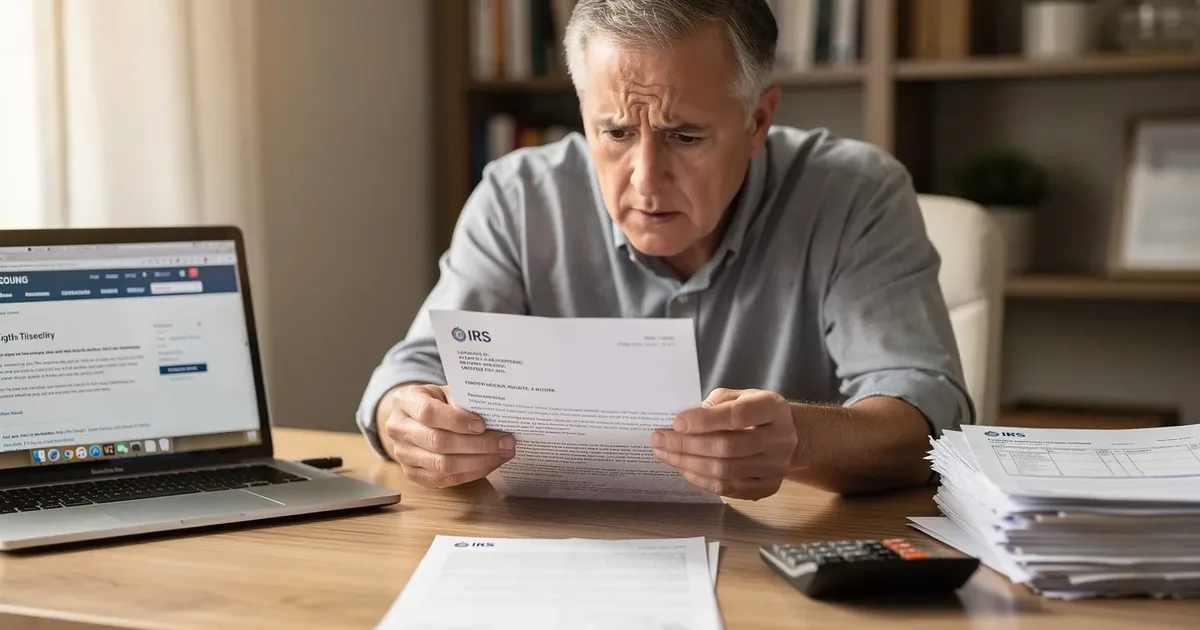
Letter 4464C from IRS: What It Means for Your Tax Refund and What to Do Next
If you opened your mailbox to find letter 4464c from the IRS, you're probably wondering whether something went wrong with your income tax return. The short answer: your refund is on hold while the IRS double-checks a few things, and in most cases, it gets released without major issues. Here's everything you need to know about why you got it, what to do, and when to worry.
Quick Answer: What IRS Letter 4464C Means for Your Refund
IRS Letter 4464C is a verification hold letter. It means the IRS has placed an IRS hold on your tax return to verify reported income, withholding, and tax credits before releasing your tax refund. Your refund status will remain in a holding pattern until the IRS completes its verification process.
This irs letter 4464c is not a formal audit. Receiving this letter does not imply wrongdoing. It does not indicate an audit is occurring. The IRS simply wants to confirm your numbers before cutting a check.
During the standard review, the IRS holds your refund for up to 60 days from the date printed on the notice. Most IRS reviews are completed within 60 days, barring complications, though some resolve faster and a handful take longer depending on IRS workload.
Here's what matters right now:
Many taxpayers receive the same letter each filing season. According to the taxpayer advocate service, roughly 2% of returns are flagged by fraud filters, and most turn out to be false positives.
Do not file a second tax return. Keep the original letter with your supporting documents.
Avoid calling the IRS repeatedly in the first 60 days - you'll likely get no new information.
The sections below cover identity theft red flags, identity verification steps, potential outcomes, and when to get professional help.
What Is IRS Letter 4464C? (Integrity & Verification Letter)
IRS Letter 4464C - formally the integrity and verification letter - is issued by the IRS Return Integrity and Verification Operations (RIVO) unit. It arrives after your tax return is filed but before any refund is issued. Think of it as a pre-release checkpoint for your money.
The verification letter typically comes from IRS processing campuses in Austin, TX; Fresno, CA; or Ogden, UT, and it references the specific tax year under review, such as your 2024 Form 1040 filed early in 2025.
The core purpose is straightforward: IRS Letter 4464C indicates a review of your tax return. The IRS reviews income, deductions, and credits reported on your return, then cross-references tax returns against third-party records like W-2s, 1099s, and other income documents already in irs records.
A few important details:
The notice date on the letter starts the clock, not the date you e-filed or mailed your return.
This particular irs letter usually does not request additional documents. It's alerting you that the IRS is reviewing your return.
The letter can arrive even if no refund was claimed, though it is most commonly tied to returns expecting a refund.
The language can feel vague or unsettling. That's normal. This is a routine integrity check, separate from a full audit notice.

Why Did I Receive IRS Letter 4464C?
The IRS uses automated filters and data-matching systems to decide which returns get letter 4464c. The exact algorithms are not public, but the common triggers are well known.
You are more likely to receive this irs letter if your return includes:
An unusually large increase or decrease in reported income compared with previous years
New dependents claimed for the first time
Large refundable tax credits such as the Earned Income Tax Credit, Child Tax Credit, or American Opportunity Credit
A switch from W-2 employment to self employed or business income
Mismatches between your return and third-party forms (W-2s, 1099s, mortgage interest statements)
Common triggers include first-time filers or large refunds relative to income. Taxpayers who filed early - January or February - before employers submit wage data to the IRS are also more likely to be flagged.
Discrepancies between your return and IRS records can trigger this letter, but sometimes the selection is random. Receiving letter 4464c does not, by itself, mean the IRS suspects fraud.
One critical exception: if you did not file a return for the tax year shown on the letter, that is a major warning sign of possible identity theft. Compare the tax year on the notice with what you actually filed and take action immediately if something doesn't match.

What Should You Do After Receiving IRS Letter 4464C?
Start by reading the notice carefully from top to bottom. Confirm the taxpayer's return details - your name, social security number, address, and tax year should all match what you filed.
You typically don't need to respond to Letter 4464C. You do not need to respond unless the IRS requests additional documentation or the letter directs you to call a specific number provided on the notice.
Here's your action checklist:
Keep the original irs letter 4464c with your tax records, alongside a copy of the filed tax return, W-2s, 1099s, and receipts for major deductions.
You should review your filed tax return for obvious errors. Check your tax return for errors after receiving the letter.
You should not file an amended return unless a clear error is found. If you do discover a genuine mistake, file Form 1040-X (an amended return) promptly, but understand this may affect timing.
Monitor your refund status using the IRS online account or tools. Use the IRS "Where's My Refund?" tool once or twice per week - daily checks won't surface new data.
Mark your calendar for 60 days from the letter date. That is when it becomes reasonable to follow up if issues remain unresolved and no new letter or update has appeared.
Taxpayers with complicated returns - multiple income sources, business income, or large tax breaks - may want to consult a tax professional early, before the 60-day window closes, to ensure accuracy of the original filing.
How to Confirm the Letter Is Really from the IRS (and Not a Scam)
Real IRS letters like Letter 4464C arrive by U.S. Mail. The IRS does not initiate contact by email, text message, or threatening phone calls demanding payment.
An authentic irs letter includes:
The IRS logo and a letter number ("Letter 4464C")
The relevant tax year and an issue date
A notice number, typically in the top right corner
A phone number you can cross-check at IRS.gov
A genuine Letter 4464C does not ask for immediate payment, does not threaten arrest or deportation, and does not demand you pay via gift cards, cryptocurrency, or wire transfer. If the tone is aggressive or demands you respond immediately with sensitive information, treat it as suspicious.
Check the return address on the envelope - it should reference an IRS campus (Austin, Ogden, etc.), not a foreign address or unrecognized PO Box. To verify, visit irs.gov and call the official individual taxpayer line rather than any number in a questionable notice.
You can also log into your online account at IRS.gov to see whether the letter appears in your communication history on your irs account. Never email or text photos of your Social Security card, driver's license, or bank account details to anyone claiming to be from the IRS without verifying through official channels first.
Refund Status: How Long Will the IRS Hold My Refund Under Letter 4464C?
The IRS review process typically takes up to 60 days from the date on the letter. This is the standard review window, though it is not an absolute legal limit.
During this period, expect your refund status on "Where's My Refund?" to show messages like "Your return is still being processed" or "We are reviewing your tax return." Your refund may be delayed during the IRS review process, but many routine cases resolve in a few weeks rather than the full 60 days.
Key timing details:
The IRS may hold your refund for up to 60 days. In more complex cases - such as when the IRS suspects potential identity theft or cannot verify withholding - the hold can extend up to 180 days under internal IRS directives.
If the delayed refund exceeds 45 days past the filing deadline or processing date, the IRS may owe you interest on the refund amount.
Wait 60 days before contacting the IRS for updates. You should contact the IRS if you haven't heard back in 60 days. Calling earlier typically results in long hold times with no new information.
Special case: if your entire refund already hit your bank account via direct deposit before the letter arrived, you can disregard the letter if you already received your refund. A quick verification call can still offer peace of mind if you need your refund urgently confirmed.
Identity Theft and Letter 4464C: Red Flags and Next Steps
While many 4464C letters are routine, some are triggered because the IRS suspects a fraudulent return filed under the taxpayer's social security number.
Red flags that point toward suspected identity theft:
Receiving a 4464C letter for a tax year when you have not yet filed
Seeing a different filing status or number of dependents than you reported
Being unable to e-file because irs records show a return already on file for your SSN
Unexpected bank account or routing information linked to your return
If you did not file a return for that year, contact the IRS immediately using the number on the letter to report potential identity theft. Ask the IRS to block the fraudulent return. Submit Form 14039, the identity theft affidavit, and follow any identity verification procedures the IRS implements, such as responding to Letter 5071C, 5747C, or 4883C if those arrive separately. A follow-up letter may be sent if additional information is needed.
Beyond the IRS, take these protective steps to safeguard your financial institutions and credit:
Place fraud alerts with the three major credit bureaus - Equifax, Experian, and TransUnion (the major credit bureaus that track your credit history)
Contact banks and credit card issuers to place alerts on accounts
Create or log into your online account at IRS.gov and enable multi-factor authentication for long-term monitoring
Identity theft cases can take substantially longer to resolve than standard reviews, often extending refund timing by several months while the IRS confirms the true filer.

Potential Outcomes After an IRS 4464C Review
Once the IRS completes its review, the taxpayer states on their account will update, and you'll generally receive one of the following outcomes:
Refund approved as filed. If no issues are found, the IRS will process the return and issue the refund - sometimes including a small amount of interest if the delay was long. This is the most common outcome.
Partial adjustment. The IRS finds issues - for example, incorrect Child Tax Credit, overstated Earned Income Tax Credit, or inflated business expenses. The IRS sends a notice (such as CP12 or CP21A) explaining changes and the revised refund amount. If discrepancies are found, the IRS may adjust your refund amount accordingly.
Balance due. The IRS may deny your refund if significant issues are identified. The refund is reduced or eliminated, and a balance due notice is issued with information about penalties, interest, and payment options.
Further review or audit. In relatively rare cases, the 4464C review may lead the IRS to open a separate audit or send an additional documentation request or identity verification letter requiring the taxpayer to actively respond.
The IRS will notify you of any adjustments after the review. Taxpayers generally have taxpayer rights to question or appeal IRS changes, request explanations, and propose payment plans if they cannot pay any resulting balance in full. If the IRS proposes significant changes you don't understand, seek professional help promptly - note response deadlines carefully on any follow-up notice.
How to Reduce the Chances of Getting Letter 4464C in the Future
There is no way to completely eliminate the risk of receiving irs letter 4464c - some reviews are random or based on undisclosed filters. But you can reduce the likelihood.
Practical steps to advise taxpayers who want to avoid future holds:
File only after all income documents (W-2s, 1099s, 1098s) are in hand. If you filed early last time, consider waiting until mid-February when third-party data reaches the IRS.
Use reputable tax software or a qualified tax professional, especially when claiming complex tax credits, self employed income, or new types of tax breaks.
Double check social security numbers, dependent birth dates, and bank account routing numbers. Simple data errors are a top cause of processing delays.
Report all income sources accurately, including gig-economy work and online platform payments reported on Forms 1099-K and 1099-NEC.
Keep organized records year-round - pay stubs, receipts, mileage logs, and additional documents - so you can ensure accuracy when filing and respond quickly if the IRS requests backup.
Consistently filing accurate, timely returns with realistic refund amounts builds a clean irs account history and reduces the odds that the IRS sends you the same letter next season.

When to Contact the IRS or Seek Professional Help
There are two key decision points: when to contact the IRS directly and when to bring in a tax attorney, enrolled agent, or CPA.
Contact the IRS directly if:
More than 60 days have passed since the letter date with no update or refund
The letter's instructions are unclear or reference additional information you don't understand
You never filed the return in question (a sign of possible identity theft)
A new notice suggests changes you did not expect
When calling, have the irs letter 4464c in front of you along with your tax return, social security number, and any relevant forms. Be ready to answer identity verification questions using the number provided on the letter.
Professional help is especially valuable when:
A large refund is at stake or the irs issues involve complex self employed, rental, or business income activity
You see signs of an upcoming audit or suspected identity theft spanning multiple years
You received the same letter in previous years and issues remain unresolved
Look for licensed professionals - CPAs, enrolled agents, or a tax attorney - who routinely handle IRS letters, refund holds, and verification issues. With proper authorization, they can speak to the IRS on your behalf. The Taxpayer Advocate Service is also a resource if you've been unable to resolve your case through normal channels and your irs received no response to your inquiries.
Prompt, informed action - whether taken personally or with a professional's assistance - prevents unnecessary delays, penalties, and stress. If your refund is being held, now is the time to organize your records, verify your return, and be ready to move when the 60-day window closes.