
Is the IRS fresh start program real?
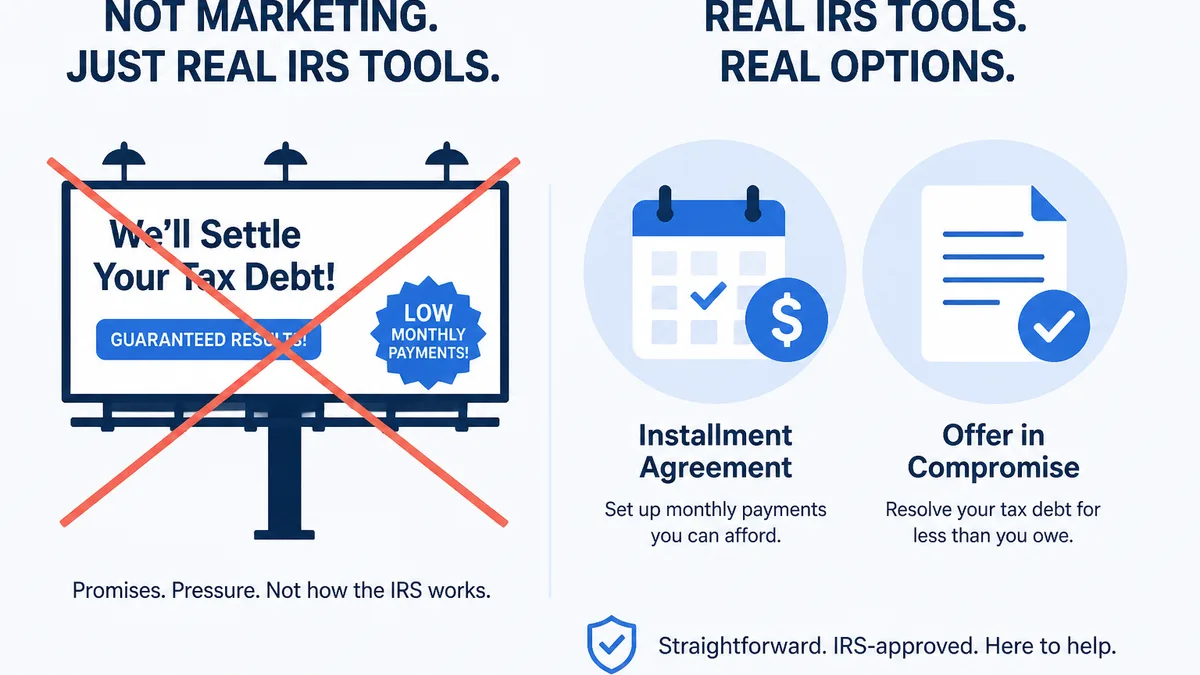
The phrase IRS fresh start program shows up constantly in ads, yet it is not one magic doorway that forgives every balance. What is real are separate IRS tools that were expanded or promoted in past “Fresh Start” initiatives: broader installment agreement access, currently not collectible review, offers in compromise, and first time penalty abatement. Treat the brand name as marketing shorthand. Choose the actual process that fits your numbers.
Why the name confuses people
Tax-relief marketing loves a single label. “Fresh Start” sounds like a reset button. Callers expect one application, one approval, and a new life. The IRS does publish and update collection and relief options over time, and older outreach used Fresh Start language when rules for payment plans and offers changed. That history is why the phrase sticks.
Confusion starts when an ad collapses every option into one promise: settle for pennies, stop all calls, erase penalties, and skip the paperwork. Real IRS processes still need facts, forms, and eligibility. A CP14 balance bill does not become a settlement case just because a commercial used friendly music.
What actually exists (the four tools ads usually mean)
1. Installment agreements
If you can pay over time, an installment agreement is often the workhorse option. You request it online when you qualify or with Form 9465 when mail is the better path. Setup fees can apply. Direct debit plans sometimes follow different fee rules than other payment methods.
An installment agreement spreads tax. It does not equal forgiveness. Interest and some penalties can continue under IRS rules, though a qualifying plan can reduce the monthly failure-to-pay rate. Staying current on new returns and on the agreed payments keeps the plan in good standing.
2. Currently not collectible (CNC) status
CNC is for taxpayers who cannot cover basic living expenses if the IRS collects. It is a hardship collection pause after financial review, not a secret amnesty. Interest can still accrue. The IRS can revisit your finances later. Misstating income or expenses to force CNC is a serious mistake.
CNC fits thin cash flow and high necessary expenses under IRS standards. It is a poor fit when monthly payment capacity is clear.
3. Offer in compromise (OIC)
An offer in compromise is a formal request that the agency take a lower settlement than the full assessed debt in limited situations, most often based on what collectors believe they can recover. Application steps, fees, initial payments in many cases, and full financial disclosure are part of the path. Acceptance is never guaranteed.
“Pennies on the dollar for everyone” is sales talk. OIC screening compares your offer to reasonable collection potential. Many applicants are better served by an installment agreement after a realistic review.
4. First time penalty abatement (FTA)
FTA can remove certain failure-to-file, failure-to-pay, or failure-to-deposit penalties when filing is current, tax is paid or arranged, and recent penalty history is clean. It does not cancel interest or the tax. It is one relief lane, not the whole “program.”
How Fresh Start marketing usually stretches the truth
Watch for these patterns:
- One brand, many processes: The ad names Fresh Start, then quietly routes you into whatever product the firm sells.
- Guaranteed outcomes: Real IRS decisions depend on transcripts and finances. Guarantees are a red flag.
- Fear plus urgency: “Act tonight or lose Fresh Start forever” is pressure, not a statute.
- Fee-first pitches: Paying a large upfront fee before anyone reviews your collection potential is risky.
- Silence about interest: Relief talk that never mentions ongoing interest on unpaid tax is incomplete.
You can use licensed help. Many people should. The healthy version starts with account analysis, not a slogan.
A clearer decision map than any ad
Ask four questions:
- Can I pay the balance soon without skipping essentials?
- Can I sustain a monthly payment?
- Would paying anything prevent rent, food, medicine, or utilities under a realistic budget?
- Is there a plausible collectibility case for an offer, or mostly a hope?
Answers point toward full payment, an installment agreement, CNC exploration, or careful OIC screening. Separately, check whether FTA or reasonable cause fits any penalty lines. Measure delay cost with the penalty calculator so the price of waiting is visible.
No commercial “Fresh Start” label stops a levy deadline printed on an IRS collection notice. If a letter warns that the agency may seize wages or bank funds after a date, contact the IRS or establish a real agreement before that date. Marketing emails do not toll levy clocks.
How to talk to a relief firm without getting lost
If you hire help, ask for plain answers:
- Which exact IRS process are you filing (installment, CNC, OIC, FTA, or something else)?
- What documents will you need from me?
- What fees are due before any IRS filing happens?
- What happens if the IRS rejects the request?
- Will you give me copies of everything submitted in my name?
If the firm cannot name the process without saying “Fresh Start,” keep asking until you hear a concrete path.
DIY starting points
Many individual balances begin with self-service steps:
- Confirm the bill and years on IRS Online Account when you can access it
- Compare the notice to payments already sent
- Use Online Payment Agreement tools when you qualify
- Request FTA by phone or letter when the three compliance tests fit
- Gather income and expense records before anyone mentions CNC or OIC
ClearNotice guides on CP14 and the penalty calculator help you see the account in pieces instead of as one scary total.
Business and payroll debts
Trust fund and payroll tax debts are not casual Fresh Start material. Personal liability exposure can be severe. Get licensed advice early rather than trusting a late-night ad aimed at individual 1040 balances.
Bottom line
Is the IRS fresh start program real? As a single erase-everything product, no. As a nickname for real tools (installment agreements, currently not collectible status, offers in compromise, and first time penalty abatement), the underlying options are real. Ignore the brand wrapper. Match your cash flow and transcripts to one concrete process, watch collection dates, and treat guaranteed pennies-on-the-dollar pitches as marketing, not IRS policy.
Quick follow-ups
Is there a single IRS form titled Fresh Start Program?
No single catch-all Fresh Start application replaces the separate processes for installment agreements, currently not collectible status, offers in compromise, or first time abatement.
Do TV ads invent tools that do not exist?
The named tools are often real. The problem is packaging them as guaranteed pennies-on-the-dollar results for every caller.
What should I do instead of chasing a brand name?
Match your facts to a concrete path: pay, installment agreement, hardship collection pause review, offer in compromise screening, or penalty relief.
Upload a photo for a free plain-English explanation of your amounts, deadline, and options.

Founder of ClearNotice · Updated August 2026 · About