
Is an IRS audit vs notice the same thing?
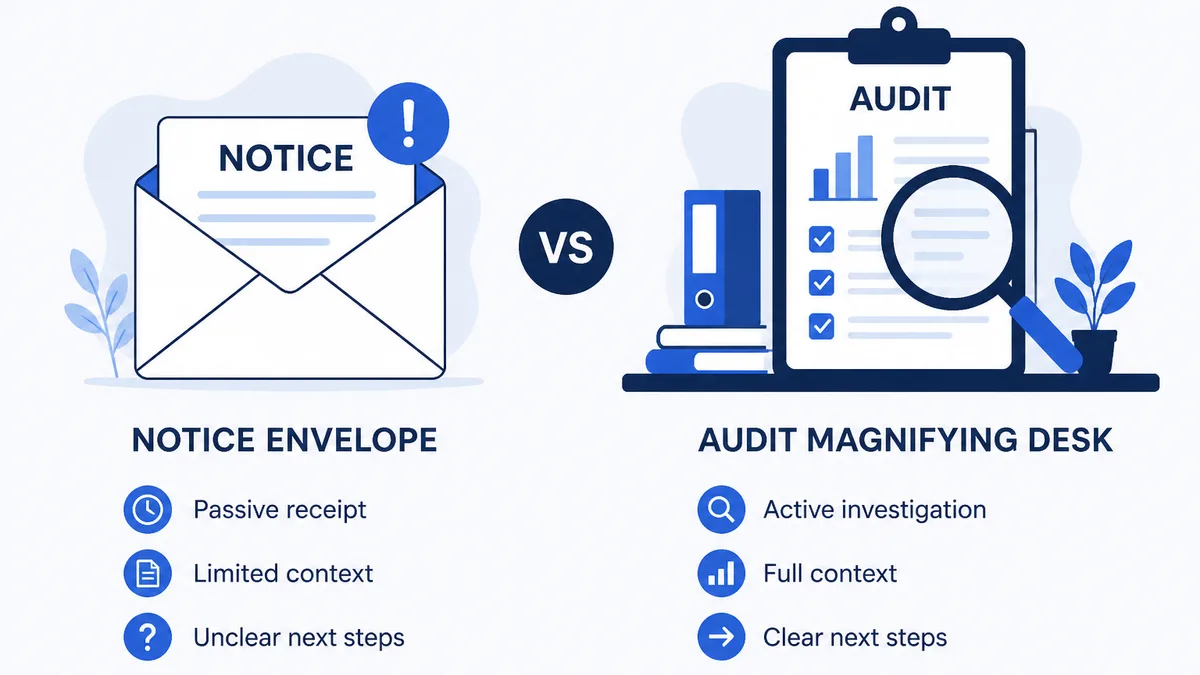
An IRS notice is not the same as an audit, even though both arrive in similar envelopes. Most notices are automated or correspondence steps: a balance due, a refund pause, a proposed change from a 1099 mismatch, or an identity check. An audit is a deeper examination of your return with structured information requests and sometimes interviews. Understanding IRS audit vs notice differences keeps you from treating every letter like a courtroom trial.
Plain definitions
Notice: A standardized IRS letter tied to your account. It explains something the IRS believes is true and tells you what to do next: pay, wait, verify identity, agree, or disagree with documents. Audit: A review of your return’s accuracy. Audits can happen by mail (correspondence audit) or in person (office or field audit). They ask for proof of income, deductions, and credits.Every audit usually involves notices, but most notices are not audits. That one-way relationship is the core reassurance.
Why the words get mixed up
Taxpayers say “audit” when any IRS letter arrives because:
- The envelope looks official and frightening
- Friends share audit horror stories out of context
- Some notices use examination language loosely
- Refund delays feel like investigation even when routine
Marketing from tax firms also blurs terms to sell services. Precision helps you respond correctly.
Common notices that are usually not audits
Balance due and payment reminders
Letters such as CP14 and later collection reminders mean the IRS shows tax unpaid. They are billing and collection mail, not a deep return review. You may owe because you filed and did not pay, or because an earlier proposed change assessed.
Proposed changes from form mismatches
CP2000 and similar underreporter mail compares your return to W-2s and 1099s. The IRS proposes new tax if you do not explain or document the gap. This is often called a correspondence exam in professional slang, yet it is still primarily a paper dispute unless it escalates.
Math or processing adjustments
When the IRS fixes arithmetic or applies credits differently, it mails an explanation. You can disagree within the window if the math is wrong. That is processing, not a sit-down audit.
Refund review holds
A CP75 or related refund hold letter pauses your refund while the IRS verifies income, credits, or withholding. It feels invasive because money is frozen, yet many holds clear after routine screening or a document request. Read IRS reviewing my refund for the waiting pattern.
Identity verification
Letters such as 5071C ask you to confirm you filed. They protect against refund fraud. No examination of every deduction is implied.
When mail starts to look like audit territory
Treat the situation as audit-level risk when you see patterns like:
- A letter scheduling an appointment with a revenue agent
- Repeated numbered Information Document Requests with short deadlines
- Office or field audit notification with a specific time and place
- Examination of multiple years together with broad document lists
- Business return selected for payroll, inventory, or margin scrutiny
Correspondence audits still live mostly on paper, but they are examinations with audit rights and procedures. They are more than a single pay-by date on a bill.
IRS audit vs notice at a glance
| Feature | Typical notice | Audit track |
| --- | --- | --- |
| Primary goal | Inform, bill, propose change, or verify one issue | Examine return accuracy broadly or deeply |
| Interaction | Mail, fax, upload, or phone on that notice | Ongoing document production, sometimes meetings |
| Scope | Often one year, one issue | Can span multiple lines, years, or entities |
| Tone | Form letter with code | Agent letters plus formal IDR-style requests |
| Taxpayer feeling | Worried | Exhausted |
Neither row means guilt. Both mean read and respond.
The correspondence exam middle ground
Tax professionals sometimes call CP2000-style work a “correspondence audit.” That label scares people who equate audit with agents at the kitchen table. In practice it means:
- The IRS asked for written proof
- Deadlines matter
- Ignoring it can assess tax as proposed
It does not automatically mean an agent will visit your workplace. Still, take correspondence exams seriously. Documents and dates count.
Use notice lookup to see how your specific code behaves before you label it an audit in your head.
How to classify your envelope in ten minutes
- Find the notice code on page one
- Note whether the letter proposes new tax or only shows balance due
- Check for appointment language or revenue officer names
- Count how many years and forms the letter covers
- Read the respond-by section: pay, disagree with documents, or verify identity
If step three shows an appointment or broad IDR list, move your mental label from “notice” toward “audit track” and consider professional help. If step two shows a simple bill you already expected, you are likely in notice territory.
Emotional reassurance with practical respect
Learning that IRS audit vs notice is not a single concept should calm you, not make you lazy. Routine mail still has deadlines. A CP2000 you ignore can assess tax just like an audit you ignore can expand.
The difference is strategy:
- Notice path: read code, gather targeted documents, reply once clearly
- Audit path: organize books, consider representation, expect multiple rounds
Both paths reward calm record keeping.
Do not assume a refund hold is “just waiting” if the letter also requests specific documents by a date. CP75-style holds can need a timely upload or mail response. Silence can convert a pause into a denial or adjustment.
When to escalate help
Self-help fits many single-issue notices. Consider a CPA, enrolled agent, or tax attorney when:
- Mail uses examination or deficiency language with Tax Court rights
- Business returns with inventory or employee issues are involved
- You cannot reconstruct records for the year under review
- Prior unfiled years are bundled into current contact
See do I need a tax attorney for an IRS notice for triage between CPA and counsel.
Connecting to your next read
If you still wonder why mail arrived at all, start with why did I get a letter from the IRS. If the code points to refund pause, read IRS reviewing my refund. If the code is CP75 specifically, the dedicated CP75 guide walks through hold mechanics in more detail than this overview.
Closing distinction
Is an IRS notice the same as an audit? No. A notice is a letter about one account event. An audit is an examination program that may send many notices along the way. Most envelopes Americans receive are notices, not opening shots of a field audit. Respect the deadline anyway, use notice lookup for your code, and escalate your effort when appointment language or multi-year document demands show the IRS moved from informing you to examining you.
Quick follow-ups
Does every IRS letter mean I am being audited?
No. Most IRS mail is routine billing, refund review, identity checks, or proposed changes based on third-party forms.
Which notices feel like an audit but often are not?
Refund holds such as CP75, math error adjustments, and CP2000 proposed changes are serious yet are usually correspondence exams, not field audits.
When should I treat IRS mail like audit-level risk?
When you receive examination appointment letters, repeated document demands from an revenue agent, or statutory deficiency notices with Tax Court rights.
Upload a photo for a free plain-English explanation of your amounts, deadline, and options.

Founder of ClearNotice · Updated August 2026 · About