
Why is the IRS asking for proof of income before releasing my refund?
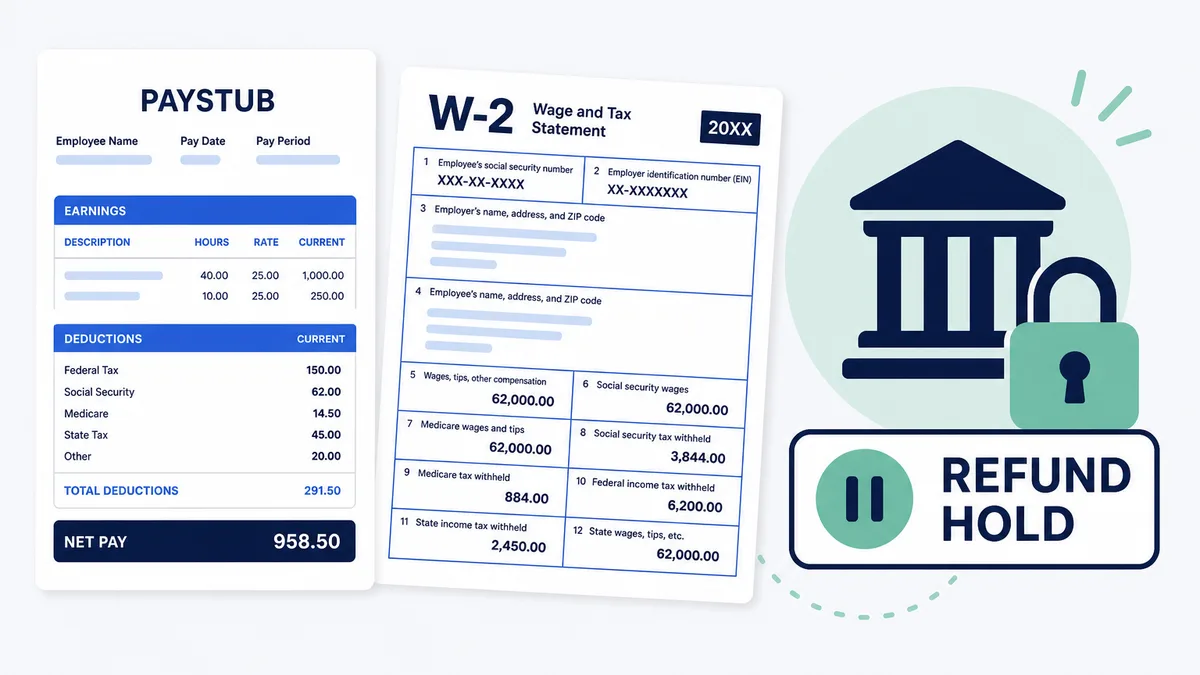
When the IRS asking for proof of income delays your refund, the letter usually lists exact documents, not a vague request for “all financial records.” Common unblockers are W-2 copies, recent pay stubs, employer verification letters, and third-party forms that match what you reported. Send only what the notice names, keep duplicates at home, and meet the response date on the envelope. Extra paper or missing pages can restart the clock.
Why proof requests happen after a hold
Refund screening can move in two steps. First, a hold letter such as CP05 may ask you to wait. Second, if internal matching still disagrees with your return, the IRS may mail a document request. That is when filers say the IRS asking for proof of income before releasing my refund.
The agency is not accusing you of fraud in every case. It is trying to reconcile your claimed wages, withholding, or credit eligibility with records it can verify. When automated data and your return still conflict, human review needs paper evidence.
Typical triggers:
- W-2 wages on the return differ from employer filings
- Withholding claimed exceeds what payers reported
- Multiple jobs or mid-year employer changes confuse totals
- Schedule C income needs support beside a simple W-2 story
- Credit rules require residency or relationship proof tied to income
Read the notice code before you gather papers. Notice lookup helps you confirm whether you have CP05A or a related request.
CP05A and the document checklist
CP05A is a frequent letter in this family. It follows or accompanies a refund hold and lists items the IRS needs to continue processing. The checklist is the script. Do not improvise a different pile of documents.Items often requested:
- Copy of W-2 for each employer
- Pay stubs covering listed pay periods
- Form 1099 copies when non-wage income is in question
- Employer letter confirming dates of employment, gross pay, and tax withheld
- Proof of health insurance or other credit support when the notice ties income to a credit
Send readable copies unless the notice demands originals. Black-and-white scans are fine when the text is sharp. Highlighting is optional; clarity matters more than decoration.
Pay stubs: what to include
Pay stubs show year-to-date gross pay, federal withholding, and pay dates. When the IRS asking for proof of income names stub periods, include every period listed, in order. Partial sets force reviewers to request again.
For each stub, check that:
- Employee name and employer name match the W-2
- Year-to-date totals align with the annual figures you reported
- Pay dates fall inside the tax year at issue
If you lost stubs, ask payroll for reprints or a wage transcript letter. Many employers provide them within a few business days.
W-2 copies: match the return line by line
A W-2 copy seems simple, yet mismatches cause repeat mail. Compare box 1 (wages) and box 2 (federal tax withheld) to your Form 1040 entries before you seal the envelope. If you filed before a corrected W-2 arrived, say so in a brief cover note and include both forms if you have them.
When you had more than one job, include every W-2. Omitting one job’s form while reporting combined wages is a common reason proof requests go back and forth.
Employer verification letters
Some checklists ask for a signed letter on company letterhead. The letter should state:
- Employee name and dates worked during the tax year
- Gross wages paid
- Federal income tax withheld
- Employer contact information
HR or payroll usually prepares these. Keep the tone factual. The IRS wants verification, not a narrative about job performance.
If the employer closed, gather whatever you have: final pay stub, W-2, unemployment records, or bank deposits that support reported amounts, and explain the situation briefly in writing.
Credits that ride along with income proof
Income proof sometimes pairs with credit documents. Examples include school records for education credits or residency proof for EITC when the notice ties them together. If your letter mentions EITC specifically, our guide on EITC refund delayed covers exam-style requests that feel similar but use different codes.
Missing the response date on a CP05A-style letter can lead to refund changes or continued holds without another reminder. Treat the deadline on the notice as firm even if an earlier letter only told you to wait during an IRS 60 day review.
How to mail a clean response
- Copy the checklist and mark each item as you attach it
- Include the notice reference or bar code page if instructed
- Use the address or fax on that notice only
- Keep proof of mailing or fax confirmation
- Retain a full duplicate set at home
Do not staple over bar codes. Do not send bank statements unless the list asks for them.
What not to send
Avoid these common mistakes:
- A full tax return reprint when only W-2 and stubs were requested
- Password-protected PDFs the IRS cannot open
- Illegible phone photos with cropped edges
- Documents for the wrong tax year
- Personal ID copies unless identity is part of the same letter
If identity verification is the real issue, income papers alone will not release the refund. Identity letters follow a separate path described in IRS reviewing my refund.
After you mail proof
Processing time varies. The IRS must match your copies to employer filings and internal databases. Where’s My Refund may still show a delay while review continues. Watch for a new notice that either releases the refund or proposes an adjustment.
If the agency disagrees with your figures after review, you may receive a math or credit correction letter with its own dispute window. That is different from the original proof request.
When to get help
Gathering W-2 and pay stubs fits many households alone. Consider an enrolled agent, CPA, or tax attorney when the checklist includes business books, multiple states, amended W-2 corrections you cannot explain, or mixed identity and income issues on the same account.
Bottom line
The IRS asking for proof of income is a specific document step, not a vague delay. Read CP05A, use notice lookup to confirm the code, send exact copies of W-2s, pay stubs, and employer letters the notice lists, and meet the deadline. Clear, complete packets finish reviews faster than extra paper sent on guesswork.
Quick follow-ups
Can I fax proof of income instead of mailing it?
Some notices list a fax number for responses. Use the method on your exact letter. If only mail is listed, faxing elsewhere may not attach to your case.
What if my employer will not give me a letter in time?
Start with W-2 and recent pay stubs, which many notices accept. If the checklist names an employer letter, ask HR for a signed statement on company letterhead showing wages and dates.
Will sending proof guarantee my full refund?
No. Proof lets the IRS finish its review. If records support your return, release is more likely. If figures differ, an adjustment notice may follow instead.
Upload a photo for a free plain-English explanation of your amounts, deadline, and options.

Founder of ClearNotice · Updated August 2026 · About